Optimising Reporting for Better Manufacturing Outcomes Across Industries
Explore key types of manufacturing reports, like compliance, quality, efficiency and learn how Cyzag helps simplify & improve reporting.
8 min read
Reporting has always been central to manufacturing. Historically, reporting began as handwritten logs, basic records of machine performance, production counts, or incidents scribbled into notebooks on the factory floor. Fast forward to today, and we’ve entered an era of real-time data capture, cloud–based interactive dashboards and automated workflows.
But this evolution is more than a technological shift; it’s a strategic one. With the rise of data visualisation, manufacturers can now see patterns, uncover inefficiencies, and prevent issues before they arise. A single, well-structured report can simultaneously support compliance, reveal inefficiencies, improve quality and safety, and keep teams aligned around operational priorities. For industries such as chemicals, pharmaceuticals, and food & beverage, where regulatory pressure and process complexity are high, effective reporting is not optional, but a cornerstone of operational excellence.
In this article, we’ll explore the different types of reporting used in manufacturing, how they’re applied across sectors, and why modern manufacturers must embrace a new approach to reporting that’s intuitive, real-time, and built around frontline needs.
All screenshots shown are for illustration purposes only. Reports are fully personalised to your needs. Fields and workflows, such as starters, approvals, and actions linked to specific roles, can be tailored to your organisation.
Manufacturing Reports That Matter Most
1. Incident and Near-Miss Reports: Crucial for Safety Culture
In chemicals and pharmaceuticals, where hazardous substances are handled daily, incident and near-miss reporting help prevent accidents before they happen. In food production, early identification of contamination risks or equipment failures is equally critical.
Digital tools simplify reporting from the shop floor, increasing visibility and response speed, while creating a documented trail for audits and investigations.
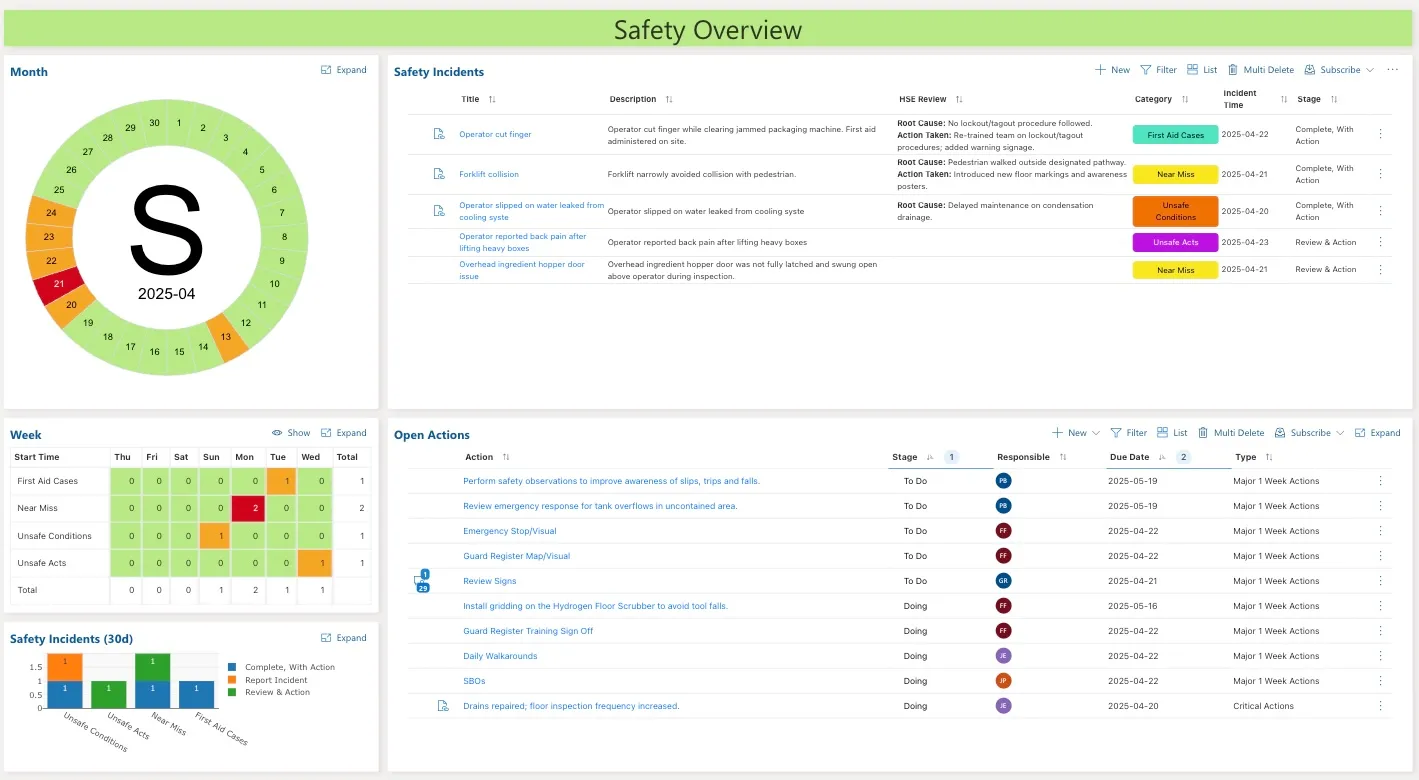 *Image 1: Safety Overview on the Cyzag platform, showing the list of safety incidents and open actions. By clicking on the incident, all the details can be seen. *
2. Compliance Reporting: A Must in Regulated Industries
For pharma and food processing, compliance isn’t optional; it’s mission-critical. From batch traceability to GMP and HACCP records, automated compliance reports ensure data integrity, version control, and audit readiness, without overloading teams.
Drawing from the insights shared by Qarma, we know that automation can drastically reduce the burden of compliance reporting. By using digital tools, manufacturers can ensure timely reporting, maintain version control, and ensure that no critical detail is missed.
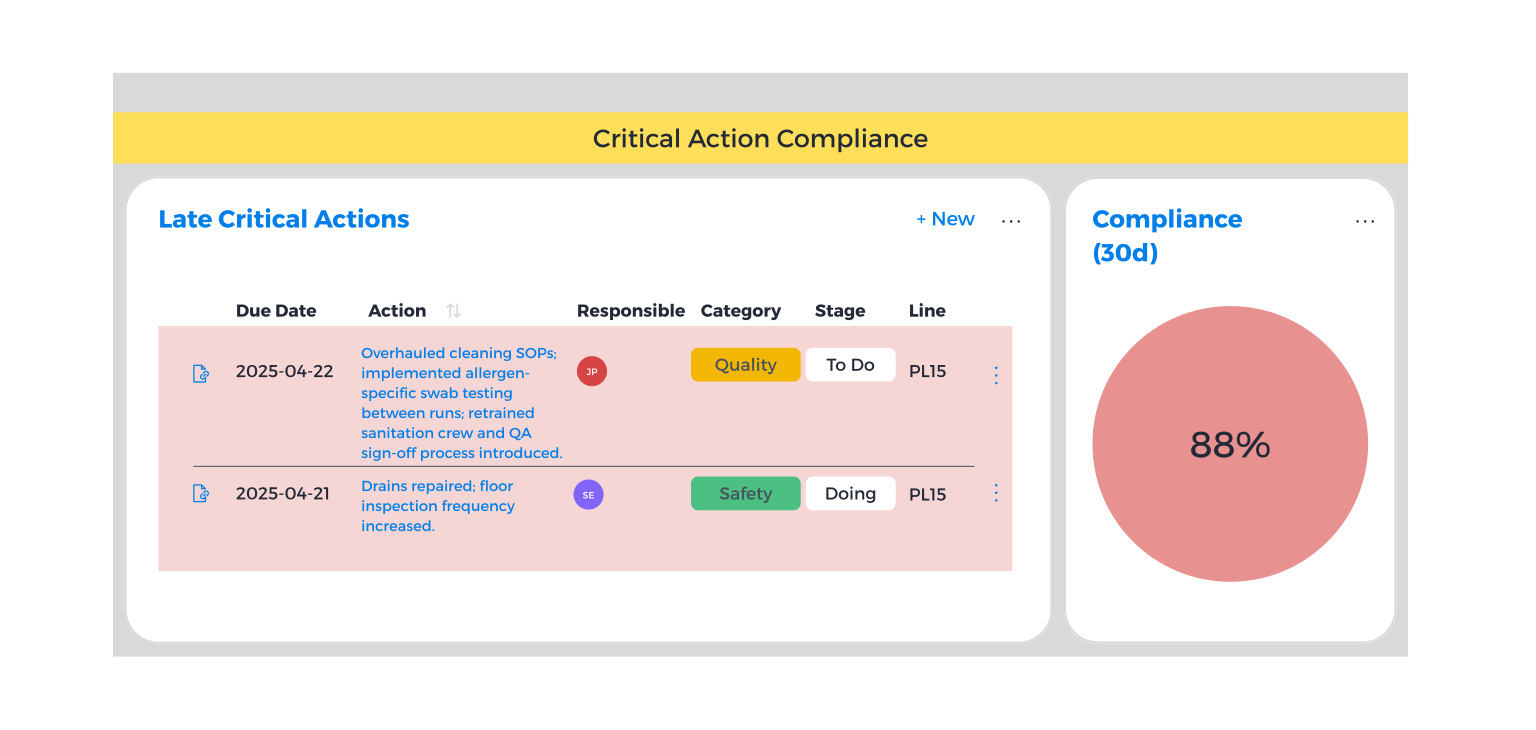 Image 2: Critical Action Compliance example in a Compliance Overview board on the Cyzag platform.
3. Non-Conformance & CAPA Reports: Driving Continuous Improvement
Non-conformance reporting (NCRs) plays a pivotal role in managing deviations from standards. Whether it’s a defective product or a process anomaly, capturing, analysing, and addressing non-conformances is key to maintaining quality and avoiding repeat issues.
In the pharma industry, regulatory compliance is a major driver for CAPAs (Corrective and Preventive Actions). Regulatory bodies often require documented CAPAs as part of compliance audits, making robust CAPA management critical to meet industry standards and avoid penalties.
Effective systems, such as the Cyzag platform, link NCRs with root cause analysis (RCA) tools and CAPA workflows, streamlining the path from problem identification to resolution while compliance requirements are met.
4. Shift & Handover Reporting: Ensuring Operational Continuity
Every manufacturer relies on shift and handover reports, but in the process industry, these reports are vital. We’ve seen how gaps between shifts can create miscommunication, repeat mistakes, or even put safety at risk.
Whether you’re running a 24/7 chemical plant or a multi-line food production facility, capturing key operational details at the end of each shift is essential. This includes work in progress and pending tasks, equipment status, maintenance actions, production updates, quality concerns, and operator notes to ensure continuity. The Cyzag platform lets teams create structured, consistent, and searchable shift reports so information flows seamlessly from team to team.
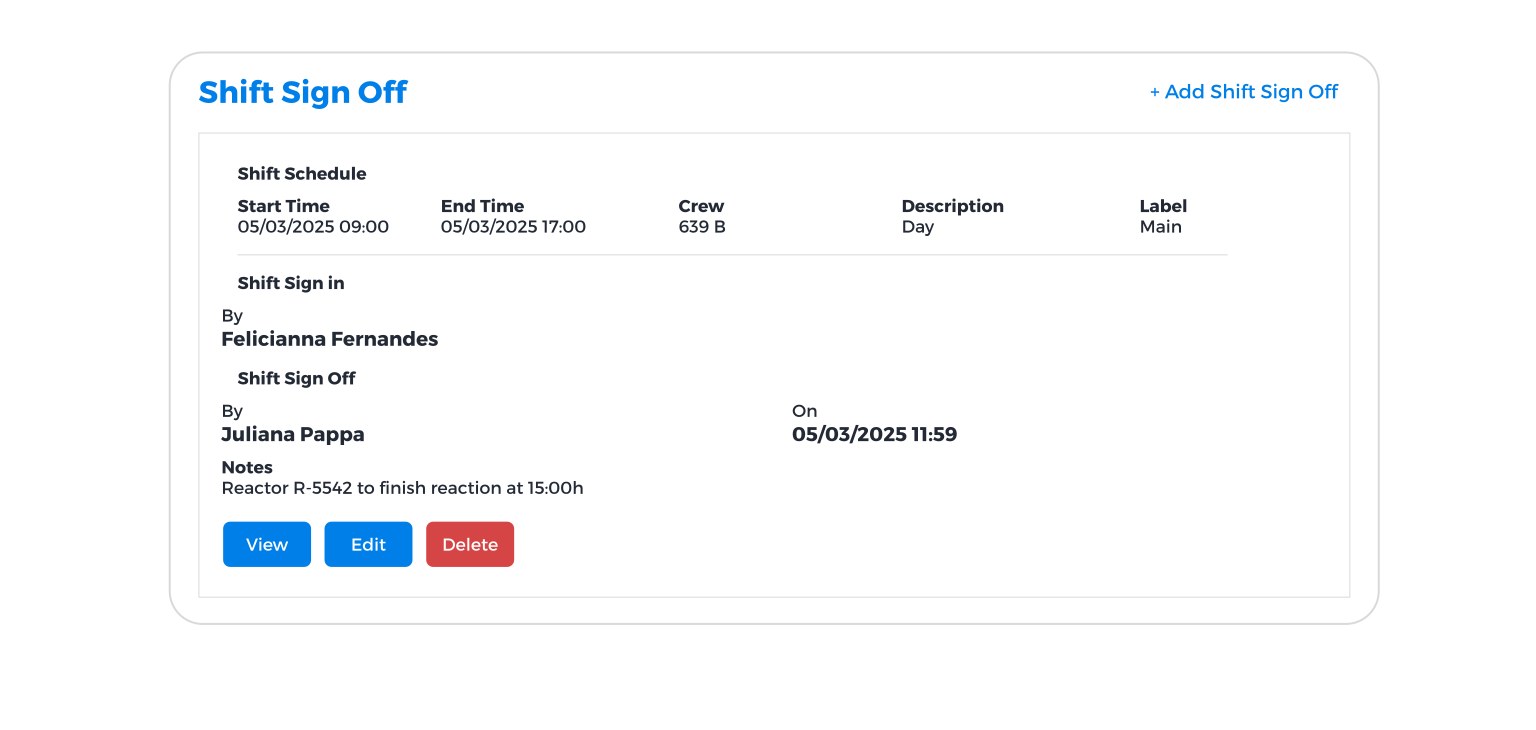 *Image 3: Shift Reporting with Digital Sign-off within the Cyzag platform. *
5. In-Process Quality Reports: Maintaining Standards During Production
Beyond end-product checks, in-process quality reports monitor critical parameters in real time, such as fill weights, temperatures, and contamination indicators. This proactive approach ensures compliance and reduces the risk of costly rework or recalls.
6. OEE & Performance Reports: Tracking Efficiency in Real Time
Overall Equipment Effectiveness (OEE) is a cornerstone metric across all industries. OEE reports quantify losses in availability, performance, and quality, helping teams identify bottlenecks and prioritise improvements.
In food & beverage, tracking microstoppages and speed losses is critical to meeting production targets. Chemical plants monitor OEE to optimise high-value assets, while pharma focuses on reducing deviations and improving yield.
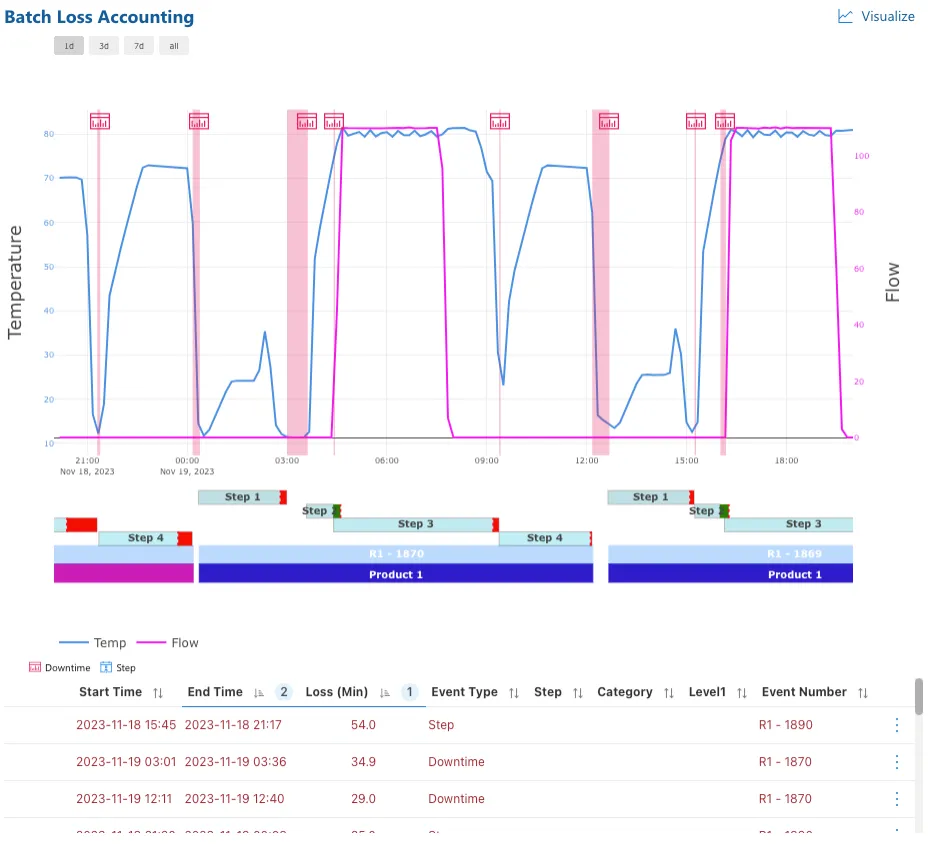 Image 4: Batch Loss Accounting report within the Cyzag platform, ideal to identify OEE improvement opportunities.
7. Maintenance & Asset Health Reports: Reducing Unplanned Downtime
Maintenance reporting is critical to ensure equipment reliability, process continuity, and cost control. Reports track planned vs unplanned maintenance, asset performance metrics (like MTBF and MTTR), and common failure patterns, enabling data-driven decisions on where to focus maintenance efforts.
In chemicals and pharma, unplanned downtime not only disrupts production but can also trigger compliance risks and safety concerns. Food & beverage manufacturers rely on these reports to avoid production losses and ensure consistent quality. Advanced maintenance reports increasingly incorporate predictive analytics such as vibration, temperature, and pressure trends, allowing teams to prevent failures before they occur, optimising both uptime and maintenance costs.
8. Energy & Consumption Reports: Supporting Sustainability & Cost Control
Energy, water, and raw materials are major cost drivers in manufacturing. Tracking consumption helps reduce waste, optimise processes, and control production costs across lines, shifts, and plants.
In food & beverage, utilities such as steam, compressed air, and water represent significant cost drivers, making consumption monitoring critical for both financial performance and environmental footprint reduction. Chemical manufacturers focus on optimising energy-intensive processes to improve yield and control variable costs, while pharmaceutical plants track cleanroom energy usage and water consumption to support sustainability initiatives.
In parallel, accurate consumption reporting supports compliance with environmental regulations and corporate sustainability goals. Automated tools simplify monitoring and ensure traceability of emissions, effluents, and resource use.
By connecting consumption data to production outputs, manufacturers can control costs, meet environmental standards, and support long-term efficiency initiatives.
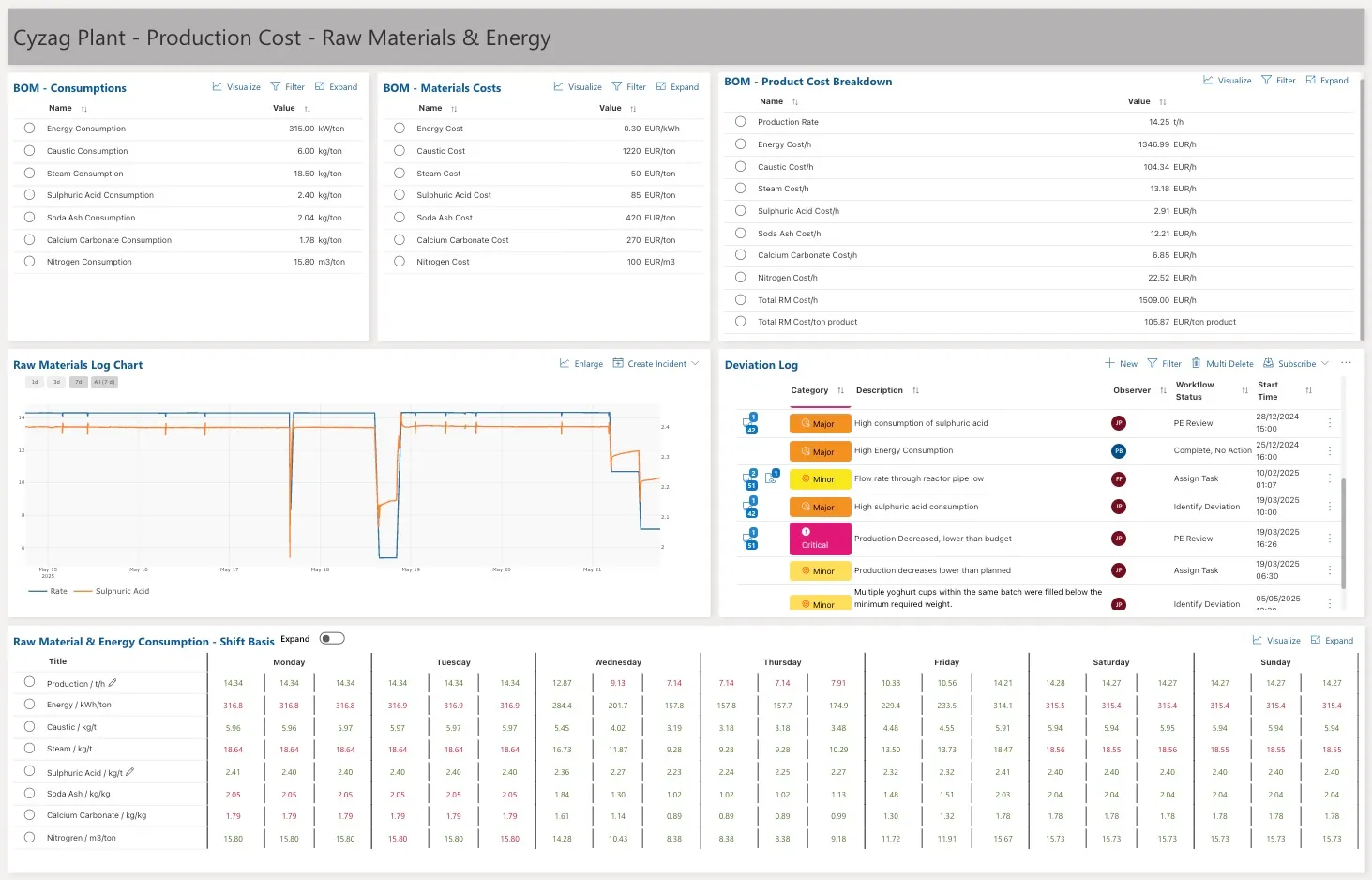 *Image 5: Example of a Production Cost Report in the Cyzag platform: view overall figures, drill down into details and add actions with ease. *
Why Reporting Matters: The Benefits You Can’t Ignore
We often say, “If you’re not reporting it, you can’t improve it.” And it’s true. Here’s why we believe every manufacturer should rethink how they approach reporting:
-
Better Decisions: Clear data leads to smarter, faster choices, whether it’s about performance, safety, or quality.
-
Improved Compliance: With automated tools, staying compliant with industry regulations becomes far less time-consuming.
-
Greater Transparency: Reporting gives you a clear view into what’s really happening across your operation, making issues easier to catch and fix.
-
Risk Reduction: Proactive reporting prevents small problems from becoming major incidents.
-
Continuous Improvement: Data-driven insights inform and drive improvement initiatives.
Why Manufacturers Are Moving to No-Code Platforms for Reporting
Traditional reporting systems often require complex IT setups, custom coding, and constant developer support. They’re slow to adapt, difficult for frontline teams to use, and often siloed from real-time data, making them a poor fit for today’s fast-moving manufacturing environments.
By contrast, no-code platforms like Cyzag offer a radically different approach.
| Feature | Traditional Reporting | No-Code Reporting (Cyzag) |
| Setup Time | Days or Weeks | Hours |
| Flexibility | Requires developer changes | Drag-and-drop, easily configurable |
| User Access | Limited to analysts or IT | Accessible to operators, managers, and auditors |
| Real-Time Capabilities | Often delayed or manual | Instant, live dashboards and notifications |
| Ease of Use | Complex tools, training-heavy | Intuitive UI built for frontline users |
| AI and Automation | Minimal or add-on | Built-in generative AI chatbot and automated workflows |
| Maintenance & Scalability | High IT involvement | Scalable and self-service |
How Cyzag Puts No-Code Reporting Into Action
Cyzag is built to integrate reporting seamlessly into daily operations, making it easier for frontline teams to log, track, and act on the data that matters.
Here’s what sets the platform apart:
-
Live Notifications Instantly alert the right teams when an incident occurs, a compliance deadline approaches, or a CAPA is overdue, so nothing falls through the cracks.
-
AI-Powered Chatbot Need to find a report, check a batch record, or view OEE data? Just ask. Our generative AI assistant helps users quickly surface the information they need, no digging required.
-
User-Centric Design Cyzag is fast, familiar, and frictionless, designed for real-world shop floor workflows and adopted by teams at every level.
-
Action-Oriented Dashboards Real-time visualisations help teams focus on what matters most, enabling proactive improvements and faster decisions.
We’ve seen firsthand that when reporting is intuitive, people actually use it. That leads to better safety outcomes, smoother audits, and higher-performing teams.
Final Thoughts
The role of reporting in manufacturing has never been more important. As industries grow more complex and regulations tighten, the ability to capture accurate, real-time data becomes a competitive advantage.
From shift logs to compliance checklists, each report is an opportunity to learn, improve, and stay ahead. And with platforms like Cyzag, reporting doesn’t have to be a chore; it can be a powerful tool for transformation.
Ready to take control of your reporting? Let us show you how easy and impactful it can be with Cyzag.
Follow Cyzag on LinkedIn for new articles and stories.