Stolt Tankers’ Case Study: Scaling Continuous Improvement Across a Global Shipping Fleet
Discover how Stolt Tankers successfully scaled Continuous Improvement across a global fleet by adopting Cyzag's digital platform.
Updated 26 November 2025 8 min read
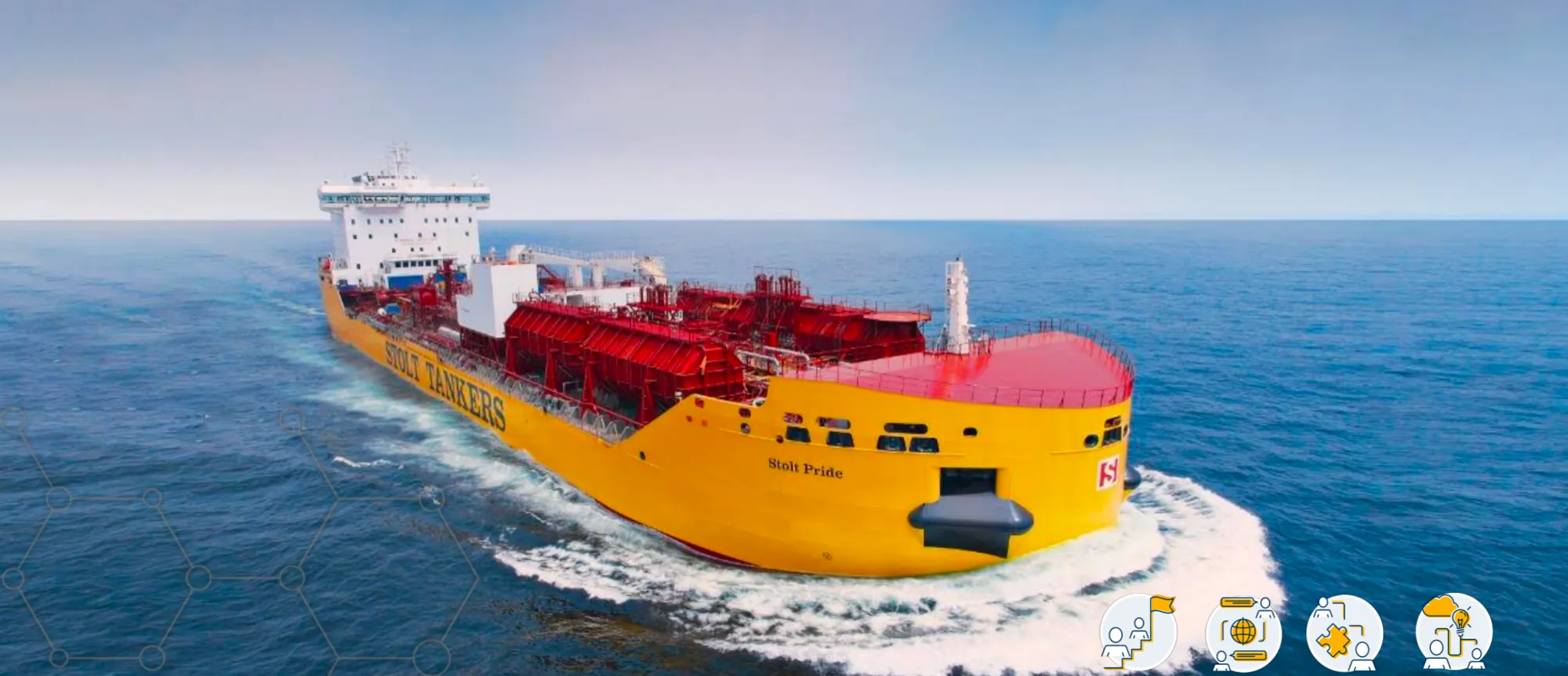
Scaling Continuous Improvement (CI) across a diverse deep-sea fleet of 104 vessels and approximately 4,000 seafarers is no small feat. As a company committed to doing better and achieving more, Stolt Tankers has been embedding CI into its daily operations for some time. A key driver of this transformation is the CI@Sea program, which has become an integral part of how the fleet operates.
Initially supported by a manual process, CI@Sea laid the foundation for a culture of improvement at sea. However, the team quickly recognised the need for a scalable and sustainable solution to support continued growth and reinforce their PDCA approach.
To find the right platform, Stolt Tankers conducted an in-depth evaluation of five solutions. They focused on scalability, collaboration, integration with their rewards system, and overall user engagement. A user-friendly, engaging platform was critical to drive adoption and foster a culture of continuous improvement.
They partnered with Cyzag to implement a transparent, scalable solution aligned with their CI strategy. Within six months, the platform was live across 104 ships.
The Results: PDCA activity tripled during the pilot and is on track to double annual throughput, unlocking cost, safety and quality improvement opportunities. On top of this, a significant reduction in administrative workload.
Explore how Stolt Tankers successfully scaled continuous improvement, powered by a clear vision and accelerated by Cyzag’s digital platform.
1. The Challenge
Stolt Tankers, a leading operator of deep-sea and regional chemical tankers, set an inspiring ambition: to embed safety and continuous improvement (CI) throughout its organisation. This included everyone, from corporate offices with 350 employees to over 3,900 seafarers operating across more than 100 vessels worldwide. Its vision was to create a powerful ‘improvement engine’. In this model, every crew member is empowered to identify opportunities, implement changes, and share learnings across the fleet. The goal: to drive world-class performance and set new industry standards.
1.1 From Vision to Execution at Scale
To support this, they launched the CI@Sea programme, anchored in the proven PDCA (Plan-Do-Check-Act) cycle. PDCA provides a consistent, structured approach for teams to solve problems and continuously improve. Within such a distributed fleet, it created a shared language connecting ship and shore efforts.
From the start, Stolt Tankers demonstrated a strong commitment to CI and had a clear strategy. However, with a fleet spanning multiple time zones, cultures, and varying digital readiness, the manual tools and processes initially in place, such as Excel worksheets and email updates, presented natural limitations as the programme scaled.
We started looking for a solution because we needed to scale, and with Excel, it would be unmanageable. We wanted a solid tool that’s easy to use and fits our processes perfectly. — Patrick, CI expert
One key area identified for growth was enhancing crew recognition and motivation. While crews were actively initiating PDCAs using worksheets, the process lacked interactivity and visibility. This made it harder to fully engage and reward their efforts. Embedding CI as a motivating part of daily operations, rather than just extra paperwork, became a key focus.
At the same time, leadership recognised an opportunity to improve collaboration and visibility between ship and shore. The manual approach had worked well in the early stages. But as the program expanded, it needed to evolve to maintain PDCA quality and enable fleet-wide knowledge sharing.
Each vessel was making meaningful progress. However, without a central platform to capture and share successes, valuable insights might remain local. Leadership saw strong potential in connecting these efforts through a collaborative, scalable system. This would accelerate continuous improvement across the organisation.
The image below illustrates the complexity of the pre-digital PDCA workflow. It highlights the need for a unified solution to streamline and amplify Stolt Tankers’ CI ambitions.
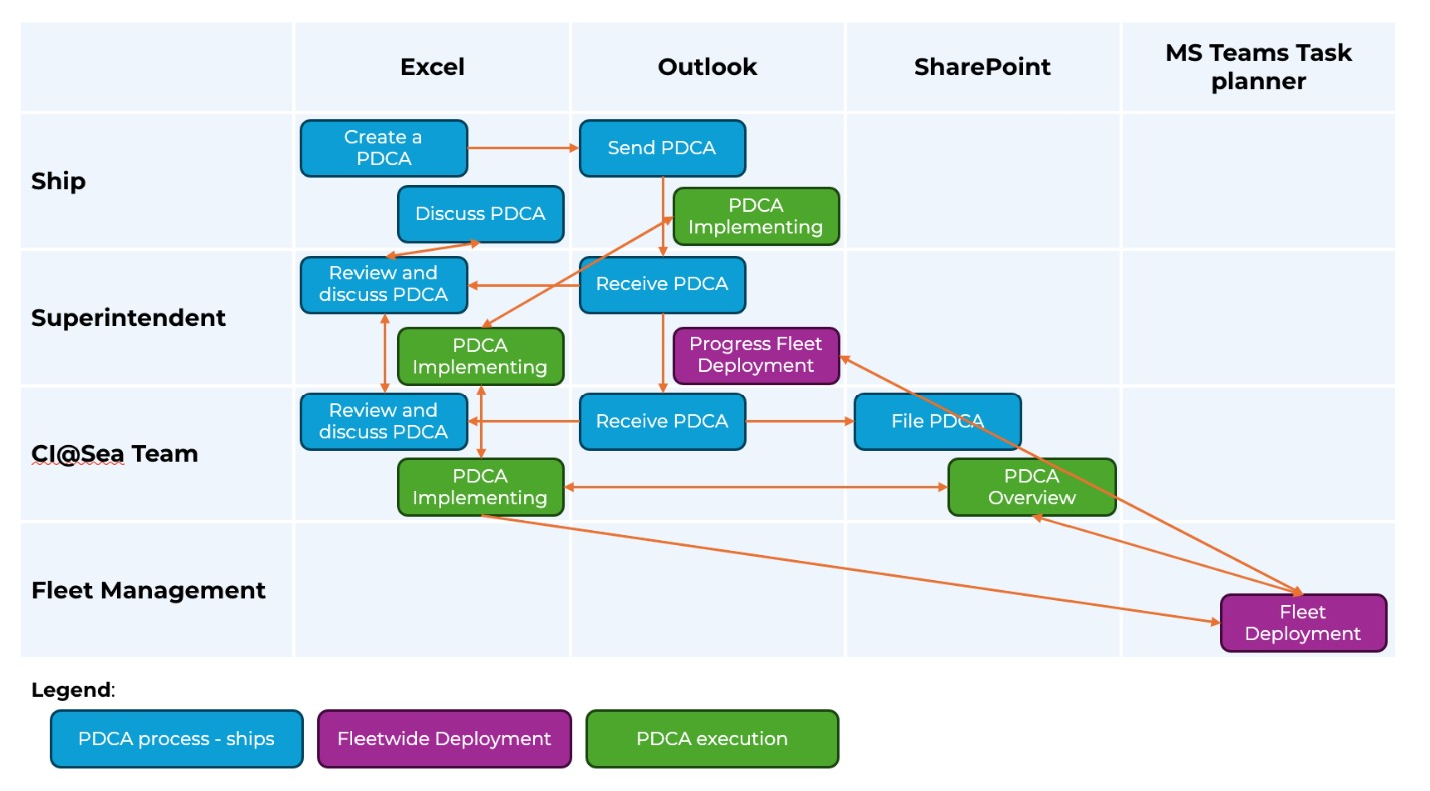 Image 1: PDCA Flow before Cyzag platform implementation.
2. The Solution
2.1 Choosing the Right Tool
Recognising the limits of existing tools, Stolt Tankers began searching for a more scalable, collaborative solution. It needed a platform that could unify ship and shore teams, simplify CI engagement, and give full visibility into PDCA progress. It also had to integrate with their rewards programme and support structured training to build capability across the fleet.
Just as important was alignment with their existing CI methodology. The goal was to enhance their proven processes, not reinvent them. They aimed to make those processes more consistent, interactive, and measurable at scale.
The team conducted a thorough vendor assessment, shortlisting five platforms for detailed evaluation. Simplicity and flexibility were critical. The solution needed to serve a diverse user base, from office staff to seafarers, ensuring it was intuitive and accessible regardless of role, environment, or familiarity with digital tools. After extensive testing, Cyzag was selected as the best fit for a pilot.
One of the reasons why we like Cyzag so much is that there’s a lot of flexibility. You can change the process yourself. In alternative platforms, this wasn’t possible. You needed a lot of support from developers. – Kai, Continuous Improvement Expert
2.2 Pilot Rollout and User Adoption
The platform was first piloted over six weeks on 36 ships, using a train-the-trainer approach. Superintendents received training and supported vessel crews with onboarding, including accessible video tutorials recorded by a port captain.
Adoption was strong from day one. This reflected both the teams’ dedication and the platform’s intuitive design. Cyzag supported guided PDCA workflows, integrated approvals, real-time collaboration, and transparent audit trails. These features directly addressed key challenges in scaling CI.
User feedback played a crucial role throughout the Cyzag pilot. It led to more than 30 platform enhancements, improving both usability and engagement. This collaborative development approach empowered users to actively shape the solution, fostering ownership and sustainable adoption.
My personal feeling is that Cyzag adds great value to the crew’s acceptance of CI and administrative work on PDCAs. Some had a few suggestions on how it could be improved in a practical way, and these suggestions were noted.- Teo, Captain
Cyzag stood out as being very agile, being very open to developing on the fly, and they delivered very fast. It gave us confidence that even during the testing, you were improving, and so I think it was a good choice.- Edo, Fleet Manager
Encouraged by the results, Stolt Tankers approved a fleet-wide rollout. Within six months, the platform was live on 104 ships, with more than 90% adoption, a clear sign of growing engagement and cultural shift across the fleet.
3. The Results: Implementing CI at Scale
Stolt Tankers has transformed Continuous Improvement and how it is managed across its fleet, supported by Cyzag which is live across over 100 ships. Thanks to the commitment of its teams, both at sea and on shore, PDCA cycles have become more structured, visible, and collaborative. What was once a manual, vessel-by-vessel effort is now a connected process, enabling real-time collaboration and knowledge-sharing across the organisation.
The enhanced visibility has also strengthened the company’s rewards and training programs, consistently recognising crew contributions and linking them to meaningful incentives. Improved access to guidance and learning resources continues to build CI capabilities and confidence across the fleet.
Another key outcome of the platform adoption was the transformation of the PDCA flow. During the pilot, Stolt Tankers redesigned the manual process (Image 1) and streamlined it within Cyzag to enhance usability, consistency, and traceability, while maintaining alignment with the company’s CI methodology.
The new, simplified flow, as shown in Image 2, enables information to move seamlessly within a single system. Approvals are automated, PDCA content and status are visible in real time, and reports are generated automatically. The guided, step-by-step workflow with integrated approvals and transparent tracking gives crews a clear structure, improving the overall quality and consistency of PDCA cycles.
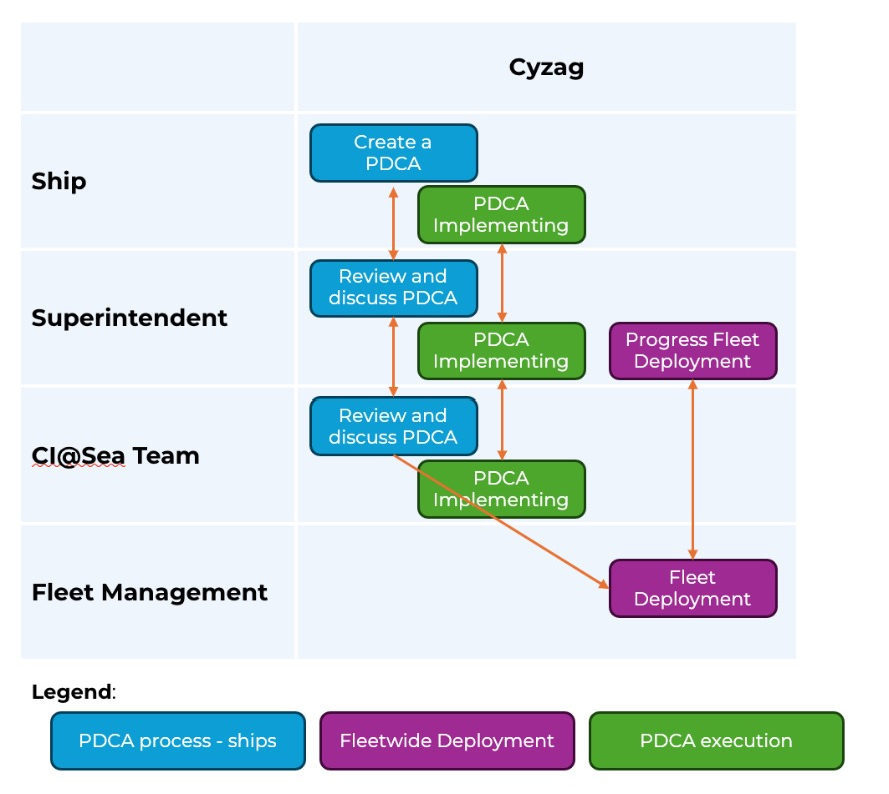 Image 2: PDCA Flow after Cyzag platform implementation.
As a result, PDCA activity tripled during the pilot phase and is now on track to more than double annually, increasing from 180 to 360 cycles. This higher level of activity not only accelerates problem-solving but also helps crew members gain greater experience in applying the PDCA method. With practice, their analyses become sharper and the countermeasures generated through each cycle grow more valuable and impactful.
Cyzag is significantly better accepted than the Excel form, and crew is much more interested in completing PDCA once they start with it in Cyzag… The crew likes it and finds it simple and convenient to use and complete.- Captain Teo
Proactive problem detection has also improved, due to the depth and quality of data input by Stolt Tankers’ teams. For example, in one instance Cyzag’s AI chatbot surfaced recurring equipment challenges early, enabling timely action before formal maintenance issues arose.
Efficiency gains are notable, too. By automating manual updates and progress tracking, Stolt Tankers has freed up a significant amount of time, allowing superintendents to focus more on coaching and leadership.
Most importantly, a strong cultural shift is evident. Ship and shore teams share ownership of CI, actively learn from each other, and focus on root causes and sustainable improvements, moving beyond task completion to truly enhancing operations.
4. Next Steps
Building on strong adoption and growing engagement, Stolt Tankers is focused on deepening the integration of continuous improvement into everyday operations—embedding it not as a standalone programme, but as a fundamental part of how work gets done across their global fleet.
Key priorities include:
-
Deeper integration: Plans are underway to connect Cyzag with other enterprise systems, streamlining data flows and enhancing visibility across operations. This will empower smarter decision-making and further break down information silos.
-
Expanding platform use: The flexibility of Cyzag opens the door to digitising additional processes within the CI@Sea programme, including supplier evaluation, change management (MOC), audit forms, and work permits. These expansions will enable faster innovation and greater local ownership.
-
Reinforcing culture: Building on informal recognition already in place, Stolt Tankers is developing more formal ways to acknowledge and reward crew contributions to CI. This will sustain enthusiasm and further embed the mindset of continuous improvement at every level.
With a solid platform and an engaged workforce, Stolt Tankers is well-positioned to sustain and scale its continuous improvement ambitions, driving stronger collaboration, smarter operations, and lasting performance gains across the fleet.
Follow Cyzag on LinkedIn for new articles and stories.