Digital Lockout Tagout: How to Improve Safety, Compliance and Daily Operations
Discover how Digital Lockout Tagout improves safety, reduces errors and strengthens compliance. Learn practical ways to digitalise LOTOTO.
5 min read
In manufacturing, Lockout–Tagout–Tryout (LOTOTO) remains one of the most critical safety processes in manufacturing. It prevents accidental energy release, protects maintenance teams, and ensures equipment is restored safely to operation. And yet, in many plants today, LOTOTO still relies on paper tags, manual logs, and fragmented communication, precisely the gaps that digital Lockout Tagout aims to eliminate.
Digitalising LOTOTO is not about replacing safety fundamentals; it’s about bringing structure, traceability, and real-time collaboration to a process that is inherently complex and high-risk.
Why Traditional LOTOTO Still Breaks Down
Incorrect energy isolation continues to cause thousands of injuries and dozens of fatalities each year. According to the U.S. Occupational Safety and Health Administration (OSHA), proper compliance with Lockout/Tagout procedures prevents an estimated 120 fatalities and 50,000 injuries annually in the United States alone. Although these figures are U.S.-based, the trend is global. LOTOTO failures remain a major factor in serious incidents across manufacturing, chemicals, energy, and heavy industry. European regulators, including EU-OSHA and the UK HSE, consistently highlight inadequate energy isolation as a recurring cause during maintenance and non-routine operations.
Many of these failures stem from the limitations of traditional, paper-driven LOTOTO. Tags get lost or damaged. Handwritten notes are misunderstood. Shift teams struggle to understand which isolations are active. Verification steps are inconsistent or delayed during busy periods. Because the process relies heavily on manual discipline, even small communication gaps can escalate into significant safety risks.
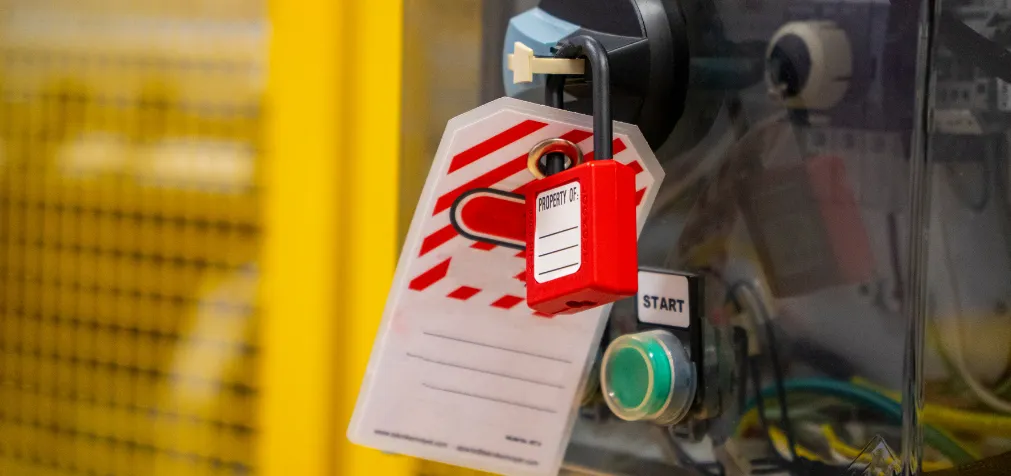
Digital Lockout Tagout addresses these weaknesses by centralising information, guiding teams through the correct sequence, and providing real-time visibility across departments and shifts.
Two Practical Ways to Digitalise LOTOTO
Digitalisation should adapt to the plant’s maturity, not force a single approach. Cyzag supports two complementary models that allow plants to start immediately and then evolve.
1. IoT-Enabled Smart Locks
Some plants choose to use IoT-connected locking devices. These devices physically isolate the energy source and report their status directly into the system. As a result, teams can see lock status in real time, receive alerts if something changes, and access an accurate isolation map at any moment. This approach works well for sites with strong automation or where remote supervision is essential.
2. Digital Lockout Tagout Without IoT
Most plants begin digitalisation here because it requires no new electronic hardware and fits naturally into existing safety practices. Importantly, the physical procedure does not change: technicians still apply real lockout devices to valves, breakers, and isolation points. The difference is that digital tools make the process clearer, more consistent, and easier to monitor.
In this model, QR codes are optional and can be used strategically. Many plants place a single QR code on the equipment or asset to open the correct LOTOTO procedure. Others choose to tag only a few high-importance isolation points, such as main valves or electrical breakers. This selective approach avoids unnecessary tagging while still supporting accurate identification and traceability.
When QR codes are used, technicians scan the code and confirm physical lock placement with a photo. This evidence is timestamped and stored automatically. When QR codes are not present, the same steps are completed through the digital workflow interface, ensuring consistency in both cases. The system guides users through each stage of the procedure in line with recognised standards such as ISO 45001, the EU Machinery Directive, and HSE guidance.
Supervisors then gain real-time visibility of all active isolations across the plant. They can see which equipment is locked, who applied the lock, and whether verification has been completed. Paper disappears entirely, and teams no longer rely on handwritten notes or scattered checklists.
This version of Digital Lockout Tagout provides immediate improvements in consistency, control, and compliance while keeping the physical lockout process.
Importantly, both models work together. Plants can start with procedural digital LOTOTO and later adopt IoT locks without changing the workflow.
How Cyzag Supports LOTOTO and Maintenance Work
LOTOTO and maintenance are closely linked, since many isolations occur during inspections, repairs, or corrective actions. The Cyzag platform supports this connection by giving teams clear visibility of which assets are isolated, who applied the locks, and when equipment will be ready for work.
Cyzag is not designed to replace full maintenance workflows. Instead, it complements them. When desired, Cyzag can integrate with platforms such as SAP PM, so that LOTOTO status aligns with work orders and equipment availability. This reduces duplicate data entry and helps teams avoid miscommunication. However, integration is optional.
Whether used on its own or connected to existing maintenance tools, Cyzag strengthens the link between operations, EHS, and maintenance by ensuring LOTOTO information is accurate, visible, and easy to manage.
What Plants Gain From Digital Lockout Tagout
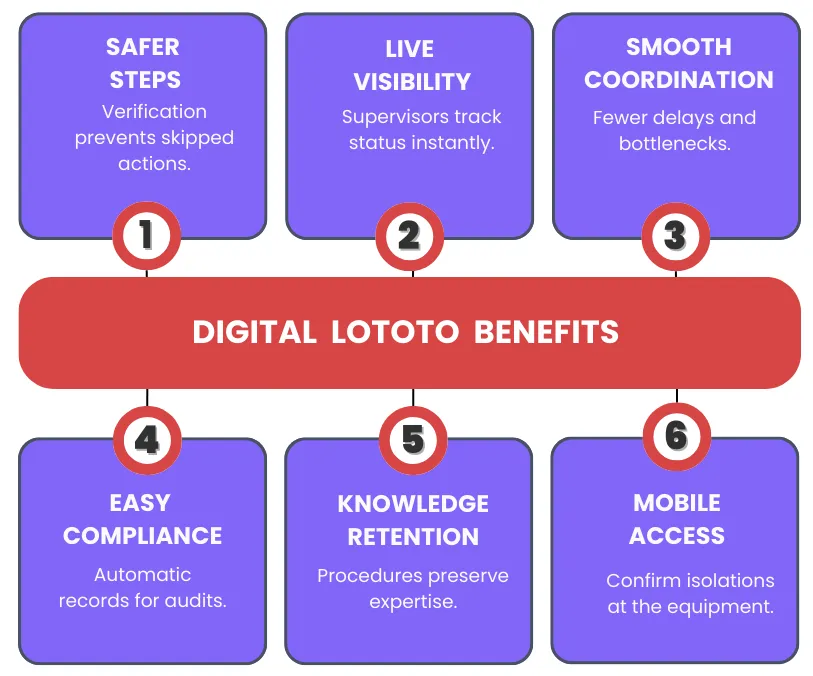
The benefits of digitalisation become visible almost immediately. By enforcing essential steps such as verification, sign-off, and tryout, Digital Lockout Tagout reduces the risk of error and makes it harder for critical actions to be skipped or misunderstood. Mobile access allows technicians to follow procedures, record evidence, and confirm isolations directly at the equipment, eliminating the need to return to a control room or chase paperwork.
Supervisors gain real-time visibility of all active isolations through clear dashboards, making it easier to coordinate parallel work, manage shift handovers, and detect issues early. This reduces bottlenecks that traditionally slow down maintenance and operations, and it creates a more predictable workflow across the plant.
Compliance also becomes more straightforward. European frameworks such as ISO 45001, the Machinery Directive, and HSE guidance place strong emphasis on documentation and traceability. A digital LOTOTO system automatically generates and stores these records, significantly reducing preparation time for audits or incident reviews.
Finally, digitalisation supports knowledge retention. Guided procedures help new technicians follow best practices consistently, while digital records preserve operational know-how that might otherwise be lost as experienced workers retire or move to other roles.
Challenges and How to Address Them
Transforming LOTOTO requires attention to behaviour, not just tools. Many plants initially create workflows that are too complex. Others underestimate the need for frontline involvement. Connectivity in remote areas can also create barriers. And some teams resist change when they are used to a paper-based process.
The key is to start simple and improve gradually. Many plants begin by digitalising LOTOTO in lower-risk or more predictable areas, allowing teams to become familiar with the new process before extending it to more complex operations. A clear, easy-to-follow workflow builds confidence, reduces frustration, and demonstrates quick wins. When technicians see that digitalisation removes ambiguity, speeds up coordination, and reduces delays, adoption grows naturally.
Conclusion
Digital Lockout Tagout strengthens one of the most essential safety processes in industrial operations. Whether supported through structured digital workflows, selective QR-code identification, or IoT-enabled smart locks, digitalisation brings greater reliability, clearer communication, and stronger consistency to LOTOTO. It also connects the procedure with maintenance and daily operations, reducing uncertainty and improving how teams coordinate work.
At a time when industrial plants must operate safely, efficiently, and with limited resources, modernising LOTOTO is no longer optional. It is a practical and achievable step toward safer, leaner, and more resilient operations. Book a demo and discover how.
Follow Cyzag on LinkedIn for new articles and stories.