AI in Manufacturing: How It’s Solving the Ageing Workforce Challenge
Discover how AI in manufacturing helps bridge the ageing workforce gap by automating routine tasks, supporting RCA, and preserving expertise.
4 min read
Debates about artificial intelligence often fall into two extremes. Some fear that AI will take millions of jobs, leaving people behind. Others imagine a world where robots handle every repetitive task, freeing humans entirely from routine work and transforming factories into fully automated ecosystems. In manufacturing, however, the truth lies somewhere in between.
AI in manufacturing ageing workforce discussions are not about replacement; they’re about balance. AI is helping people work smarter, not disappear. By automating routine decisions, simplifying complex analysis, and connecting data to action, it allows teams to focus on creativity, problem-solving, and continuous improvement.
This shift is crucial, because the industry faces one of its biggest challenges yet: an ageing workforce and a declining number of new professionals joining the field.
A Generational Shift in Manufacturing
Across the world, manufacturers face the same demographic challenge. Experienced operators, technicians, and engineers, those who carry decades of process knowledge, are nearing retirement. At the same time, fewer young professionals are choosing industrial careers.
In the United States, workers aged 55 and older now account for 26% of the manufacturing workforce, as researched by the U.S. Bureau of Labor Statistics. In the United Kingdom, the picture is similar: around 20% of manufacturing workers are aged 55 or above, showing the same ageing trend across industrial economies, as indicated by Opus LLP.
This reality is well recognised by industry leaders. According to a report from the Manufacturing Institute, almost all (97%) of manufacturing firms report being aware of the ageing of their workforce, and 78% indicate they are very or somewhat concerned about this change.
Even more concerning, nearly all firms (97%) express at least some level of concern about brain drain —the loss of institutional and technical knowledge as experienced workers retire — and almost half describe themselves as “very concerned.” Many also anticipate associated challenges such as labour shortages, declining productivity, and rising costs.
This growing imbalance threatens knowledge continuity; yet it also opens the door for AI to become a bridge between generations.
AI as the Bridge Between Experience and the Future
AI does not replace decades of know-how; it helps capture, connect, and extend it. Through intelligent data processing, natural-language search, and context-aware recommendations, AI in manufacturing acts as a living knowledge repository, keeping expertise accessible and actionable.
When embedded into daily work, AI can:
-
Surface insights instantly. Operators and engineers can describe an issue in natural language and retrieve related incidents or best practices from past cases.
-
Support Root Cause Analysis (RCA). AI compares current conditions with historical data and suggests probable causes based on patterns and resolutions.
-
Preserve expertise. Lessons learned stay within the organisation long after senior staff retire.
As Carolyn Lee, Executive Director of the Manufacturing Institute, notes in their report: “Manufacturers are utilising the expertise of their older workers, implementing policies and procedures to keep them longer and creating opportunities to pass on their knowledge and talents to the next generation.”
How AI Strengthens Every Role
AI’s impact varies across levels of responsibility, but in every case, it amplifies human judgement and reduces the strain caused by the ageing workforce. The image 1 illustrates how AI impacts different roles across manufacturing, from operators to directors, helping bridge the ageing workforce gap through smarter work and shared knowledge.
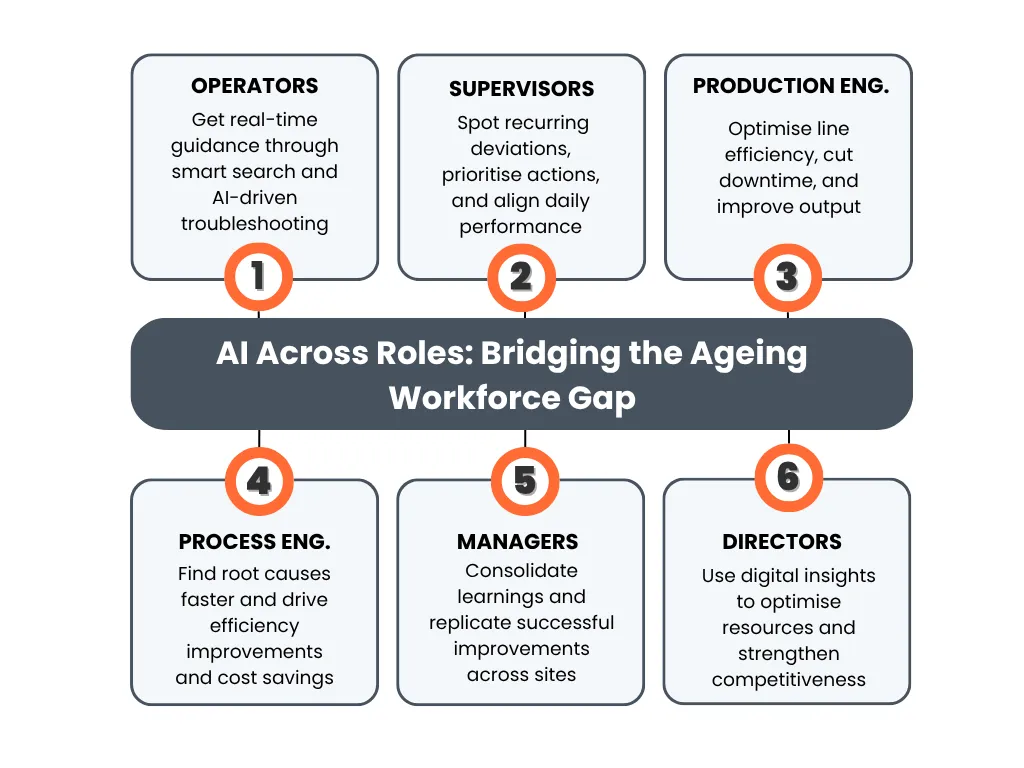
Image 1: How AI impacts different roles across manufacturing, helping bridge the ageing workforce gap through smarter work and shared knowledge.
Practical AI manufacturing examples already show how data-driven insights can boost efficiency, improve communication, and foster collaboration across disciplines. Rather than replacing people, AI acts as a force multiplier for human expertise, stimulating innovation and smarter decision-making on the shop floor.
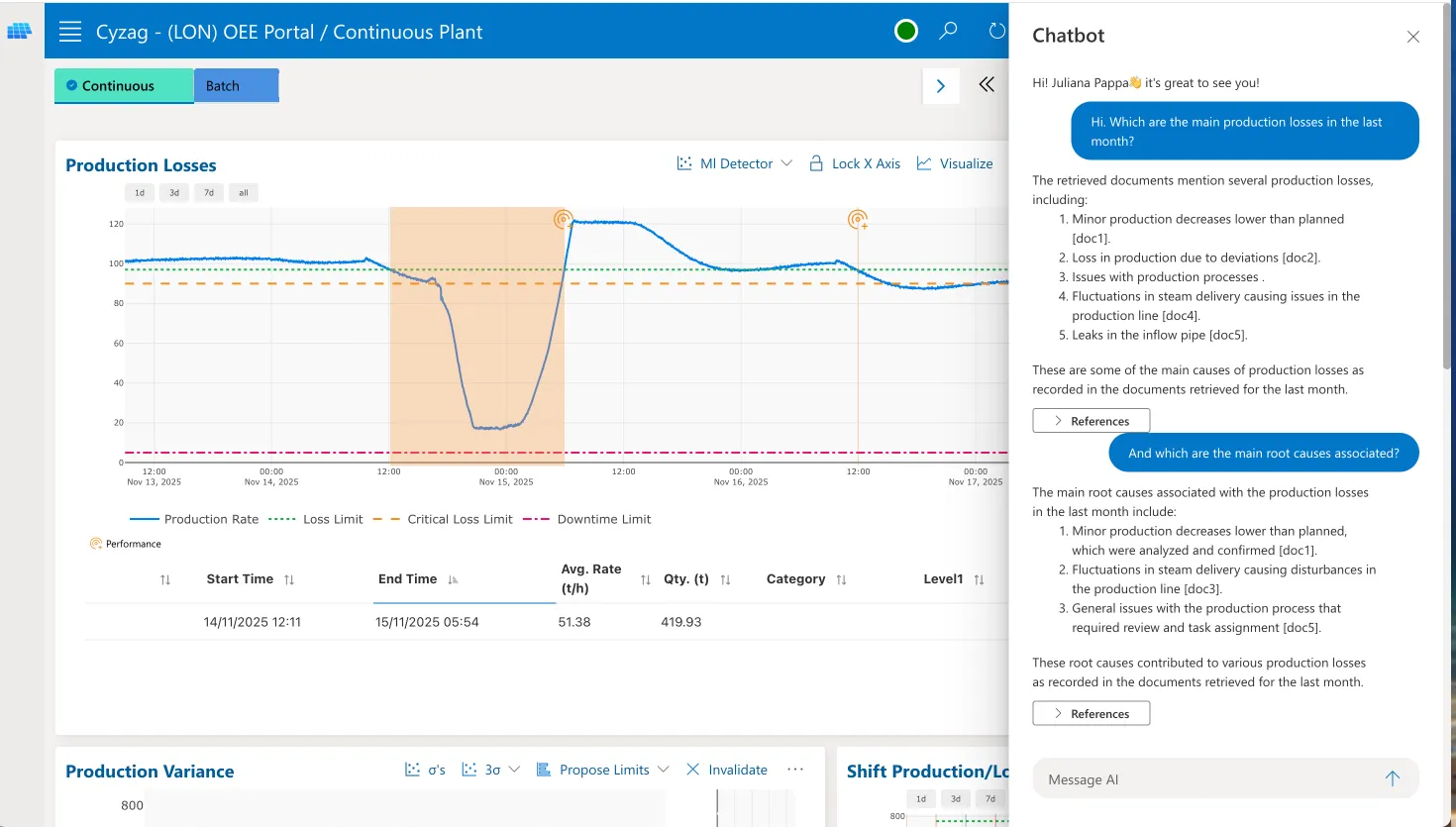
Image 2: Cyzag AI chatbot in manufacturing supports operators and engineers in identifying production losses and their causes, helping bridge knowledge gaps in an ageing workforce.
From Knowledge Retention to Collective Intelligence
Beyond specific roles, AI in manufacturing transforms how organisations learn and evolve. By analysing data from operations and past incidents, it identifies where teams need guidance, turning every deviation and improvement into shared learning. Instead of depending on who remembers what, companies build collective intelligence, a system where expertise is available to everyone, every shift.
This approach not only preserves institutional knowledge but also makes manufacturing more appealing to younger generations who expect modern, data-driven workplaces.
The Future of Work: Human + AI
AI is now part of everyday industrial life. Resisting it would mean missing out on faster insights and smarter decisions. When people embrace it, they gain time for what matters most: creativity, collaboration, and problem-solving.
The future of work is not humans versus AI but humans with AI. Machines handle the routine; people bring the understanding. Together, they create a more resilient, knowledge-driven manufacturing industry.
AI in Practice
At Cyzag, we see this every day. AI features such as Smart Search, intelligent RCA suggestions, and connected knowledge repositories already help manufacturers retain expertise and empower their teams. They make confident, data-driven decisions possible, without losing the human element that drives operational excellence. Book a demo and discover how.
Follow Cyzag on LinkedIn for new articles and stories.