How To Deliver Sustainability From The Shop Floor Up
Let’s get back to basics and discuss sustainability concepts and how the shopfloor can contribute to a greener future.
Updated 12 March 2025 3 min read
The scale and diversity of the process industry position it as a formidable force, offering extensive opportunities to play a pivotal role in the realisation of Sustainable Development Goals (SDGs) by 2030. Now, the process sector must explore avenues beyond breakthrough innovations and materials.
The shop floor plays a crucial role in building a more sustainable future. Let’s get back to the basics of sustainability.
 The Sustainable Development Goals (SDGs): The EU introduced “extended producer responsibility” as part of the Sustainable Development Goals (SDGs), urging manufacturers to prioritise reuse, recycling, and material recovery over landfill disposal while also enhancing the Waste Framework Directive.
The Significance of the Process Industry
The process industry is a massive global business, generating four trillion dollars in revenue. It directly and indirectly employs over 20 million people. As the largest industrial energy consumer, it plays a significant role in global energy use. Additionally, it ranks as the third-largest contributor to direct CO2 emissions. Additionally, the industry accounts for approximately 11% of the global primary demand for oil and 8% of natural gas. These staggering numbers underscore the imperative for all stakeholders to actively contribute to improving sustainability.
Understanding Sustainability Pillars
While environmental sustainability often takes center stage, true sustainability comprises three pillars: the environment, society, and the economy. First articulated in the Brundtland Report in 1987, these pillars serve as the foundation for sustainable development. Achieving sustainability is only possible when environmental protection, social equity, and economic profitability coexist harmoniously.
Sustainability in Action
Beyond the broad strokes of environmental consciousness, sustainability within the process industry involves practical measures at the plant operations and, more importantly, the shop floor. Key initiatives include waste prevention, reduced feedstock usage, lower carbon footprint, enhanced energy efficiency, and minimised accident potential.
Empowering the Shopfloor
A growing number of organisations are recognising the symbiotic relationship between sustainability and business strategy. Moreover, integrating sustainability into the corporate ethos not only benefits the planet but also provides an opportunity to reduce operational costs. Enabling the workforce on the shop floor becomes a powerful catalyst for waste reduction and process improvement. As a result, the connection between sustainable development and efficiency becomes evident, creating a win-win situation for both the business and the environment.
Digitalisation and Sustainability
Digitalising the shop floor emerges as a transformative strategy to bolster sustainability efforts. By automating processes, streamlining operations, and optimising resource consumption, organisations can make significant strides in reducing operational costs and environmental impact. A practical example is showcased in a control room where the focus was on minimising feedstock consumption and associated CO2 emissions through data-driven insights.
A Practical Example
In a control room aiming to reduce feedstock consumption, the journey began with configuring boards, trends, and drill-downs to meet specific needs. The emphasis was on the quick identification of losses and the ability to manipulate process parameters for generating insights. The data collected paved the way for root cause problem-solving (RCPS) and the identification of solutions to improve steam efficiency.
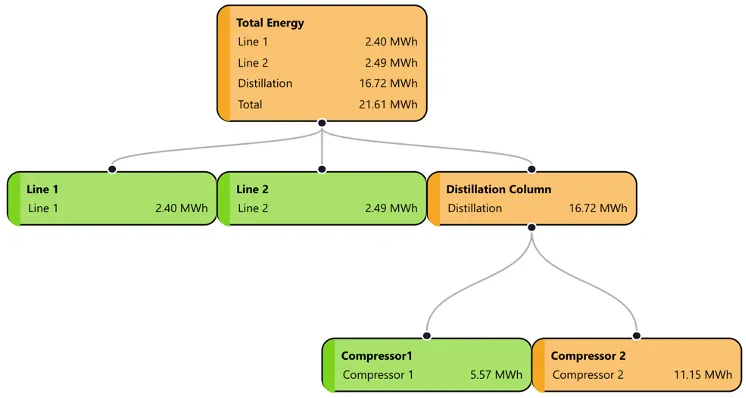 Parameter Drilldown in the Cyzag platform.
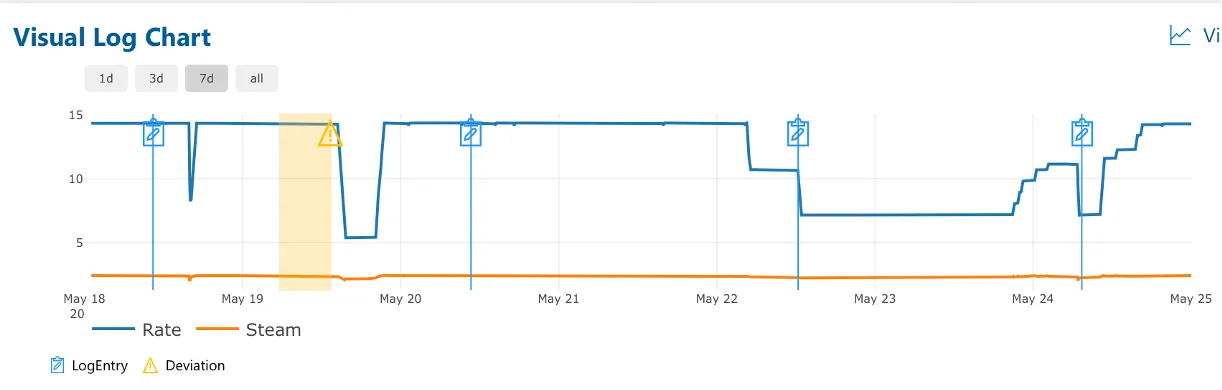 Visual log charts within the Cyzag platform.
Summary
Ultimately, achieving sustainability in the process industry requires leveraging the workforce’s collective knowledge. Their experience plays a crucial role in driving meaningful improvements. Standardisation and horizontal deployment of use cases foster collaboration, breaking down silos and leading to increased innovation. Digitalisation emerges as the main factor for engaging employees in sustainable practices, impacting every shift and every day.
Book a demo with us today to witness the transformative power of digitalisation in building a more sustainable business.
Follow Cyzag on LinkedIn for new articles and stories.