Delivering Better OEE in Food and Beverage Operations
OEE alone won’t drive results in food & bev manufacturing. It’s people who turn data into action and make performance improvements stick.
Updated 28 April 2026 7 min read
OEE Without Action is Just a Number
Overall Equipment Effectiveness (OEE) is a core metric in food and beverage manufacturing, offering a snapshot of how effectively equipment is used by measuring losses across availability, performance, and quality. However, despite its widespread use, OEE often fails to drive meaningful outcomes. Why? Because OEE by itself, especially when treated purely as a data metric, cannot improve performance. Actionable OEE stems from a combination of high-quality data, effective processes, and, most importantly, engaged people.
In many plants, OEE numbers are still manually compiled using spreadsheets, operator estimates, or disconnected systems. This fragmented data leads to misleading KPIs and weak decision-making. Yet even in digitally advanced plants, excellent data can lead nowhere if people don’t trust it, act on it, or see it as relevant to their daily work.
The real value of OEE lies not in the number itself but in the behaviours it encourages and the actions it drives. For example, availability losses, especially micro-stoppages, often go unrecorded or underreported. These seemingly minor stops can hide up to 40% of total downtime in the food industry, but if teams don’t engage with the system or see the relevance of logging them, they remain invisible.
You’ve Got the Data. So Why Aren’t You Improving?
One common obstacle isn’t the lack of data, but its fragmentation. Most plants operate using a combination of PLCs, SCADA, MES, ERP, and offline systems, as well as handwritten logs. Operations, maintenance, and quality departments often keep separate records and interpretations. Without a single source of truth, evaluating performance and defining priorities becomes a matter of guesswork.
This fragmented setup leads to three recurring problems:
-
Minor stops and micro-downtime often go undetected, even though they account for a significant share of lost time.
-
Operators under-report events, not because they don’t care, but because the recording process is burdensome or unclear.
-
Improvement efforts stall as poor-quality data erodes confidence and makes it difficult to measure actual progress.
Without a unified view of performance, teams rely on assumptions instead of insights. Integrating systems to create a single source of truth is essential, not just for accuracy, but to enable collaboration and accountability. It’s this integration, combined with human engagement, that transforms OEE from a report into a continuous improvement tool.
Why Isn’t OEE Delivering Results in Your Plant?
While integrating systems to create a single source of truth is essential, it’s only part of the solution. Traditional OEE improvement efforts often prioritise data accuracy and system integration, and these are critical enablers. However, they do not guarantee meaningful results on their own.
Many high-performing sites have shown that even with incomplete data, strong collaboration, structured routines, and ownership from the shop floor can lead to measurable gains. Conversely, sites with perfect dashboards but no team engagement struggle to make improvements stick.
That’s why leading food and beverage manufacturers are shifting towards an outcome-based approach to OEE, one that combines accurate, integrated data with process ownership and behavioural change. This means:
A digital operations platform enables food and beverage plants to:
-
Involving operators in shaping how losses are categorised and recorded.
-
Simplifying data entry so it fits naturally into the workflow.
-
Using visual tools that teams can act on during the shift—not just in the boardroom.
-
Reinforcing routines that connect data to daily decisions.
-
Creating feedback loops so improvements are visible and celebrated.
Example 1: Reducing Micro Stoppages in Butter Production
At a food manufacturer producing plant-based butter in tubs, the operations team faced recurring performance issues during specific batch runs. While the line had no major breakdowns, it consistently underperformed against production targets due to frequent minor disruptions.
The team suspected micro stoppages—brief interruptions lasting under two minutes—but struggled to measure their true impact. Their existing system relied on manual operator logs in disconnected spreadsheets. Given the high production pace and focus on completing batches, many micro stoppages went unrecorded, making it difficult to spot recurring patterns or identify root causes.
To address this, the company implemented a digital platform. During the implementation of the Cyzag digital platform, the production team played an active role in configuring the system. Operators and supervisors participated in workshops to define the reason tree structure in a way that would allow them to act directly on issues, moving away from overly generic categories that didn’t support decision-making. They also provided feedback on using meaningful functional location tags, allowing events to be traced precisely to the equipment zones they were most familiar with.
Once live, the platform introduced automated monitoring for micro stoppages, while still allowing operators to add short contextual notes. This combination of structured data and shopfloor input gave new clarity. The team discovered that specific high-fat batches triggered nozzle blockages at the filling station. Cleaning protocols were revised, and pressure sensors were installed to detect flow irregularities in real time.
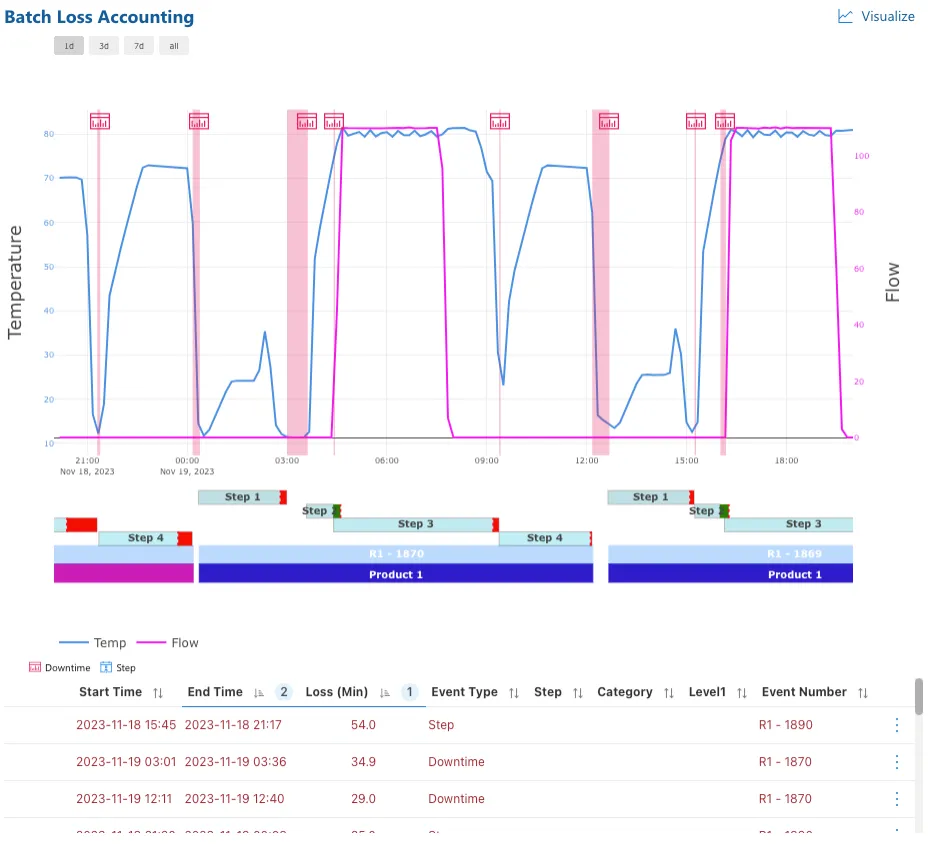 Image 1- Batch Loss Accounting in Cyzag, improving OEE in Food and Beverage plants.
The result: micro stoppages were reduced by 42%, and OEE improved by 5.8%. But the real success came from operators taking ownership, recognising patterns, and helping define the corrective actions.
Example 2: Proactively Adressing Quality Deviations in Yoghurt Cups
At a dairy plant, underfilled yoghurt cups were flagged during quality checks. The investigation linked the issue to a partially clogged fill head, which had gone unnoticed during the shift. Because stoppages weren’t consistently logged, there was no early warning.
During the rollout of the Cyzag platform, shopfloor teams, including operators, maintenance, and quality technicians, were directly involved in shaping how data would be visualised and used. Their familiarity with the process enabled quick configuration of relevant parameters and views that reflected actual production concerns. They also contributed ideas on how to improve visibility into problem areas, including trends that weren’t previously correlated, such as fill variation and minor stop frequency.
Some team members began developing their own visual components and logic through Cyzag’s no-code tools, becoming early citizen developers. This new capability enabled operational teams to respond more quickly to emerging needs, such as tracking fill-weight trends by SKU or monitoring pulp variation deviations alongside cleaning frequency. Teams also used the integrated AI chatbot to spark discussions around root causes, compare historical patterns, and bring new perspectives into shift meetings.
With digital tracking and real-time dashboards in place, the plant began to correlate minor stops and fill variability. A root cause analysis linked the problem to changeovers with specific fruit pulp variations. The team updated CIP procedures, replaced the fill head, and added visual indicators to alert operators when pressures dropped.
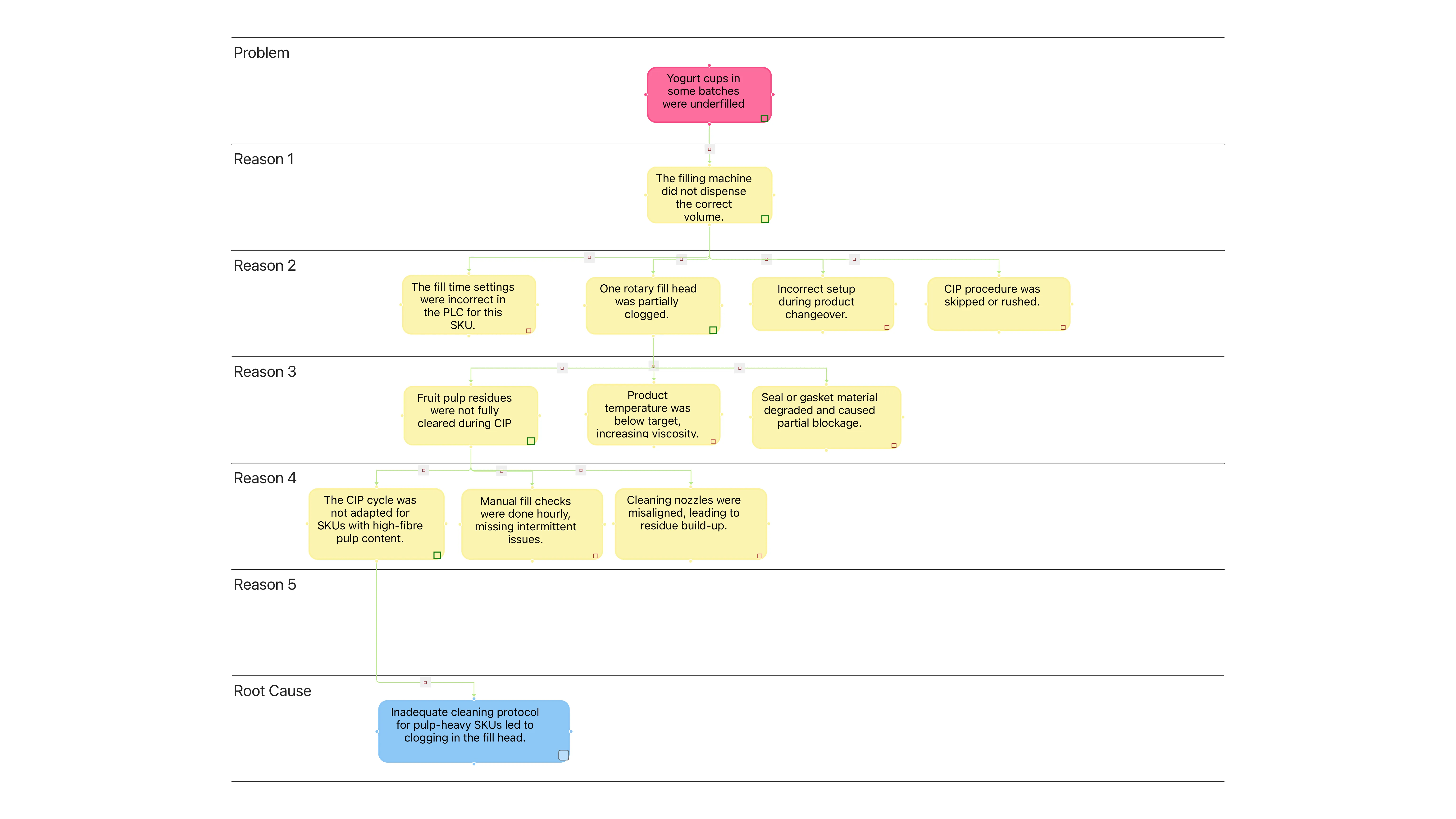 Image 2- Quality issues quickly identified and evaluated with RCA can improve OEE in Food and Beverage plants.
Minor stoppages fell by 24%, and underfill issues were brought under control. However, the bigger success came from enabling frontline workers to investigate problems, explore data, and contribute to solutions, thereby integrating digital tools into the team’s daily routine.
OEE That Drives Results: From Firefighting to Proactive Teams
OEE is not just a metric, it’s an improvement tool. But it only works when the data is trusted, the system is usable, and teams feel accountable for outcomes. A digital platform like Cyzag helps integrate data sources, automate tracking, and make insights visible. More importantly, it supports the processes and behaviours that turn information into action.
With real-time data, collaborative workflows, and tools that fit into the flow of work, teams shift from firefighting to prevention. Operators see how their actions impact performance. Continuous improvement leaders have baselines to scale progress. And management gains visibility into what’s working and why.
Conclusion: People-Driven OEE is Better OEE
In food and beverage manufacturing, improving OEE isn’t just about better data; it’s about better decisions and better routines. Plants that focus on outcome-based OEE, linking data with action, accountability, and people empowerment, are the ones seeing real gains in productivity, quality, and efficiency.
Whether you’re starting from spreadsheets or already collecting real-time signals, the key is to align measurement with motivation. When teams can see, trust, and act on performance data, continuous improvement becomes a daily reality, not just a goal. Build tools and processes that work for your people, not just your KPIs, and OEE will stop being a number and start being a catalyst for lasting change.
Ready to make OEE work for your team?
Book a demo to see how frontline teams, engineers, and CI leaders are using outcome-based OEE to take ownership, collaborate across shifts, and turn everyday insights into lasting improvements. Discover how to connect data to action, so your team can drive change where it matters most.
Follow Cyzag on LinkedIn for new articles and stories.