Strategies For Change Management In The Process Industry
Change management is an approach to transitioning individuals, teams, and organisations from a current state to a desired future state.
Updated 12 March 2025 3 min read
Is sustaining change a difficult task for you? Within the process industry, change is not just inevitable; it’s essential for survival and growth. But making change stick can be a daunting task. Whether you’re a process engineer, a plant manager, or a continuous improvement specialist, mastering change management is vital for success.
Let’s get back to the basics of Change Management and explore strategies to ensure sustainable change in the process industry.
Understanding Change Management
Change management is a structured approach to transitioning individuals, teams, and organisations from a current state to a desired future state. It encompasses various elements, including new business processes or technologies, organisational structural changes, and cultural shifts. The primary goal of change management is to maximise the benefits for all stakeholders while minimising the risk of failure.
The Two Sides of Change Management
Managing change involves balancing two key aspects: the “hard” side and the “soft” side. The hard side includes factors such as project timelines, executive commitment, and the extra workload on employees. On the other hand, the soft side deals with cultural aspects, resistance to change, and motivation. Success in change management lies in effectively addressing both factors.
Strategies for Leading Change in the Process Industry
Implementing change in the process industry requires a systematic approach. Here are some strategies to lead change effectively:
1. Establish a Clear Baseline: Set clear benchmarks and regularly review progress to maintain momentum and adjust plans as needed.
2. Communicate Goals and Strategies: Clearly define objectives and strategies and ensure consistent communication to build trust and alignment among stakeholders.
3. Measure Progress Methodically: Track specific metrics to gauge progress, celebrate small wins, and sustain morale.
4. Encourage and Model Success: Foster a supportive culture that encourages learning from failures, with leaders serving as role models for the desired change.

5. Ensure Sustainability of Changes: Make desired behaviours easy to follow, update policies or incentive structures, and provide training to support ongoing changes.
Tips for Success in Change Management
Here are five additional tips to help ensure the success of change initiatives in the process industry:
1. Embrace a User-Centric Approach: Embrace a user-centric approach in your design, prioritising your customers’ needs and environment, whether you are modifying equipment or crafting digital solutions. Simplify complexity by addressing the specific issues of users rather than overloading them with unnecessary data and graphics (engineers love that).
2. Involve Key Stakeholders: Process operators and their leaders are key stakeholders. Listen to them, incorporate their knowledge and keep them informed as much as possible. If possible, make them part of the change team.
3. Conduct Pilot Tests: Site and plant managers need to understand and support your initiative. Equally, front-line leaders must understand why change is needed and feel part of it. That’s the only way they will support the adoption of the change long-term.
4. Gain Support from Management and Front-Line Leaders: Process operators are the ones that will sustain (or not) the plant changes. They must understand what it is for them and how the change will make their lives easier and more efficient. Or maybe harder. No matter what, communicate with clarity and transparency.
5. Communicate Transparently: Whenever feasible, conduct pilot tests before proceeding with complete implementation. These test phases can enhance speed, quality, and trust.
Harnessing Digital Tools for Change Management
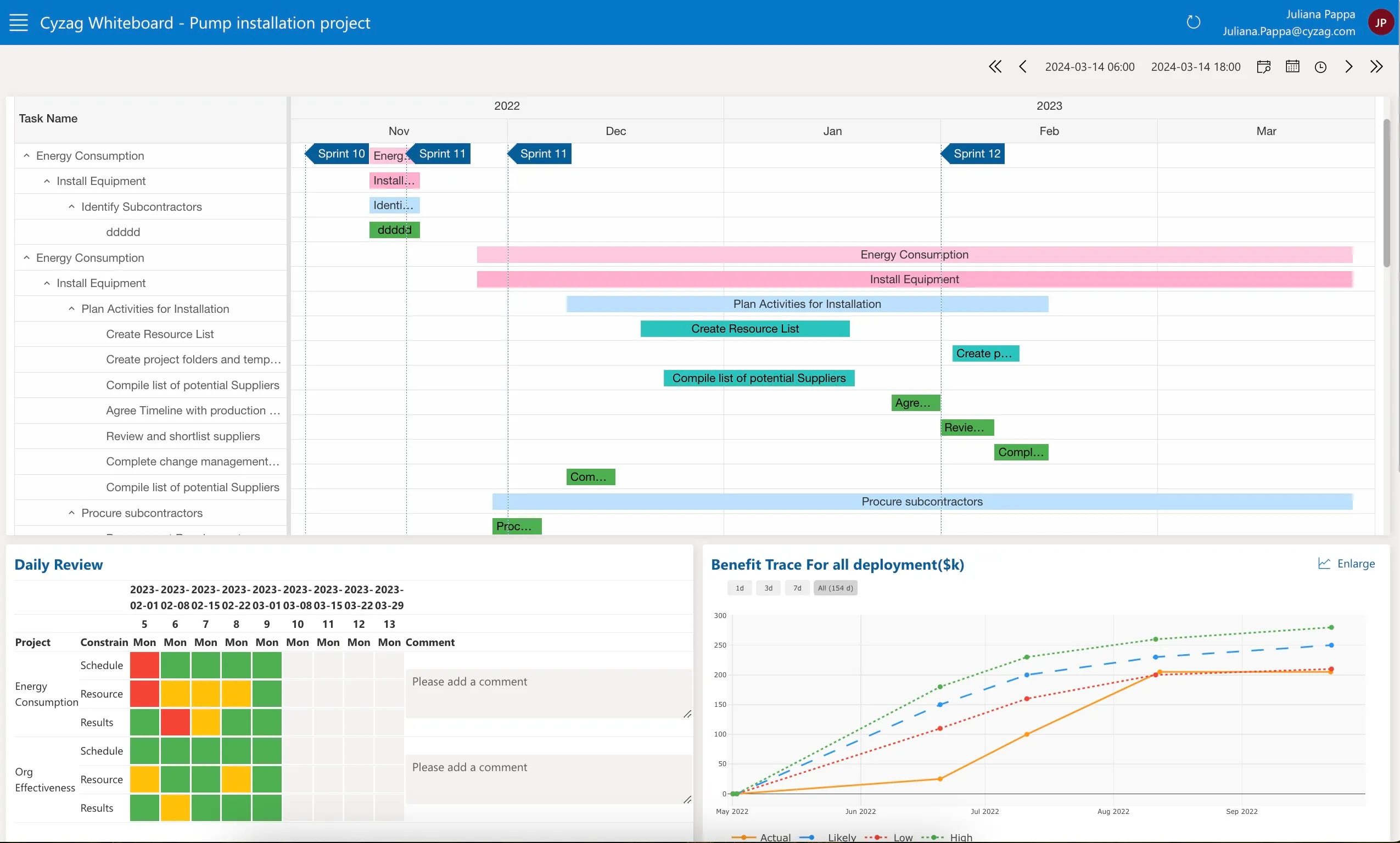
Digital tools like the Cyzag Platform can streamline the change management process by providing transparency by creating a change initiative board and keeping important information organised, updated and accessible.
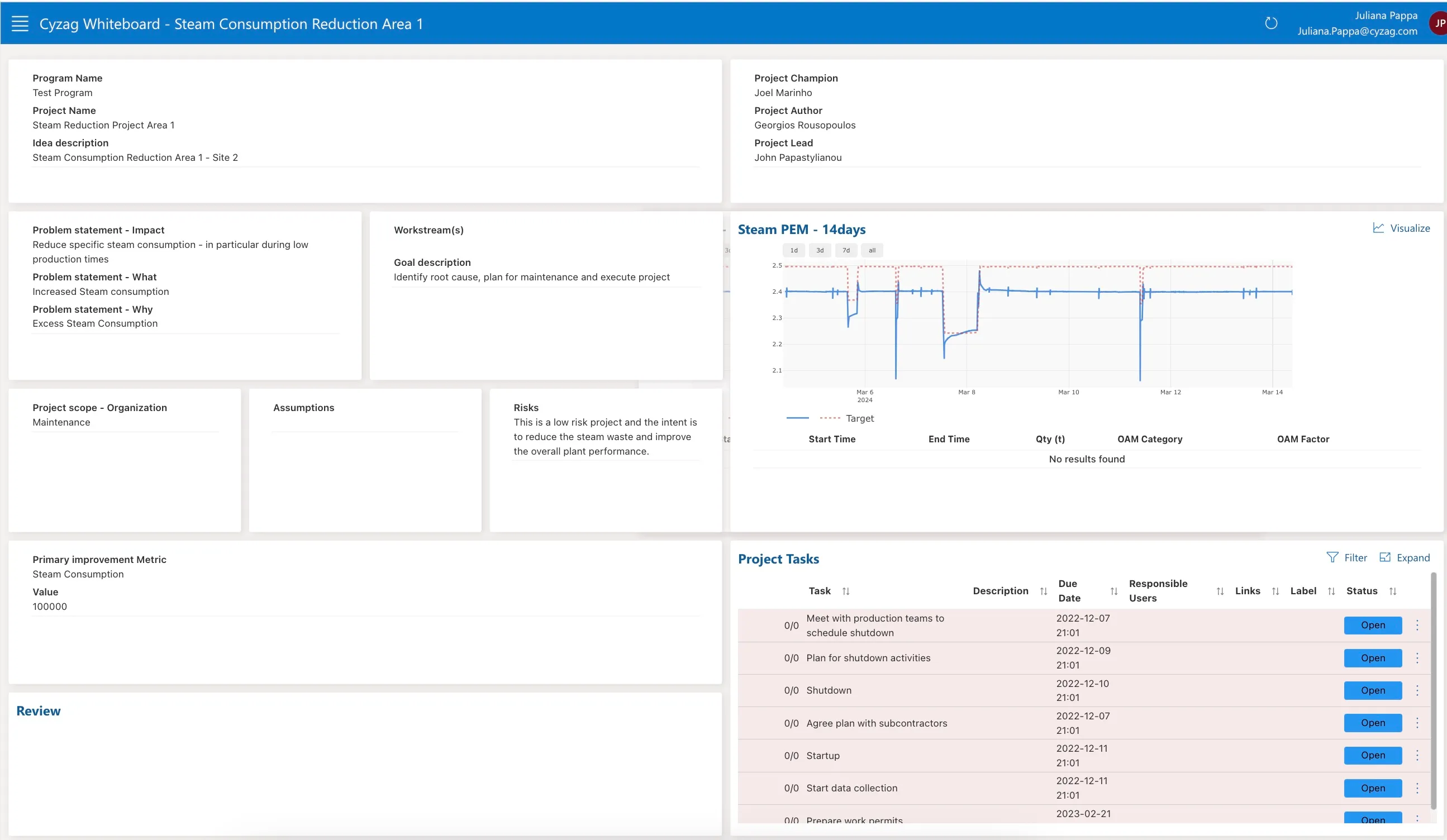
Also, users can develop an initiative schedule, such as Gantt charts and Sprint views, to guarantee on-time actions. Conduct data analysis, get all data needed for the baseline, and measure progress/ success.
Summary
In conclusion, sustaining change in the process industry requires a combination of strategic planning, effective communication, stakeholder engagement, and the right tools. By following these strategies and tips, organisations can navigate change successfully and drive continuous improvement in their operations. Book a personalised demo with Cyzag today and learn how to make change management more efficient with digitalisation.
Follow Cyzag on LinkedIn for new articles and stories.