
Citizen Developers: Who They Are and Why They Are Important
Learn how citizen developers are driving innovation on the manufacturing floor through low-code solutions.
Updated 18 May 2025 6 min read
The rise of citizen developers stems from converging factors in technology, business needs, and workforce dynamics. A UK survey of 500 businesses revealed that 93% of companies experience an IT skills gap, with 42% blaming the rapid pace of technological advancements. This challenge has been compounded by the COVID-19 pandemic, which has significantly accelerated digital transformation and pushed organisations to quickly adopt new technologies such as artificial intelligence (AI), data analytics, and cloud computing. Over the past decade, the increasing accessibility of development tools and the demand for faster, more flexible digital solutions have fueled this trend. In this article, we will explore who citizen developers are, their benefits, and how Cyzag supports their role in the manufacturing industry.
“Applications tend to be designed to work in a certain way, so either you have to change your internal processes to match the way the application works, or you have to reconfigure the software to match your processes.”
What Is A Citizen Developer?
A citizen developer is typically a non-IT professional who creates applications using low-code or no-code platforms. In process manufacturing, these individuals can range from Process Engineers, Manufacturing Excellence Managers, and CI Managers to Production Operators. They possess a deep knowledge of manufacturing processes, internal expertise, and an understanding of the organisational dynamics. Unlike external contractors who may be unfamiliar with the intricacies of a manufacturing environment, citizen developers have firsthand experience and a clear grasp of the business’s objectives. This internal perspective fosters greater engagement and allows for experimentation and deployment of various use cases directly within the manufacturing plant.
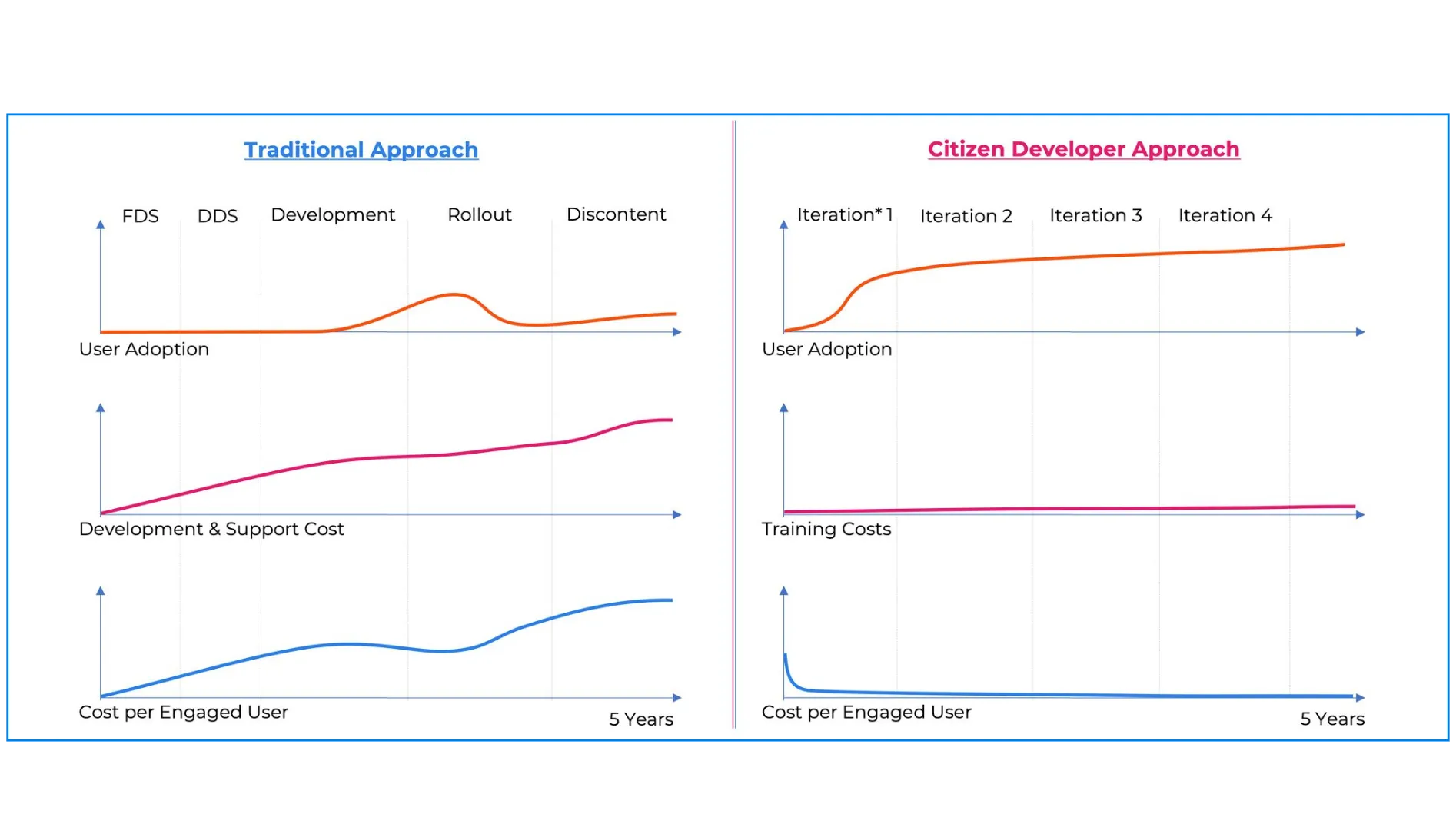
“A citizen developer is an employee who creates application capabilities for consumption by themselves or others, using tools that are not actively forbidden by IT or business units. A citizen developer is a persona, not a title or targeted role. They report to a business unit or function other than IT.” –
What Are the Benefits of Having Citizen Developers?
Although numerous benefits exist, we’ve accumulated six key benefits of integrating citizen developers into the process manufacturing sector:
1. Leverage Internal Domain Knowledge
In process manufacturing, intimate knowledge of specific processes, challenges, and operational nuances is crucial. Citizen developers bring their deep, firsthand understanding of the industry’s intricacies into the development process. For example, a continuous improvement manager or a process engineer who lives the daily operational realities can create tailored solutions that directly address bottlenecks, inefficiencies, and unique challenges. This internal domain knowledge ensures that applications and automation tools are highly relevant and effective, minimising the gap between IT solutions and practical, on-the-ground needs.
2. Cultural Shift – Drive Engagement From Within
Empowering employees to become citizen developers fosters a cultural shift within the organisation. It transforms traditional hierarchical dynamics and promotes a more inclusive and engaging environment. Process manufacturing roles often involve routine tasks and strict operational procedures, which can lead to employee disengagement. By involving these professionals in developing their tools and applications, companies can drive a sense of ownership and empowerment. This not only increases job satisfaction but also encourages continuous learning and innovation, creating a more dynamic and motivated workforce.
3. Speed and Agility
The pace of change in the process manufacturing industry is accelerating, driven by technological advancements and market pressures. Traditional IT development cycles can be slow and cumbersome, often unable to keep up with the rapid changes required. Citizen developers can bypass lengthy development processes, quickly creating and deploying applications that meet immediate needs. For instance, a manufacturing excellence leader can
rapidly develop a whiteboard containing operating trends, calculations and follow-up tasks to decrease the consumption of certain raw materials as soon as the company targets variable cost reduction, without waiting for IT department availability. This speed and agility are crucial for maintaining a competitive advantage in a fast-paced environment.
4. Enhanced Innovation
Innovation fuels the progress of modern process manufacturing. Citizen developers bring a fresh perspective to problem-solving, combining their operational experience with the creative freedom of low-code/no-code platforms. They are often closer to the problems that need solving and can experiment with novel solutions without the constraints typically faced by traditional IT teams. For example, a citizen developer might set up an environment containing real-time anomaly detection to follow up on critical equipment parameters for that specific plant. This will enable the control room staff to practice short-interval control preempting equipment failures, thus reducing downtime and increasing productivity. This bottom-up approach to innovation can uncover unique opportunities that might be overlooked by a more top-down, IT-centric development process.
5. Standardise Through Templatisation
While innovation and agility are critical, maintaining consistency and standardisation across applications is equally important in the process manufacturing industry. Citizen developers can leverage templated solutions provided by low-code/no-code platforms to ensure uniformity in their applications. These templates can standardise best practices, compliance measures, and operational workflows, reducing variability and enhancing quality. For instance, a process engineer might use a standardised template to create a monitoring system for different production lines and plants, ensuring that all systems adhere to company-wide quality and safety standards. This approach not only speeds up development but also helps in maintaining consistency and reliability across the organisation’s operations.
6. Fixed Cost Reduction Related To External IT Services
Citizen developers can handle many simple day-to-day application developments, such as:
-
Tracking process parameters
-
Build workflows to create robust work processes
-
Production losses and chemical inventories
-
Creating enhanced dashboard visualisations
-
Monitoring production metrics and tasks internally
This reduces the need for costly third-party IT services for minor adjustments and customisations, which usually encumbers the fixed cost.
How Cyzag Encourages Citizen Developers
The Cyzag platform goes beyond being a dashboarding or visualisation tool. At its core, it aligns shop floor operations by consolidating data from multiple sources into a single source of truth. The platform supports the development of data capture mechanisms and workflows catering to various operational activities, fostering collaboration vertically and horizontally across the plant. By ensuring frontline workers are aligned and equipped with the same information, the platform facilitates. It presents data in a format that is easily comprehensible and usable for real-time decision-making.
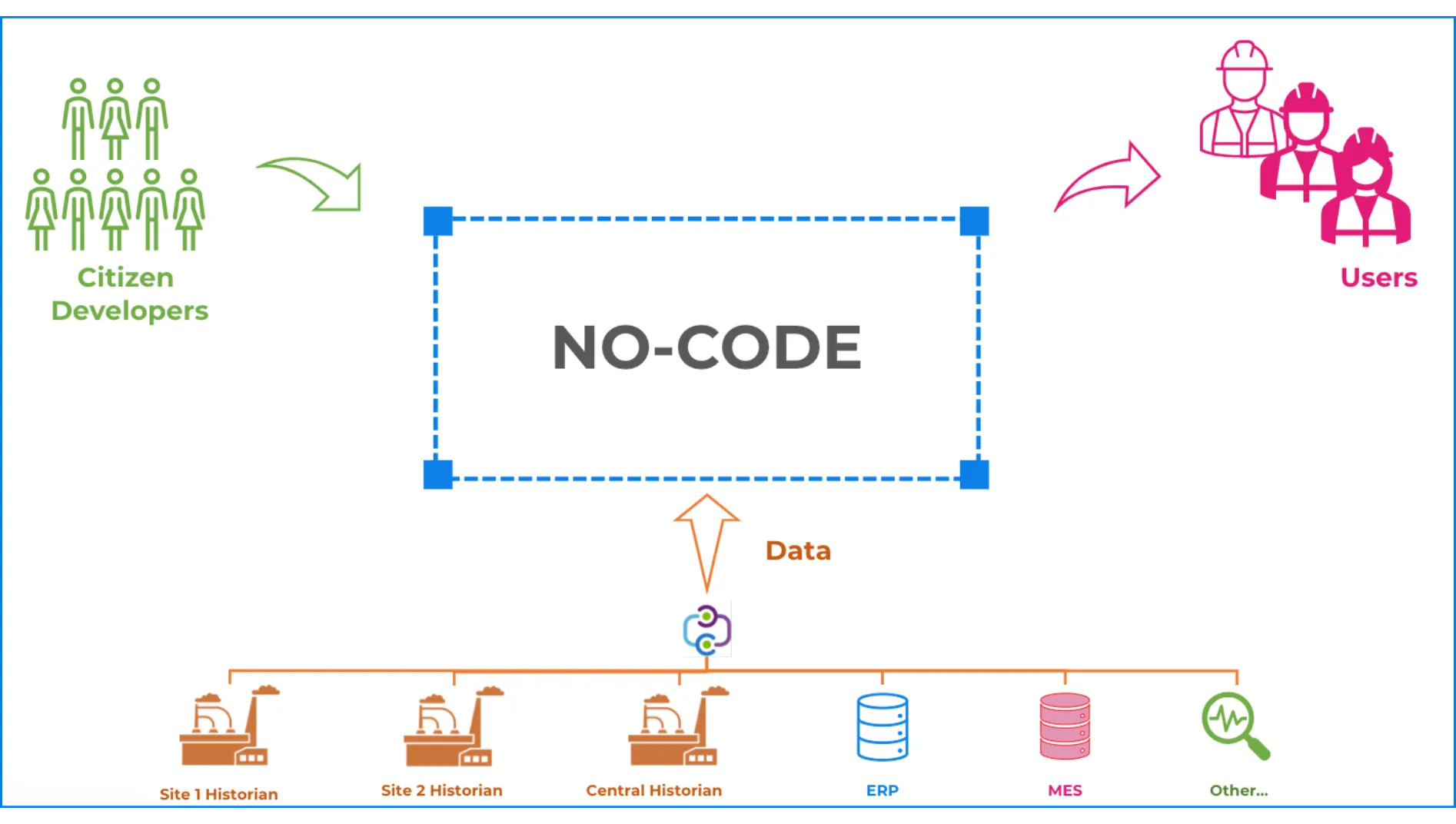
A key advantage of the Cyzag platform is its inclusive approach to engagement creation. Instead of relying on a single individual or group, a community of citizen developers typically emerges, comprising central teams, operational excellence experts, process engineers, and even operators. These citizen developers actively contribute by building and testing use cases, ultimately driving platform adoption throughout the organisation. This democratises innovation, and once validated use cases mature, they can be easily standardised, templated, and deployed horizontally across other plants. Importantly, all access and development occur with a fully role-based approach, ensuring a secure environment and data.
Conclusion
The rise of citizen developers in the process manufacturing industry represents a significant shift in how organisations approach software development and problem-solving. By leveraging internal domain knowledge, driving cultural engagement, enhancing speed and agility, fostering innovation, and standardising processes through templating, citizen developers can play a crucial role in transforming and future-proofing the industry. Moreover, Cyzag’s innovative no-code platform empowers these citizen developers by providing the tools and support they need to drive meaningful change within their organisations.
See how Cyzag can be utilised in your operations. Book a 1-to-1 consultation today.
Follow Cyzag on LinkedIn for new articles and stories.