The Cost of Inaction in Digitalisation: Why You Must Act Now
ROI tells only half the story. Learn how the Cost of Inaction (COI) in shop floor digitalisation increases costs, risks, and productivity losses in manufacturing
5 min read
Why waiting to improve your shop floor operations could be your most expensive decision.
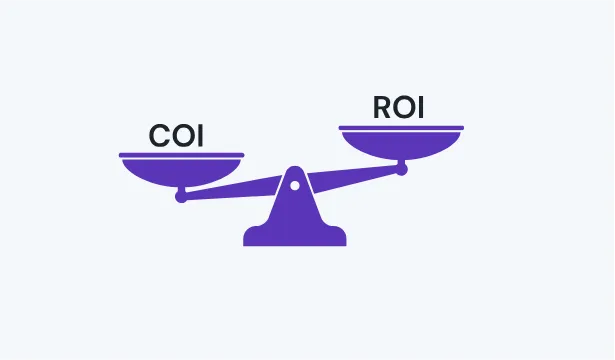
In manufacturing, every conversation about improving operations comes down to one question: What’s the ROI? ROI is indeed essential for leaders to ensure that digital initiatives deliver clear, measurable outcomes. But ROI alone doesn’t tell the whole story.
When we talk about digitalisation here, we mean digitalising the daily routines that keep a plant running: how operators identify and log issues, how supervisors react to deviations, how engineers access data, and how teams make decisions on the shop floor. This is where efficiency is won or lost.
And this is where the cost of inaction (COI) in digitalisation quietly accumulates: in delays, manual work, repeated errors, and missed improvement opportunities across shifts, all of which increase inefficiencies, risks, and productivity losses over time.
The Cost of Standing Still
Research shows that failing to digitalise operational routines has measurable consequences. A recent manufacturing studyin the Sustainability journal shows that digital innovation reduces cost stickiness, the challenge of lowering costs when production slows. Plants with low digital maturity experience the opposite: costs remain high even when output declines.
Industry analyses presented at the Asset Digitalisation Summit also reinforce this point by showing that delays in digital initiatives lead to losses that rarely appear on balance sheets, yet strongly influence competitiveness, operational stability, and future revenue.
In short, inaction is not neutral. It is a measurable and escalating cost.
Where COI Appears: The Four Drivers and Their Impact
Once we focus on daily operations, the cost of inaction in digitalisation becomes easy to recognise. It shows up in four core drivers that affect every plant, regardless of industry or maturity level. Each one has visible symptoms that leaders instantly recognise.
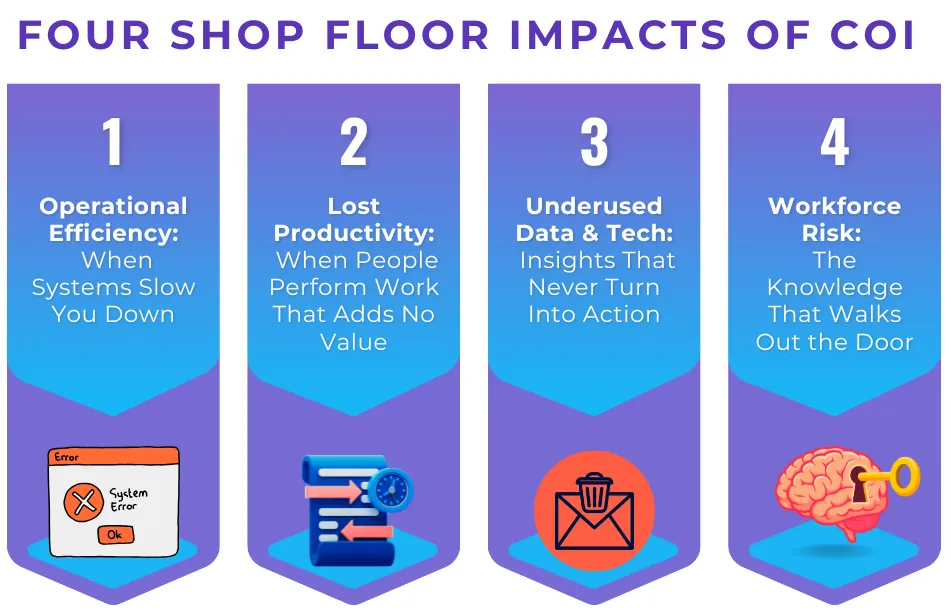 Image 1: The four drivers of the Cost of Inaction (COI) in shop floor digitalisation.
1. Operational Inefficiency: When Systems Slow You Down
Driver: Disconnected systems, slow information flow, and the absence of real-time visibility.
Symptoms:
-
Deviations detected too late;
-
Time lost searching for information;
-
Fragmented data and inconsistent reporting;
-
Recurring errors from manual processes.
These inefficiencies come from systems, not people.
2. Lost Productivity: When People Perform Work That Adds No Value
Driver: Manual logs, duplicated entries, offline reports, and administrative overload.
Symptoms:
-
Operators and engineers spending hours on admin;
-
Slower decisions and reaction times;
-
Limited capacity for improvement work;
-
Growing disengagement.
This is the people-level cost of inaction. It accumulates quietly but affects every shift, every day.
3. Underused Data and Technology: Insights That Never Turn Into Action
Driver: Large amounts of data are collected, but teams cannot access or use them effectively.
Symptoms:
-
Avoidable deviations;
-
Slow root-cause analysis;
-
Repeated issues because patterns stay invisible;
-
Delayed readiness for AI and predictive tools.
This is one of the most overlooked drivers of COI. The data exists, but the organisation cannot benefit from it.
4. Workforce Risk: The Knowledge That Walks Out the Door
Driver: Experienced operators and engineers retire without structured knowledge capture.
Symptoms:
-
Long onboarding;
-
Inconsistent performance across shifts;
-
Increased errors;
-
Dependency on a shrinking group of experts.
Digitalisation is not only about efficiency but also about continuity.
How to Estimate the Cost of Inaction in Digitalisation
Estimating the cost of inaction in operations does not require complex analysis. A few simple calculations can reveal the scale of losses hidden inside daily routines. Leaders can start with three questions.
1. What waste continues every day because we haven’t digitalised?
Examples: searching or waiting for information, reconciliations, and manual data checks.
A simple formula: COI = Time lost per shift × Number of shifts × Number of people × Cost per hour
Example:
-
10 minutes lost per shift searching for data
-
3 shifts × 20 operators = 600 minutes/day = 10 hours/day
-
At €30/hour → €300/day → €110.000/year
This is the cost of inefficiency if nothing changes.
2. How much productive time do people lose to admin and manual work?
Examples: filling logs, updating spreadsheets, preparing reports.
Formula: COI = Admin hours per week × Number of employees × Cost per hour
Example:
-
2 hours/week in manual reporting
-
40 frontline employees → 80 hours/week
-
At €35/hour → €2.800/week → €145.000/year
This is capacity that could be used for problem-solving, improvement, or stabilising performance.
3. What opportunities are we missing because we aren’t using our data?
Examples: avoidable deviations, repeated failures, late detection of trends.
Formula: COI = Avoidable incidents × Cost per incident
Example:
-
1 avoidable deviation per month
-
Each costing €5,000 in scrap/rework → 12 × €5.000 = €60.000/year
For many plants, the number is much higher because deviations often cascade into downtime, customer complaints, or capacity loss.
Even simple estimates show that the cost of inaction is often higher than the cost of digitalisation.
Making the Decision: Start Small, Prove Value, Scale with Confidence
Digitalisation is not a short-term IT expense. It is a long-term operational choice that shapes competitiveness, resilience, and the ability to scale improvement. The real question is no longer whether your organisation can afford to digitalise, but whether it can afford not to.
This is why leading industrial organisations evaluate both ROI and the cost of inaction in digitalisation. ROI shows the gains. COI reveals the risks and losses that accumulate when change is delayed.
Industry analysts at the Asset Digitalisation Summit summarise the most effective approach:
“Boards do not invest in technology for the sake of technology. They care about business outcomes. Start with small pilot projects that deliver quick wins.”
Pilot projects reduce uncertainty, demonstrate value early, and build momentum for broader adoption. And with technology evolving quickly, adaptability matters more than perfection:
“By the time a technology is fully implemented, something better is already on the market. Companies need adaptable, scalable systems instead of waiting for the perfect solution.”
Digitalisation works best when you begin early, learn quickly, and scale what works.
Conclusion: Act Early, Build Capability, Reduce COI
ROI tells you what you gain. COI tells you what you lose by waiting. The greatest risk for modern operations is not digitalising too early. It is digitalising too late, after inefficiencies, turnover, and knowledge loss have already reshaped the organisation.
By balancing ROI with the COI (cost of inaction) in digitalisation, starting with focused pilots, and choosing tools that scale, organisations build operations that are:
-
More efficient
-
More resilient
-
Ready for AI and the next generation of workers
This is how future-ready operations are built. Book a demo and discover how.
Follow Cyzag on LinkedIn for new articles and stories.