Operational Excellence Strategy: OKRs
This article will explore the use of OKRs in the process industry and how they are fundamental to keeping focus and delivering results.
Updated 12 March 2025 5 min read
This article will explore the use of Objectives and Key Results (OKRs) in the process and industrial industry and how they are fundamental to keeping focus and delivering results.
To kick things off, let’s address some essential questions:
- Daily, how do you navigate the constant flow of information that reaches you, pulling your attention away from what truly matters? How do you prioritise your tasks?
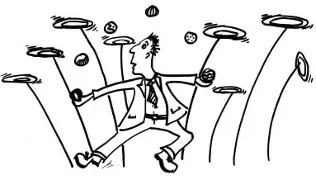
- How much time are you spending on what really matters? Are you applying Pareto to manage your time or living the “get things done” philosophy? Can you list the few vital tasks that will drive the results?
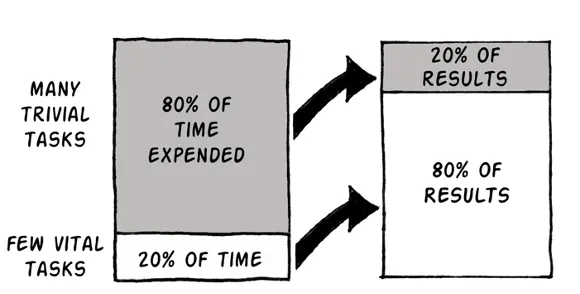
If you find the answers to these questions unclear, this article on Objectives and Key Results (OKRs) is tailored for you. Addressing the challenges of the process and industrial industry effectively demands strategic tools to optimise operations and prioritise resources. This is where the transformative impact of OKRs comes into play, enhancing operational performance and driving success.
“There is nothing quite so useless as doing with great efficiency, something that should not be done at all.”
Peter Drucker, Management consultant and educator
A Quick Look at OKR History
The origin of OKRs, or Objectives and Key Results, can be traced back to the management philosophy developed by Andy Grove, the former CEO of Intel. In the 1970s, Grove, along with John Doerr, introduced OKRs as a systematic approach to goal setting and performance measurement. Drawing inspiration from Peter Drucker’s Management by Objectives (MBO) concept, OKRs became a more dynamic and results-oriented framework. The methodology gained widespread recognition when Doerr introduced OKRs to companies like Google during its early years. Since then, OKRs have become widely adopted across various industries, providing a structured and agile method for organisations to set and achieve ambitious goals.
Objectives and Key Results Definition
OKRs are a goal-setting framework designed to align teams, break silos and focus efforts on measurable outcomes. It emphasises transparency as a fundamental pillar, with a distinctive emphasis on the regularity of checks.
One of the main differences between OKRs and other goal-setting methodologies is that OKRs measure the achieved results, not the effort.
Applying OKRs in the Process and Industrial Industry
Objectives and Key Results are implemented through the following process:
1. Objective Definition:
Identify objectives that align with the company’s strategy and mission. These objectives should be concrete, aggressive, inspirational, easy to understand, and easy to communicate, yet realistic. For instance, if you are contemplating implementing a digital platform in operations, the objective is not merely to implement the platform but to create the best and easiest way to manage operations. Such objectives include improving production efficiency, increasing sustainability initiatives, and optimising resource utilisation. Limiting the number of objectives to between 3 and 5 is recommended to maintain focus.
2. Measurable Key Results Establishment:
Establish measurable key results that outline how to achieve the objectives. Break down each objective into specific, measurable key results, typically in monetary, numerical, aggressive, realistic, and time-bound terms. For example, if the objective is to improve production efficiency, key results could involve reducing downtime by 2 hours per week or increasing throughput by 10 tons per day. Limit the number of key results to a maximum of 5 per objective. It’s crucial to distinguish key results from tasks; tasks are generated based on defined key results. The objective represents the final result; key results outline how to measure success, and tasks or initiatives detail the actions needed to achieve success.
3. Alignment and Cascade for Organisational Impact:
Cascade these objectives and key results throughout the organisation, ensuring alignment from top to bottom. Use industry-specific language to increase relevance and impact.
4. Regular Tracking and Evaluation for Continuous Improvement:
Establish a system for regularly tracking and evaluating OKRs. The most common cycle for setting OKRs is every 3-4 months, with weekly or biweekly meetings to assess progress. At the end of each cycle, analyse results and apply lessons learned to improve the next cycle. During check-ins, which occur weekly or biweekly, update the numbers, discuss the team’s confidence level in achieving results, debate possible barriers, and share improvement ideas — utilise digital platforms like Cyzag, tailored for OKR management to gain real-time insights into progress and performance.
OKRs (Objectives and Key Results) and KPIs (Key Performance Indicators)
Consider driving to a distant place. Knowing your speed and fuel levels is important, but knowing your destination is even more crucial. Your speedometer and fuel gauge act as your KPIs, ensuring efficient movement, but alone, they won’t guide you.
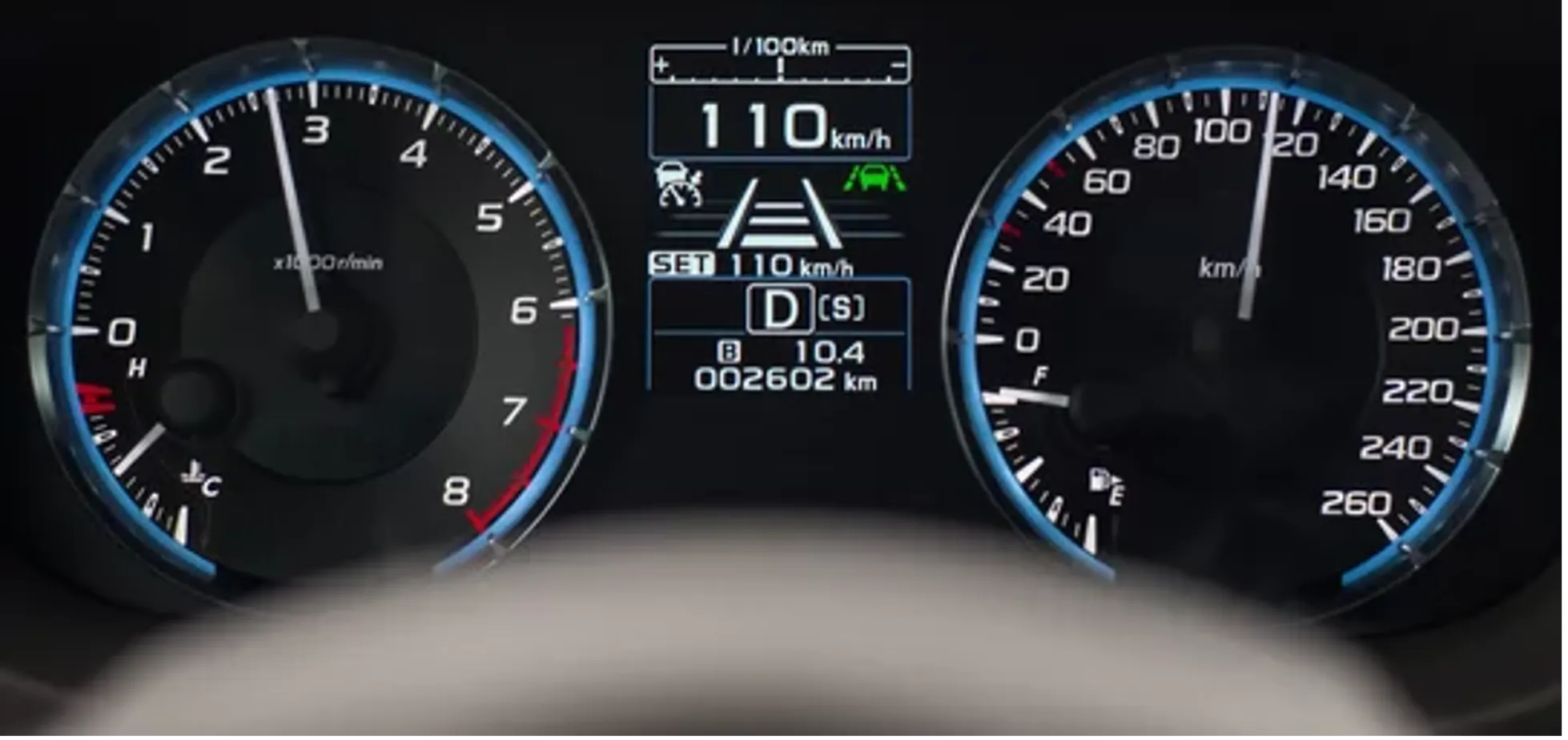
Now, think of your guidance system as the OKR. Relevant KPIs, like your speedometer, are crucial for navigation. But with OKRs, you get a comprehensive view—your map, directions, and distance to the destination.
With this diverse set of information, you can effectively navigate through various roads, account for speed limits and traffic, and anticipate that covering the remaining 78km to your destination will take approximately 53 minutes.
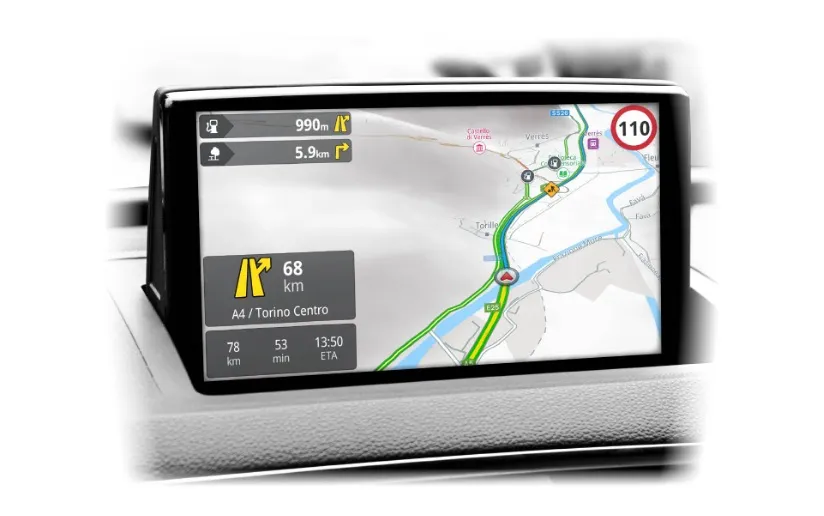
OKRs and KPIs are both performance management frameworks, but they serve different purposes and focus on different aspects of business performance. OKRs and KPIs are not competing approaches. The two work best when they’re employed together.
The following table shows different aspects of OKRs and KPIs:
KPIs are the focal metrics for your daily operations, independent of specific projects and periods. On the other hand, OKRs empower you with purpose, guiding you towards your goals in a competitive environment.
Let’s examine an example of their combined application in the process industry:
Objective: Improve Operational Efficiency
Key Result 1: Reduce production downtime by 15% within the next quarter.
Connected KPIs:
KPI: Mean Time Between Failures (MTBF)
Measurement: Increase MTBF from the current average of 50 hours to 57.5 hours.
KPI: Planned Maintenance Compliance
Measurement: Achieve 90% adherence to the planned maintenance schedule.
KPI: Production Output
Measurement: Increase daily production output by 3% without compromising quality.
Conclusion
Integrating OKRs into the industry enhances strategic clarity and operational excellence. Professionals in the industrial sector can cultivate resilience and stimulate sustainable growth through the structured and measurable approach provided by OKRs. By combining OKRs and KPIs, organisations can derive metrics for daily operations that concurrently steer them towards their goals in a competitive environment.
The Cyzag platform streamlines the management of the transformative impact of OKRs, providing a dedicated widget finely tuned to address the specific requirements of the process and industrial industry, helping leaders drive sustainable operational excellence.
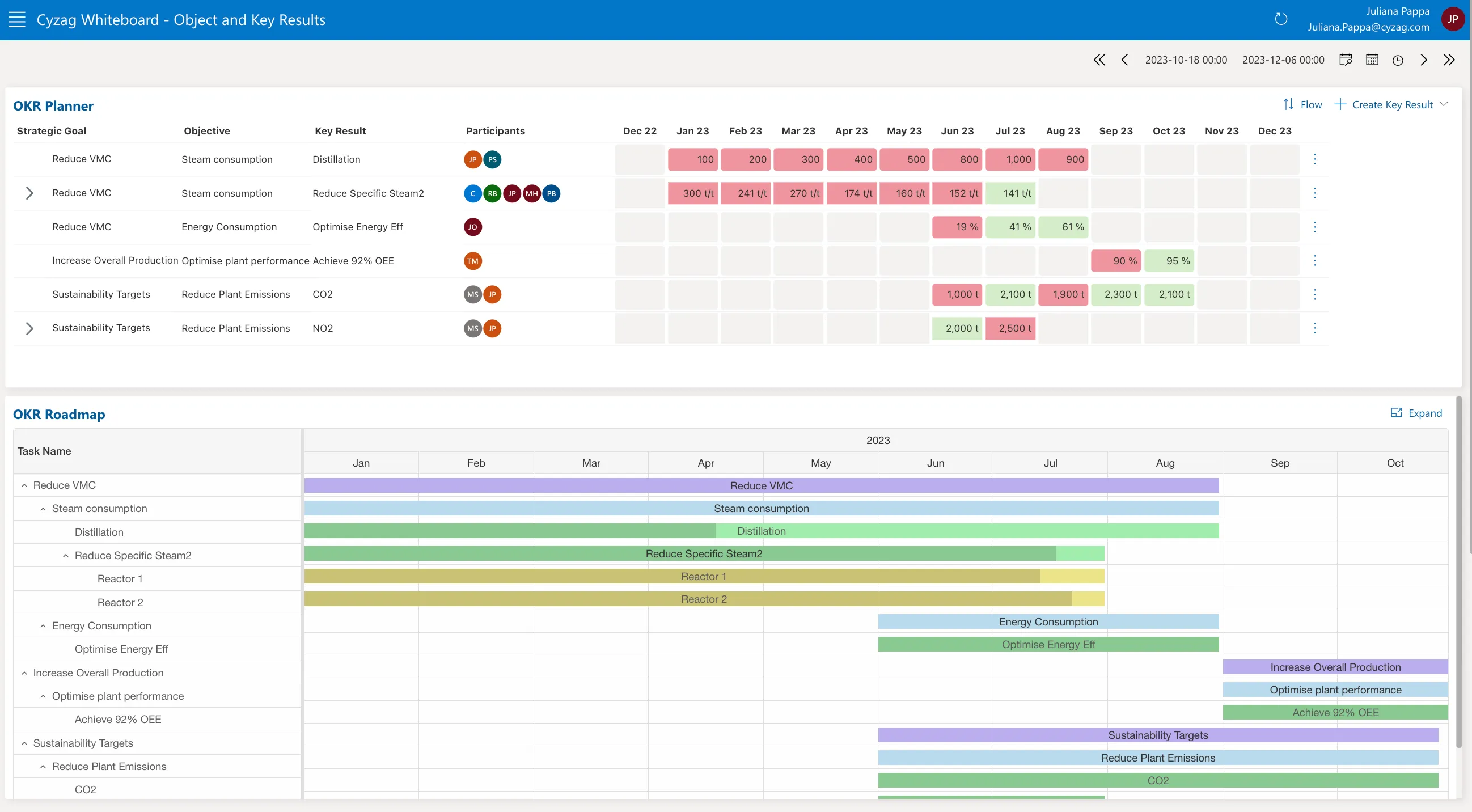 OKRs – Objectives and Key Results board in the Cyzag platform
Follow Cyzag on LinkedIn for new articles and stories.