Shift Handover – The Basics You Need to Know
Is your shift handover delivering safety and efficiency? Let’s get back to basics and discuss shift handover.
Updated 12 March 2025 2 min read
How crucial is effective communication during shift handovers in preventing incidents and accidents within the dynamic environment of the process industry? Surprisingly, nearly half of these incidents can be attributed to communication errors stemming from poorly written notes and technical misunderstandings. Let’s get back to basics and discuss shift handover.
Importance of Shift Handover
The shift handover is not just a routine procedure; it is a critical 5-15 minutes that can significantly impact safety and efficiency. During this brief period, the transfer of understanding, encompassing information and knowledge, must be precise and efficient. This understanding empowers plant workers to make informed decisions, troubleshoot issues, and respond effectively to unforeseen situations after an 8–to 12-hour shift.
The Underlying Concept
To enhance the effectiveness of shift handovers, it is essential to consider the adaptation of the Knowledge Pyramid to minimise decision risk. This involves the transfer of data, information, knowledge, and understanding:
-
Data: The collection of numbers.
-
Information: The meaning added to data.
-
Knowledge: The collective understanding and expertise of the operators gained through experience.
-
Understanding: The comprehension and interpretation of shared knowledge that enables proper action.
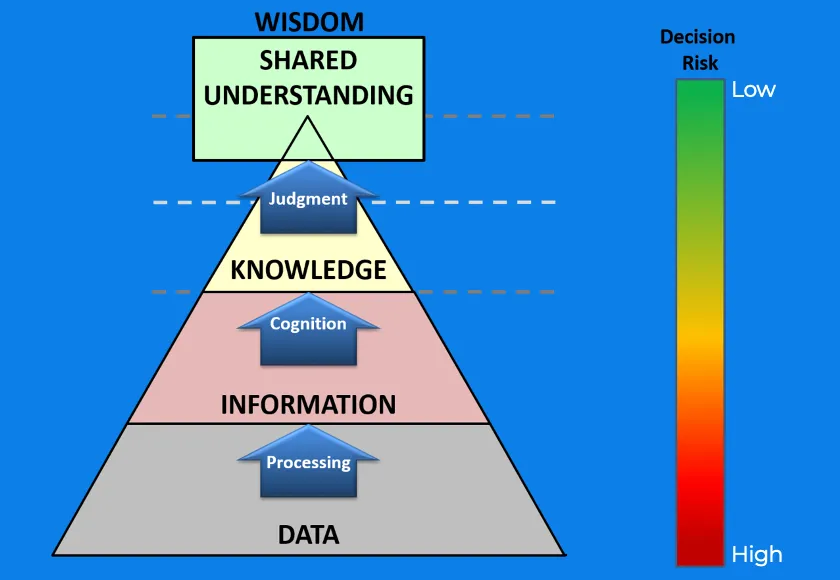 The Knowledge Pyramid.
The Three Mediums
More than just data, information, and knowledge, transferring understanding is critical. The shift handover utilises three main mediums:
-
Verbal: The most crucial medium for effective communication.
-
Written: To ensure the capture of all crucial information.
-
Visual Aids: To create clarity of information and increase comprehension speed.
Standardising to Leverage the Three Mediums
Standardising the shift handover process can leverage these three mediums and promote a seamless transition between shifts. This involves:
– Standardising written communication through a structured shift logbook/handover to ensure essential information is consistently recorded.
– Utilising visual aids and verbal communication by implementing a shift handover digital board to guide conversations, ensure quick understanding, and maintain focus on critical topics.
– Enhancing verbal communication by implementing an agenda for handover reviews.
Shift Handover and Digitalisation
Integrating a digital low-code platform into the handover process introduces a heightened level of standardisation combined with flexibility. This innovative approach facilitates automation, logging events with all necessary data readily available and registered in one place, effectively eliminating errors. It seamlessly connects the structured digital shift logbook with real-time data and insights, ensuring accessibility from anywhere.
Configuring and revising the shift workbook and handover views for different users enhances overall comprehension and improves visuals. Furthermore, the electronic shift sign-off system ensures systematic storage and auditing of all shifts’ events and data, streamlining the verification process.
The Cyzag platform exemplifies this integration, supporting information in both written and visual formats and facilitating an efficient transfer of understanding for different users.
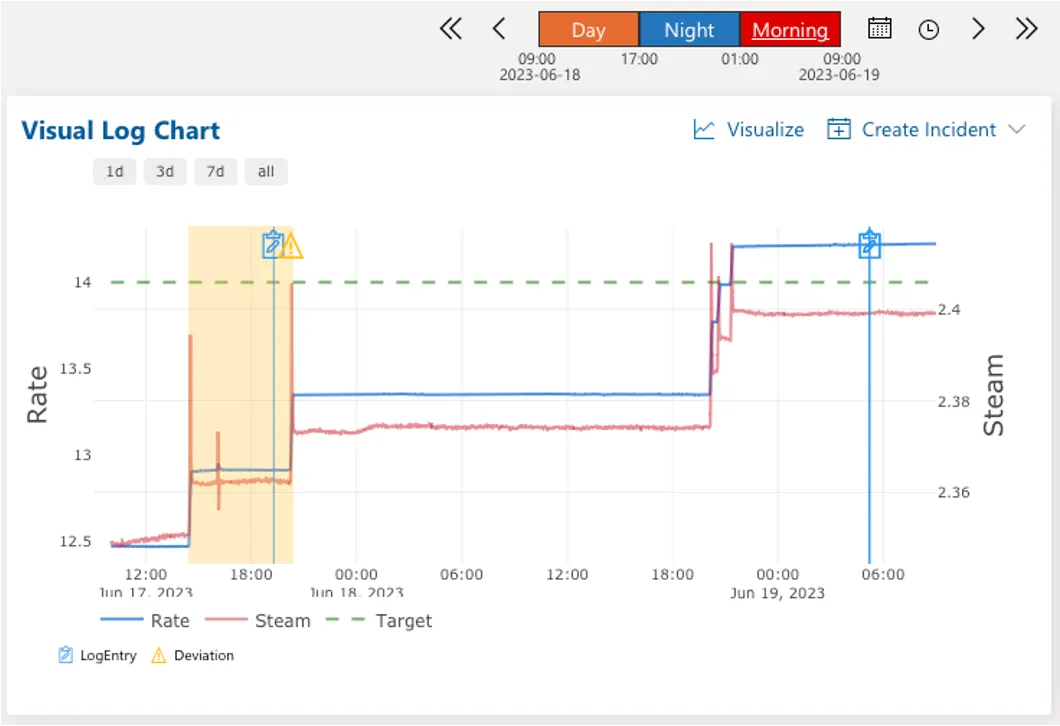 Visual log charts in the Cyzag platform.
Summary
Adopting digitalisation and standardisation ensures a safe and efficient shift handover. The Cyzag platform offers a solution that combines the best of both worlds, making the handover process seamless and effective. Book a personalised demo today and discover how digitalisation can empower your team to perform a secure and efficient shift handover.
Follow Cyzag on LinkedIn for new articles and stories.