SMED Made Simple – The Essentials for Speeding Up Changeovers
Is changeover time slowing down your production? Let's get back to the basics of SMED - Single Minute Exchange of Die in industry.
Updated 12 May 2025 7 min read
Is changeover time slowing down your production? If so, you’re not alone. In this blog post, we’re going back to basics to explore SMED (Single-Minute Exchange of Die)—a powerful methodology designed to minimise changeover times and maximise efficiency.
You’ll learn what SMED is, why it’s critical for improving operational performance, and how to apply its principles effectively in your processes. Plus, we’ll walk through a real-life example of SMED in action with a synthesis batch reactor, illustrating its potential to streamline operations and boost productivity. Whether in pharma, oil and gas, or any process-driven industry, this guide is for you. Let’s get back to the basics of SMED.
What is SMED?
SMED (Single Minute Exchange of Die) is a methodology for minimising changeover times. The term “Single-Minute” emphasises the goal of reducing die changeover time to a “single-digit” number of minutes, ideally under ten, aiming for efficient and streamlined processes.
In industry, SMED focuses on reducing the tooling changeover time when switching from producing one product to another.
 Image 1: Product changeover definition.
Beyond product changeovers, SMED principles apply to any setup process to reduce waste and increase productivity, such as maintenance activities, equipment cleaning, safety work permissions, etc.
Why Does SMED Matter?
Applying SMED can bring remarkable efficiency in changeovers, from manufacturing and software development to motorsport. A well-known example of SMED in action is Formula 1 pit stops. While an average person takes about 15 minutes to change a car tyre, an F1 pit crew accomplishes the task for the four tyres in less than five seconds.
Meticulous planning, standardised procedures, synchronised teamwork, and rigorous practice drive this extraordinary efficiency—principles that closely align with the SMED methodology. By eliminating unnecessary steps, adapting and preparing tools and equipment in advance, and optimising every second, F1 pit crews demonstrate how SMED principles can turn even the most time-sensitive tasks into seamless, high-performance operations.
 Image 2: Formula 1 pit stops exemplify SMED in action.
By focusing on minimising waste during changeovers, SMED (Single-Minute Exchange of Die) offers a structured approach that delivers measurable benefits across industries:
-
Enhanced Uptime: By streamlining changeover processes, SMED reduces downtime, ensuring equipment is operational for a greater portion of the production schedule.
-
Improved Production Capacity: Faster changeovers enable more frequent production cycles, increasing the overall output without additional resources or equipment.
-
Optimised Resource Utilisation: SMED maximises machine efficiency and enhances operator productivity by eliminating unnecessary steps and delays.
-
Reduced Environmental Impact: Faster and more efficient changeovers can lower energy consumption during idle or transition phases, reduce material waste, and contribute to more sustainable operations.
The Story of SMED
Shigeo Shingo developed SMED at Toyota in the 1950s, revolutionising how manufacturers handle changeovers. At the time, changeovers could take hours, significantly slowing production. By applying SMED principles, Toyota reduced this time to just a few minutes, setting a new standard for efficiency.
Shingo’s approach began with a detailed analysis of the sources of waste during changeovers. He identified that much of the delay stemmed from the time required to switch tools and reconfigure equipment between production phases. Toyota transformed its production process into a streamlined and highly efficient operation by modifying equipment, optimising vehicle parts, and reorganising the steps involved in building car body mouldings. This innovation increased productivity and set the stage for the widespread adoption of SMED in various industries.
How to Apply SMED
SMED methodology follows a sequence of steps:
-
Observe and Analyse: Begin by observing the current setup process. Break it down into individual tasks to identify areas for improvement.
-
Separate Tasks: Classify the tasks into two categories:
-
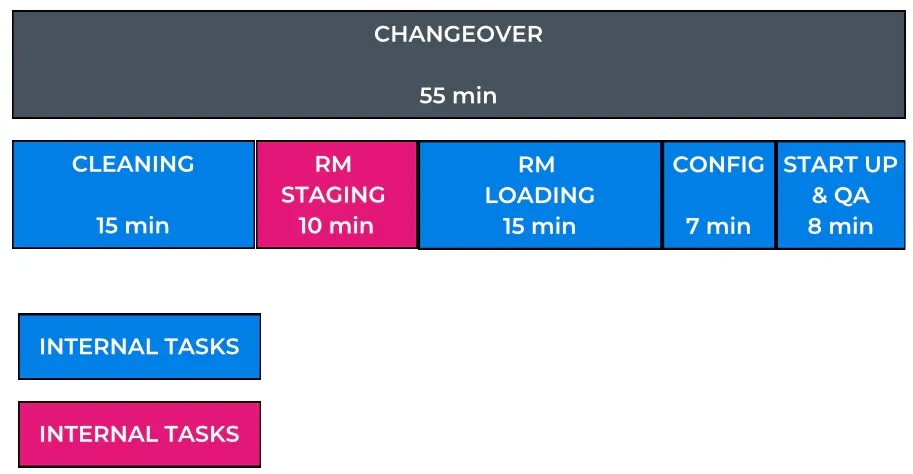
Internal tasks: Activities that can only be performed when the machine is stopped.
-
External tasks: Activities that can be performed while the machine is running.
-
Convert Internal to External: Look for opportunities to convert internal tasks into external ones. This minimises the need to stop the equipment, keeping production running more efficiently.
-
Streamline and Simplify: Optimise all activities, starting with the internal ones. Eliminate unnecessary movements, use standardised tools, and make tasks as easy as possible to perform.
-
Document and Standardise: Record the improved process to ensure consistency. Standardised procedures help maintain efficiency and make it easier for operators to follow.
-
Iterate for Improvement: Repeat the process as needed, refining each step until the ultimate SMED goal of achieving changeovers in “under ten minutes” is reached.
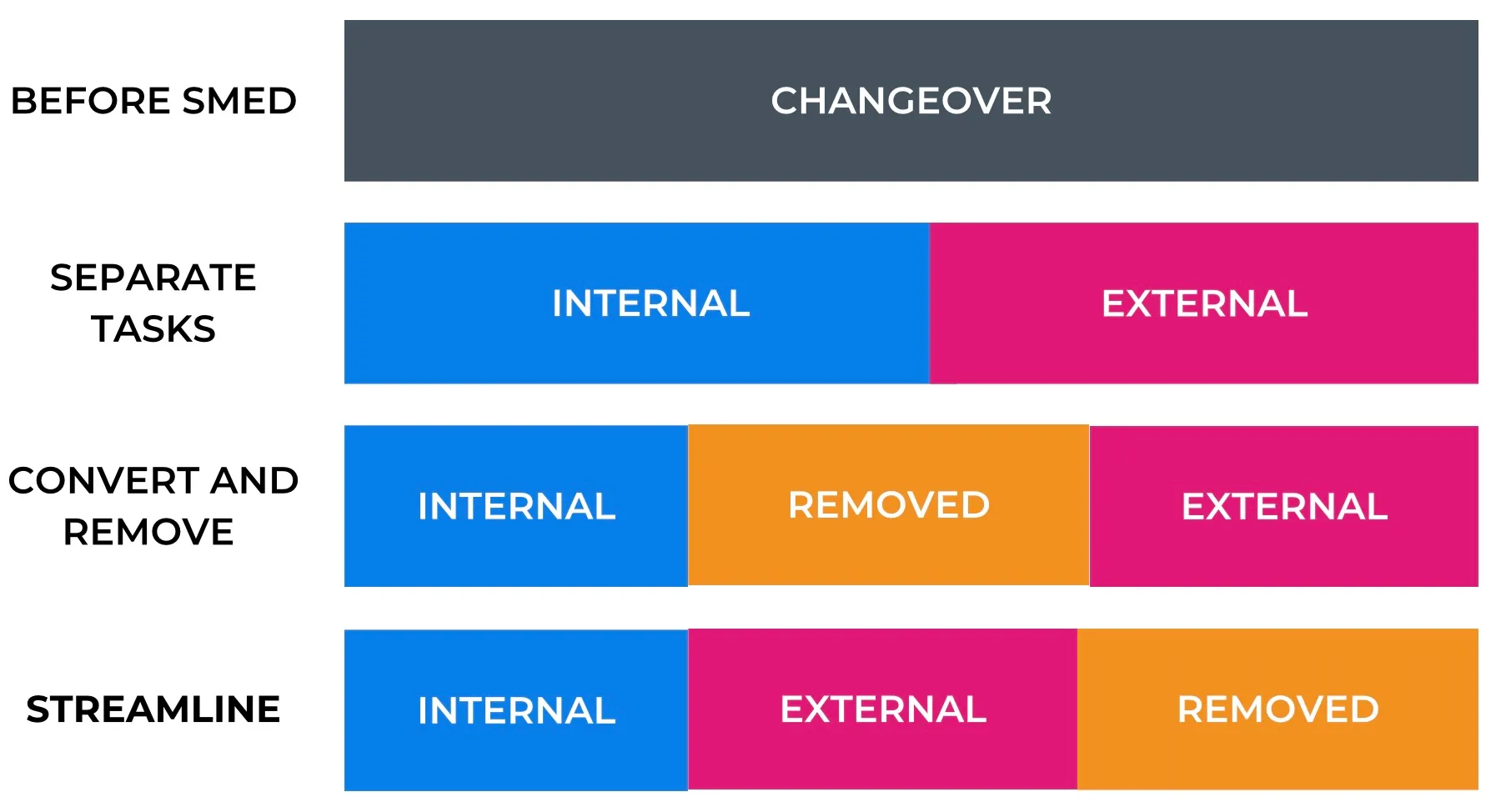 Image 3: SMED steps summarised.
Engaging employees in the process is vital for creating alignment and consensus on the chosen equipment and the implemented improvements. Furthermore, their involvement ensures a collaborative approach, promotes ownership of the changes, and enhances the success of the implementation
Example of SMED in Action
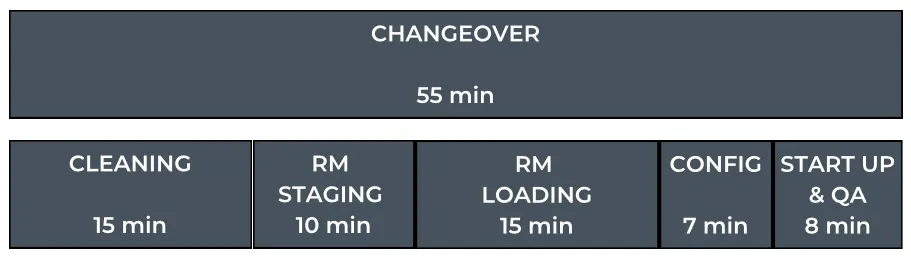
In this example, the production team faced a significant challenge: the changeover time for a batch reactor, when switching between chemical syntheses, took 55 minutes. Recognising the impact on efficiency and downtime, they decided to implement the SMED methodology to address the issue.
By methodically applying SMED’s six steps, the team worked to streamline the changeover process, reduce non-productive time, and maximise reactor utilisation. This systematic approach aimed to achieve faster transitions while enhancing overall operational efficiency and productivity. Let’s explore the step-by-step.
1- Observe the current process and break down the setup process into individual tasks:
-
Cleaning: Drain any leftover product and perform cleaning to remove residues.
-
Raw Material Staging: Pre-weigh and stage raw materials near the reactor.
-
Raw Material Loading: Load the reactor with the raw materials.
-
Parameter Configuration: Set up reactor parameters (temperature, pressure, etc.) for the next batch.
-
Startup & Quality Check: Start the reactor and perform initial quality control checks
2- Separate internal and external tasks:
3- Convert internal into external tasks so they don’t require stopping the equipment:
The raw material pre-weighing and staging process was reorganised to be performed while the reactor was still running the previous batch. This adjustment significantly reduced the overall changeover time.
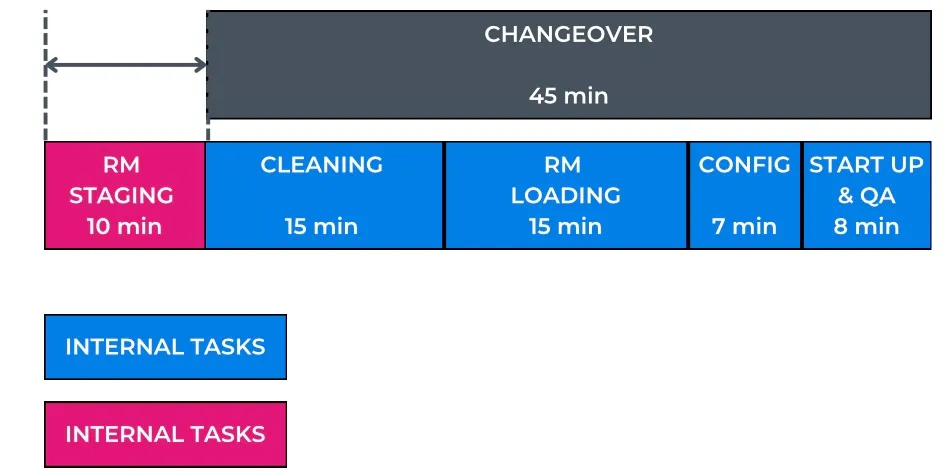
4- Streamline and simplify all activities as much as possible, starting with the internal ones.
Let’s take a closer look at each of the internal activities.
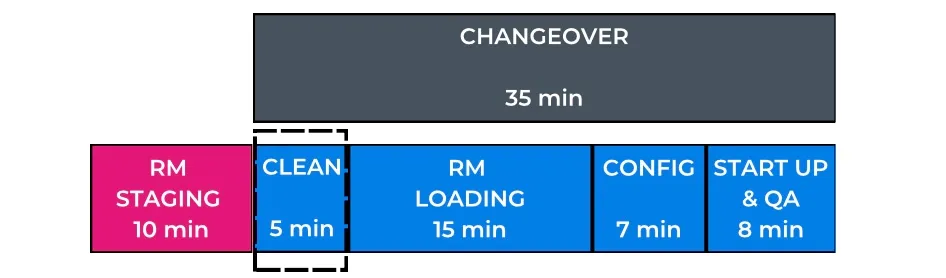
4.1 – Cleaning Improvements (1/4):

-
A mobile cleaning unit with quick connections was designed to enable faster setup, with cleaning chemicals pre-staged for immediate use.
-
Tools were strategically placed near the reactor to ensure quick access and minimise movement.
-
External tasks, such as assembling the cleaning equipment, were reorganised to be completed while the reactor ran the previous batch, further reducing downtime.
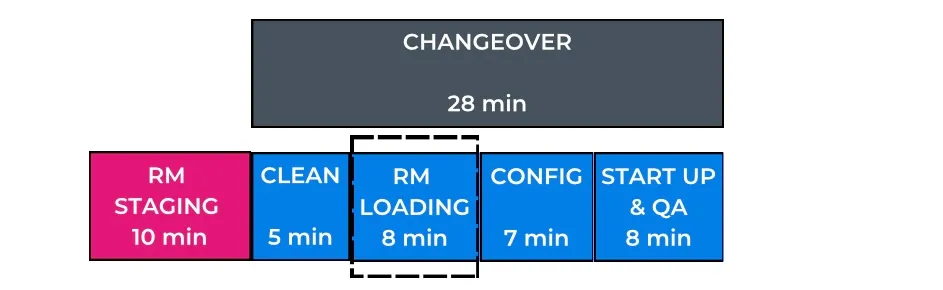
4.2- Raw Material Loading Improvements (2/4):
- A pre-assembled feed system for raw materials that can be quickly hooked up to the reactor was created, reducing manual labour and the need to switch to different tools.
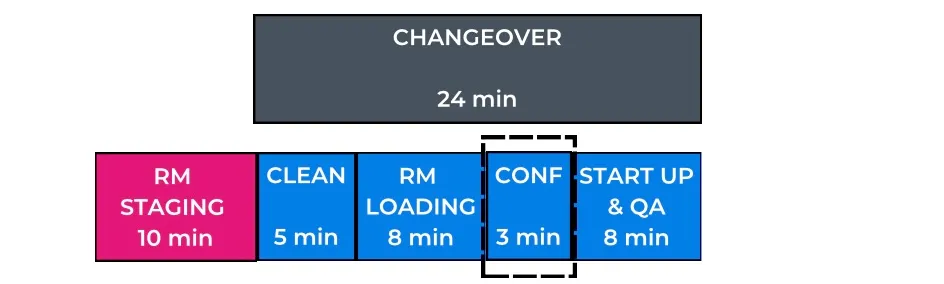
4.3- Configuration (3/4):
- Predefined process settings were configured in the control system to be activated with minimal adjustments.
4.4 – Start up & QA (4/4):
-
Two startup manoeuvres were automated, streamlining the process and reducing manual intervention.
-
Additionally, the sampling tool was upgraded to enable faster and more efficient sampling.
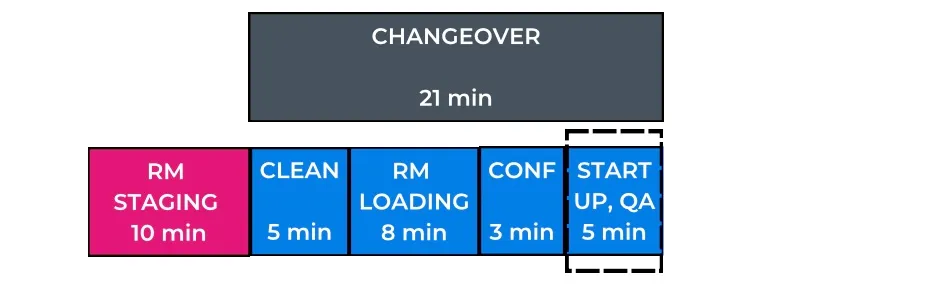
4.5 – Evaluating parallel tasks
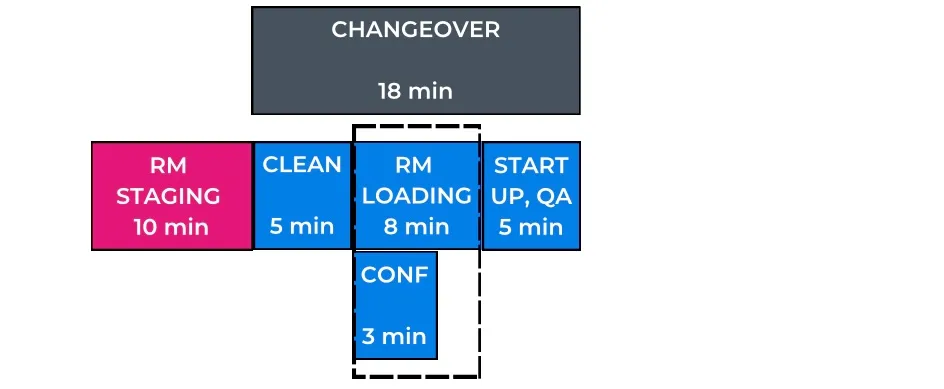
- After analysing each step, the team reorganised Raw Materials Loading and Configuration to be performed in parallel, reducing the changeover process from four sequential steps to three.
5- Document and Standardise
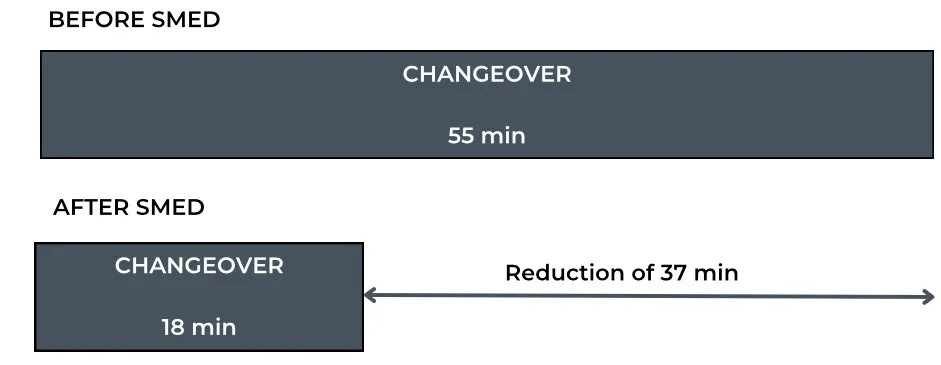
The improved process was standardised and thoroughly documented, and staff were trained to ensure consistent implementation. As a result, the changeover time was reduced from 55 minutes to just 18 minutes.
6- Iterate for Improvement
Continue refining and improving the process while evaluating whether the effort and cost required to achieve further reductions are justified. The decision to pursue the SMED goal of under ten minutes should be based on a careful assessment of the return on investment and overall impact on operational efficiency. It’s essential to ensure that the benefits gained outweigh the resources invested, as achieving the absolute lowest changeover time may not always be necessary or cost-effective.
SMED and Cyzag
The Cyzag platform enhances SMED implementation by streamlining and digitising manufacturing processes. By providing real-time visibility into process data, it empowers workers to understand better and analyse changeover times, compare performance metrics, and identify opportunities for improvement. This leads to reduced changeover times, increased efficiency, and a more optimised production workflow.
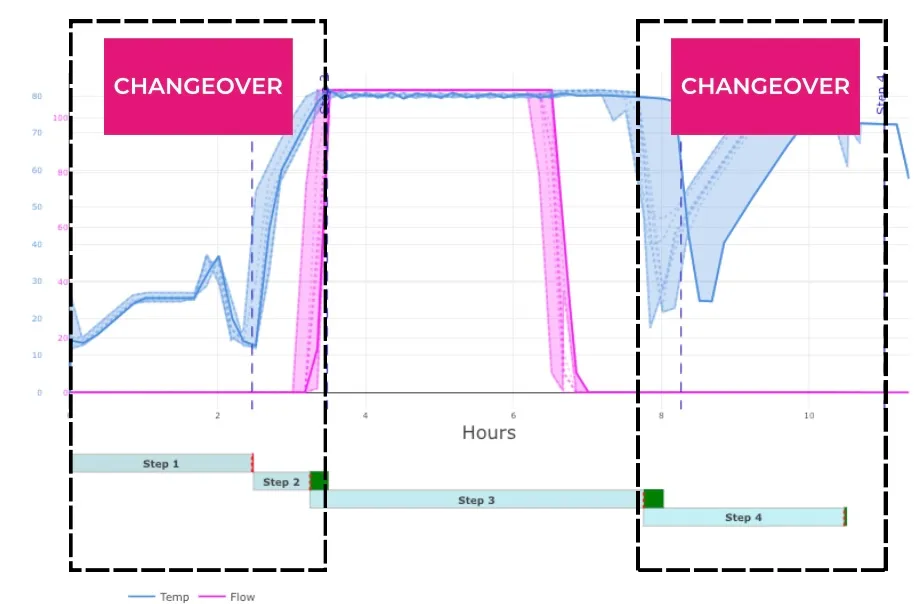 Cyzag Platform measures changeover times, helping to apply SMED methodology.
Conclusion
SMED (Single-Minute Exchange of Die) is a transformative methodology that addresses one of the most critical challenges in manufacturing—reducing changeover times. By systematically analysing and optimising internal and external tasks, organisations can significantly improve efficiency, minimise downtime, and increase production capacity.
With the right tools, like the Cyzag platform, which provides real-time data visibility and process digitalisation, implementing SMED becomes even more accessible and effective. SMED is not just a tool for operational efficiency—it’s a step toward a culture of continuous improvement and innovation.
Book a Personalised Demo today to explore how Cyzag platform can boost your SMED results.
Follow Cyzag on LinkedIn for new articles and stories.