Why Problems Keep Coming Back in Manufacturing and Terminal Operations
Learn why operational issues repeat across shifts and systems when context, decisions, and asset history fail to carry forward in industrial operations.
5 min read
In most industrial operations, work gets done. Shifts are staffed, assets are inspected, issues are discussed, and improvements are agreed on. From the outside, manufacturing and terminal operations appear to function as expected.
But the same operational problems keep resurfacing across shifts and teams. Deviations reappear, and workarounds are rediscovered. The same conversations return, often with different people, but with the same outcomes. This is rarely due to lack of effort or competence. It usually occurs because operational continuity breaks.
In 24×7, asset-intensive operations, such as process manufacturing, oil and gas, liquid terminals, and pharmaceuticals, this break shows up in familiar ways. Operational context, prior decisions, and asset history fail to carry forward across shifts, inspections, and improvement work. What was already known has to be figured out again, creating repetition, inefficiency, and elevated risk.
Operations Are Built on Handovers
Operational work is not a single, continuous flow. It is a sequence of handovers between people, teams, and systems:
-
One shift hands over to the next
-
Operators hand issues to supervisors
-
Operations hands findings to maintenance
-
Incidents hand actions to improvement teams
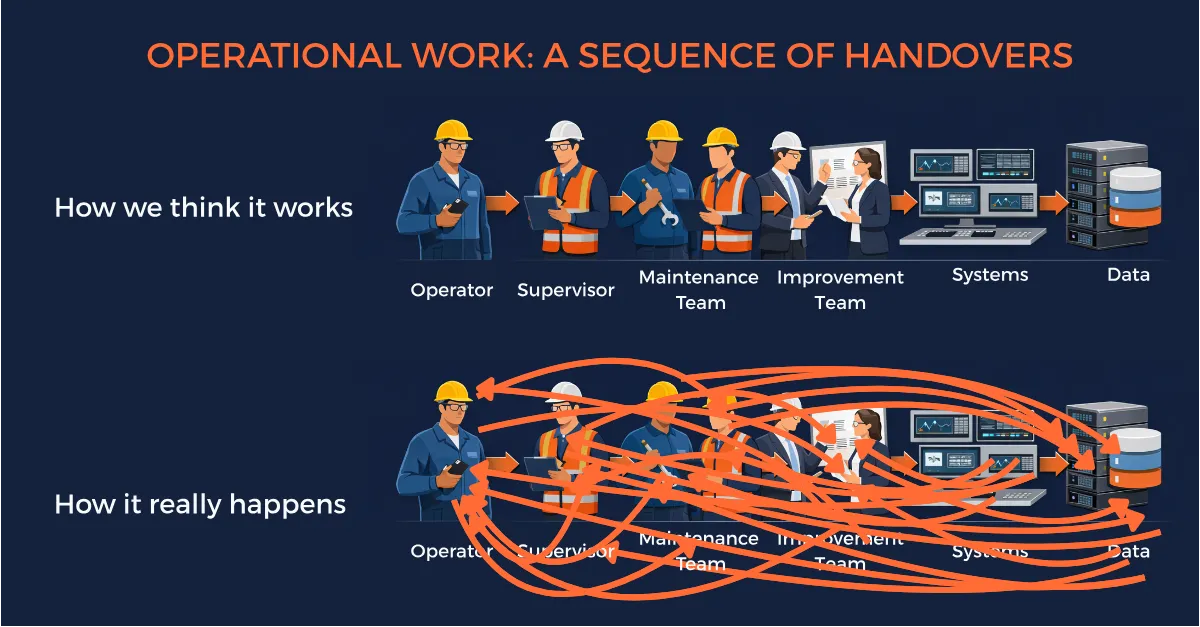 Image 1: How operational context moves (or gets lost) across handovers.
Each of these handovers is necessary. At the same time, each one is a point where operational context can be lost. Taken individually, these transitions make sense. Taken together, they create gaps where prior decisions, known conditions, and operational intent fail to carry forward.
Break #1: What Happens in the Shift Rarely Travels Forward
During every shift, operators make dozens of small but meaningful decisions. They notice subtle changes, adapt to conditions and apply temporary workarounds. They accept certain risks to keep operations stable and safe. Most of this context stays inside the shift.
At shift handover, what survives is often limited to a short note, a verbal summary, or a list of events, rarely the reasoning behind them. As a result, context fades quickly. By the next shift, much of it is already gone. By the following weeks, prior decisions are no longer visible. Before long, the same situations have to be assessed again from scratch.
This is not a discipline issue. It is a failure to preserve decision continuity over time.
Break #2: Inspections Capture Conditions, Not History
Rounds and inspections are designed to maintain control. They record readings, statuses, and observations. They confirm whether something is within limits or not. What they rarely preserve is asset-specific operational history.
An abnormal condition may be logged. A deviation might be noted. But unless it triggers immediate action, it often sits in a system without influencing how future inspections are performed. Over time, the same conditions are observed repeatedly, each time treated as isolated. Patterns only become visible once something escalates.
Inspections happen regularly. Operational memory does not accumulate.
Break #3: Improvement Exists Outside Daily Execution
Most organisations invest in improvement. Issues are reviewed, actions are assigned, root causes are discussed, and reports are created. The break happens afterward.
Improvement actions often live in separate systems, owned by different teams, and disconnected from daily execution. Operators return to work that looks and feels much the same as before. Over time, this creates a familiar dynamic: issues are raised repeatedly, improvements feel theoretical, and daily work relies on experience rather than reinforced structure.
Improvement exists, but it rarely reshapes how work is actually performed on the next shift. Actions may be completed, yet their outcomes are not verified in daily execution or fed back into how operators work tomorrow.
Break #4: Tools Preserve Moments, Not Continuity
Very few operations lack tools. Most rely on logbooks, maintenance systems, inspection forms, and performance dashboards. Each of these tools is designed to capture a moment in time: an event, a task, a reading, a closure.
What is usually missing is the connection across time.
Operational context does not flow naturally from one system to another. Each tool resets the narrative. Each day begins with only partial visibility of what was already known.
Why This Feels Normal
Because these breaks are small and familiar, they are often accepted as normal operational friction. People compensate in predictable ways: experienced operators carry more context in their heads, supervisors bridge gaps manually, and teams rely on informal conversations.
For a while, this works.
But when continuity breaks repeatedly, organisations don’t just repeat minor issues. They also recreate the conditions for more serious events. Known deviations fade from view. Accepted risks lose their history. In hindsight, incidents often reveal that the organisation had already seen the signs; the context simply didn’t survive.
What makes this harder to notice is that many operations are, on the surface, highly modern. Advanced systems, automation, and analytics are widely used. Yet even in these environments, basic continuity across shifts, inspections, and improvements remains fragile.
Technology moves forward. Operational memory quietly resets.
Seeing The Pattern: Why Problems Repeat in Operations
When you step back and look at these breaks together, a pattern becomes clear.
Work happens. Conditions are observed. Decisions are made. Actions are agreed.
But context does not reliably carry forward. This is why problems keep coming back in manufacturing and terminal operations, even in experienced, well-equipped organisations.
What’s missing is continuity across shifts, inspections, improvements, and time. Some describe this as a communication problem. Others see it as an execution gap. In practice, it is neither. It is the absence of a structure that preserves operational context and decisions over time.
This continuity can be understood as a loop: decisions made during shifts influence what gets inspected. Inspections shape what gets addressed. Improvements, in turn, should reshape how the next shift operates. When this loop holds, prior decisions remain visible and relevant. When it breaks, operations quietly reset themselves.
A Different Lens on Operations
This perspective doesn’t require new terminology or radical change. It simply changes the questions we ask:
-
Can operators see the decisions made the last time this situation occurred?
-
Do inspections reflect known asset history, or only current readings?
-
Do improvements change daily execution, or only documentation?
If the answer is often “no,” the issue is not effort, culture, or intent. The issue is continuity.
Final Thought
Most operations are not short on information, technology, or expertise. What they struggle with is keeping operational context alive across time.
The biggest gains rarely come from doing more work, but from ensuring that what is already known continues to shape what happens next. When teams recognise where continuity breaks, they usually recognise their own operations immediately.
They don’t discover a new idea. They finally have a language for an old problem.
And once continuity is understood as a system design problem rather than a people problem, the problem itself becomes clearer.
If you’d like support in finding a practical path forward and strengthening continuity in your operation, our team is available for an exploratory conversation.
Follow Cyzag on LinkedIn for new articles and stories.