The AI Theater in Industrial Operations and How to Tell If You Are in It
AI theater in industrial operations is more common than most organisations admit. Here is how to recognise it and what fixes it.
7 min read
There is an expression circulating in operations leadership conversations that deserves more attention than it is getting: AI theater. It refers to AI deployments that look right. The demonstrations are impressive. The outputs are technically credible. The board presentation lands well. And then, six months later, the same problems keep recurring. The same investigations start from zero. The same knowledge disappears at shift change. Nobody called it AI theatre at the time. But that is what it is.
RAND Corporation documented that 80.3% of enterprise AI projects in 2025 failed to deliver their promised business value. In manufacturing, the figure was 76.4%. These are not fringe cases or poorly managed projects. They are the dominant outcome. And the reason most post-mortems miss is not technical.
What AI Theater Actually Looks Like on the Floor
AI theater is not obvious while it is happening. That is what makes it expensive.
An AI copilot answers operator questions with confidence based entirely on sensor history, while missing three months of shift observations that would have changed the answer completely. Nobody catches this immediately. A maintenance call gets made. The deviation recurs two weeks later.
A predictive maintenance model accurately flags anomalies but cannot explain why this particular asset behaves differently after each planned shutdown. That context lives in the head of one engineer who has been on the team for eleven years.
A shift briefing tool summarises yesterday’s alarms correctly, but cannot flag that the incoming supervisor should watch a specific compressor. It sounded unusual overnight. Vibration readings still looked acceptable in the historian. An operator mentioned it verbally at handover. Nowhere else.
In each case, the AI is working. The model is functioning. The problem is what the model is reasoning on. It has access to sensor data. It does not have access to what the people running the operation actually know.
That gap is where AI theatre lives.
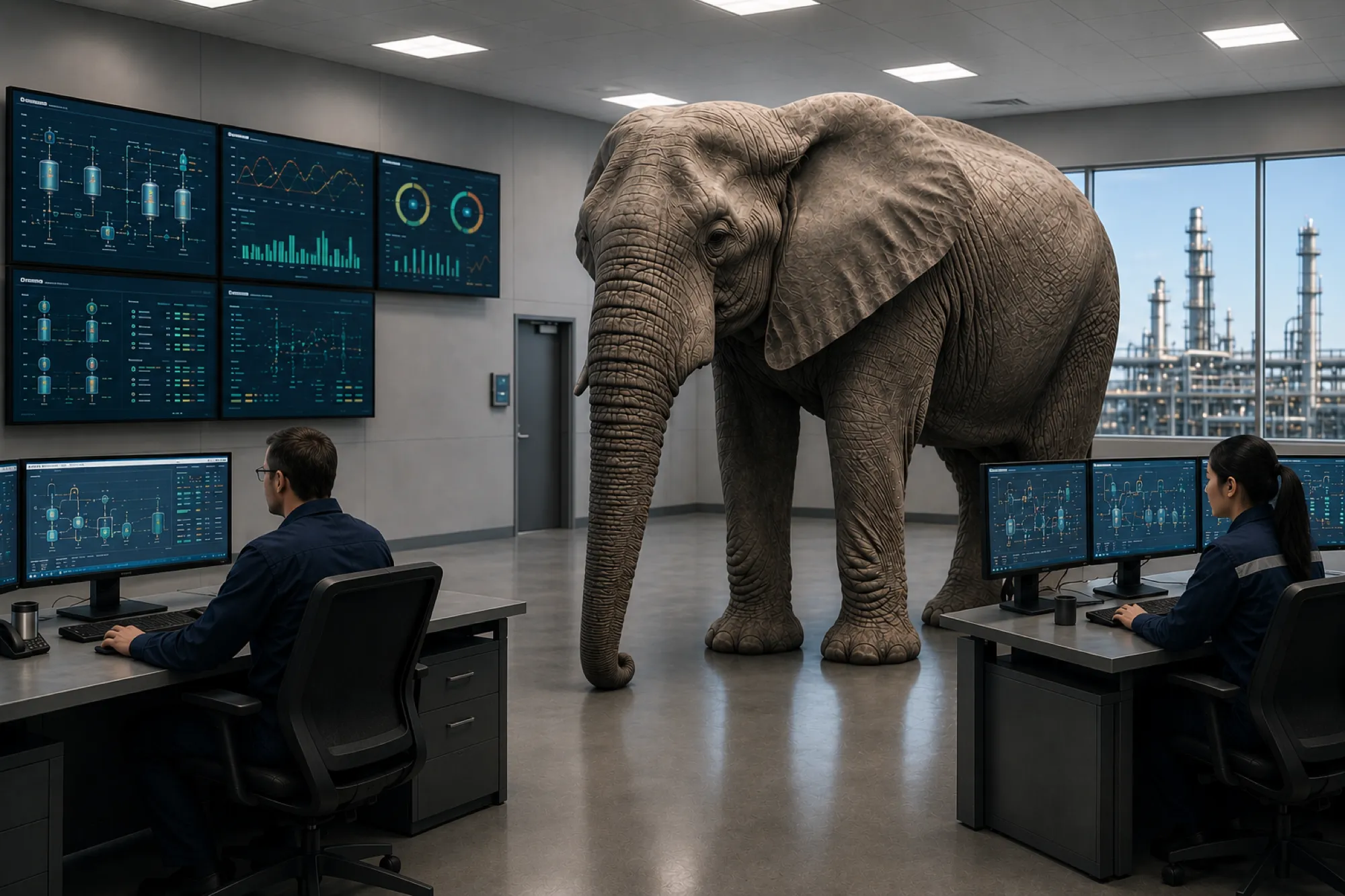 Image 1: The gap between what AI can access and what operations teams actually know is already in the room. Most organisations have not named it yet.
Why It Keeps Happening
The uncomfortable truth about why industrial AI projects fail at this rate is that most AI systems get deployed into environments that were never prepared to support them.
Sensor networks capture what happened. Historians record process conditions. DCS and SCADA systems preserve enormous volumes of operational activity. This infrastructure is real, and it works.
But none of it captures why a decision was made. None of it records what the experienced operator noticed before the alarm fired. None of it preserves what the process engineer learned from the last five investigations, or what the CI manager knows worked on a different line two years ago.
That layer, the human knowledge layer, is missing from most industrial AI environments. Not because organisations failed to build it. Because nobody told them they needed to. Every AI vendor assumed it already existed.
Gartner estimates that 60% of AI projects without AI-ready data get abandoned before reaching production. The term AI-ready data almost always refers to sensor data quality and integration completeness. It almost never refers to the human knowledge layer. That is precisely why the same projects keep failing.
How to Tell If Your Organisation Is in It
AI theater is recognisable once you know what to look for. Here are the signals.
Operators do not trust the outputs. Not loudly. They just stop using them, or use them as a starting point and immediately override with what they already know. When this happens systematically, it is not a training problem. It is a context problem. The AI produces outputs that feel disconnected from operational reality, because they are.
Investigations still start from zero. If your AI copilot is live and engineers still spend days reconstructing history before they can begin an investigation, the knowledge layer was not in place before deployment. The AI has no structured history to reason on.
The same problems keep recurring across shifts. A deviation gets resolved. Three shifts later, a different team encounters the same issue and treats it as a new issue. The AI recognised the sensor pattern but lacked access to the resolution logic, the root cause, or the observation that preceded the original deviation.
Knowledge leaves when people leave. If a supervisor retires or moves on and the team immediately loses capability around specific assets or processes, the organisation has not structured its operational knowledge. AI cannot reason about what was never captured.
If two or more of these are true in your operation, you are running AI on an incomplete foundation. The model is not the problem. The foundation is.
From AI Theater to Operational Intelligence
Forbes Technology Council declared earlier this year that the age of AI theater is ending. Writing for a broad enterprise technology audience, Rohit Kedia argued that organisations must move from showcasing AI to embedding intelligence: redesigning workflows, restructuring data, and shifting from reactive dashboards to foresight systems.
That argument is correct. The question for asset-intensive operations is whether that shift is actually happening on the floor.
In the broader enterprise world, AI theatre means retrofitting AI onto legacy software architectures. In operations, it means something more specific and more costly: deploying AI that reads sensor data but cannot access the knowledge layer that makes that data operationally meaningful. The fix in enterprise tech is architectural. The fix in operations is foundational, and it starts with the human knowledge layer that most AI systems were never given.
The organisations moving from AI theatre to operational intelligence are not running newer models. They built the knowledge layer first. Every shift generates structured, connected records. Every investigation builds on what previous teams learned. Every improvement travels with its reasoning, not just its result.
That is what operational intelligence looks like. Not AI as an add-on. AI as a reasoning layer on top of a complete operational picture.
The Foundation Is Where the Shift Begins
Ending AI theater in asset-intensive operations starts with one honest question: what exactly is your AI reasoning on? And is that foundation complete enough to make its outputs trustworthy in production?
The whitepaper we have published answers that question in full. It covers the structural gap behind AI theatre in asset-intensive industries, the two data layers most operations are missing, what it takes to build the foundation, and what the return looks like when organisations get this right. Named customers. Real numbers. A framework you can use.
Available without a form. No gate, no registration.
The foundation gap behind AI theatre is diagnosable and closable. The whitepaper covers exactly how.
Cyzag is the AI Digital Operations Platform for asset-intensive industries. We work across process manufacturing, chemicals, energy, liquid terminals, and oil and gas.
If you are ready to build the foundations and get the best performance with AI, reach out to us now.
Frequently Asked Questions
The following questions address common concerns about AI theater and operational intelligence in industrial operations.
What is AI theatre in manufacturing?
AI theater describes AI deployments that produce technically credible outputs and impressive demonstrations but deliver underwhelming operational impact. It happens when AI systems reason on incomplete data, typically sensor data, without the human knowledge layer that explains why decisions were made, what operators observed, and what previous investigations concluded. The AI works. The foundation it stands on does not.
Why do industrial AI projects fail in asset-intensive operations?
Most industrial AI projects fail because the human knowledge layer was never structured before deployment. Sensor data, historian records, and DCS outputs are accessible. The operational knowledge that explains context — shift observations, deviation histories, root-cause conclusions, improvement records — rarely gets systematically captured. Without it, AI outputs are plausible but not operationally trustworthy.
How do I know if my organisation is running AI theater?
The clearest signals are: operators who stop trusting AI outputs without saying why, investigations that still start from zero despite AI tools being live, recurring problems that each shift treats as new, and operational capability that visibly declines when experienced people leave. If two or more of these are true, the AI is likely reasoning on an incomplete foundation.
What is the difference between AI theater and operational intelligence?
AI theatre is AI deployed as an add-on to existing systems, reasoning on incomplete data and producing outputs that look credible but lack operational context. Operational intelligence is AI embedded into an environment where the human knowledge layer is structured and accessible, where every shift generates connected records, every investigation builds on previous learning, and improvements travel with their reasoning. The difference is not the model. It is the foundation underneath it.
What is the human knowledge layer in industrial AI?
The human knowledge layer is the operational intelligence people carry and produce while running an asset-intensive operation: observations, decisions, workarounds, and patterns built over years of experience. Unlike sensor data, this layer is rarely structured or systematically captured. It lives in verbal handovers, notebooks, emails, and individual memory. Without structure, AI systems cannot access it, human oversight stays nominal rather than meaningful, and operational learning does not compound across shifts, teams, or sites.
Follow Cyzag on LinkedIn for new articles and stories.