How to Problem Solve with a PDCA Cycle
Learn how to utilise the Plan-Do-Check-Act cycle to systematically solve problems, reduce costs and enhance manufacturing processes.
Updated 18 May 2025 5 min read
In the process industry, continuous improvement is crucial for sustained success. As an industry expert, you recognise that refining processes is key to staying competitive. Are you utilising the PDCA cycle to its full potential? 🤔
In this blog post, revisit the basics of PDCA: Plan, Do, Check, Act—why it matters, the four steps, and how digitalisation is used for efficient execution and management. The PDCA cycle is more than just a series of steps; it embodies a philosophy of continuous improvement that drives operational excellence and innovation. Embracing this approach can transform your business.
Why Does PDCA Matter?
The PDCA cycle is essential for businesses to remain competitive and sustainable.
-
Drives Systematic Improvement: It brings continuous improvement and optimisation of processes.
-
Improves Efficiency: The PDCA’s iterative nature allows for the consistent elimination of inefficiencies, streamlining operations, and reducing waste and manufacturing costs.
-
Enhances Quality Control: Regular assessments help maintain high quality and reduce defects.
Adopting the PDCA cycle can profoundly affect your operations, especially in industries where adaptability and continuous improvement are critical. Let’s explore the cycle in more detail.
What is the PDCA Cycle?
The PDCA (Plan-Do-Check-Act) cycle, also known as the Deming Cycle, is a four-step iterative process used for problem-solving and process improvement. It involves four key stages:
-
PLAN: Identify an opportunity and plan for change.
-
DO: Implement the change on a small scale.
-
CHECK: Use data to analyse the results of the change and determine whether it made a difference.
-
ACT: If the change was successful, implement it on a larger scale and continuously assess your results. If the change did not work, begin the cycle again.
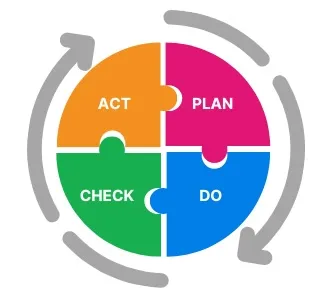 Image 1. PDCA Cycle.
How to Implement the PDCA Cycle
1. PLAN
-
Identify Problems and Opportunities: Gather data to understand the root cause of issues. Set the initial state as the benchmark.
-
Set Objectives: Define clear, attainable goals, such as key performance indicators (KPIs), and agree on pass/ fail criteria with stakeholders. Without these criteria, you might reach the Check phase and realise you didn’t get enough information to determine if the changes were successful. This could result in the need to redo parts of the cycle.
-
Develop Hypotheses: Formulate potential solutions or improvements based on root cause analysis, such as 5Whys and Ishikawa Diagrams.
-
Engage Stakeholders: Involve employees at all levels to gather diverse perspectives and foster a culture of continuous improvement.
-
Communicate Clearly and Consistently: Understand the change managementrequired, ensuring all stakeholders understand the goals, plans, and outcomes to build alignment and support.
2. DO
-
Implement Changes: Apply the proposed changes on a small scale to test their effectiveness.
-
Monitor Implementation: Ensure the changes are executed as planned and document any deviations.
-
Keep communication clear and consistent.
3. CHECK
-
Analyse Results: Compare the outcomes against the expected results, such as key performance indicators, process variations and quality data.
-
Evaluate Effectiveness: Determine whether the changes have led to the desired improvements and check whether the success criteria were met. If possible, adopt data visualisation techniques to show results effectively.
-
Identify Learnings: Gather insights on what worked and what didn’t.
-
Use Data-Driven Decision-Making: Base your plans and decisions on accurate and relevant data to ensure targeted and effective changes.
-
Keep communication clear and consistent.
4. ACT
-
Standardise Successful Changes: If successful, integrate changes into the standard operating procedures and communicate them effectively. This is critical for sustaining the change.
-
Continuous Monitoring: Keep track of the implemented changes and make further adjustments as necessary.
-
Iterate: If the changes were unsuccessful, re-enter the cycle at the planning stage and try a different approach.
-
Foster a Culture of Continuous Improvement: Encourage a mindset where employees always look for ways to improve processes and are not afraid to suggest and test new ideas.
PDCA and Digital Solutions
Adopting a digital tool like the Cyzag Platform facilitates numerous aspects of efficient PDCA application. It provides a clear and straightforward process that is transparent and easy to follow for individual PDCA execution and overall cycle management:
PDCA Execution
Effective implementation of PDCA requires attention to detail and comprehensive documentation at every step while maintaining a focus on solving problems and generating improvements. Digital tools like the Cyzag Platform facilitate this process, ensuring that PDCA execution is both efficient and straightforward. This platform allows you to:
-
Have all the information registered, organised and accessible for each step;
-
Perform and register root cause analysis, such as 5Whys and Ishikawa Diagrams;
-
Include images, attachments, data and charts;
-
Register and manage tasks;
-
Customise PDCA forms and flows to match your needs, allowing for customised approval steps and notifications.
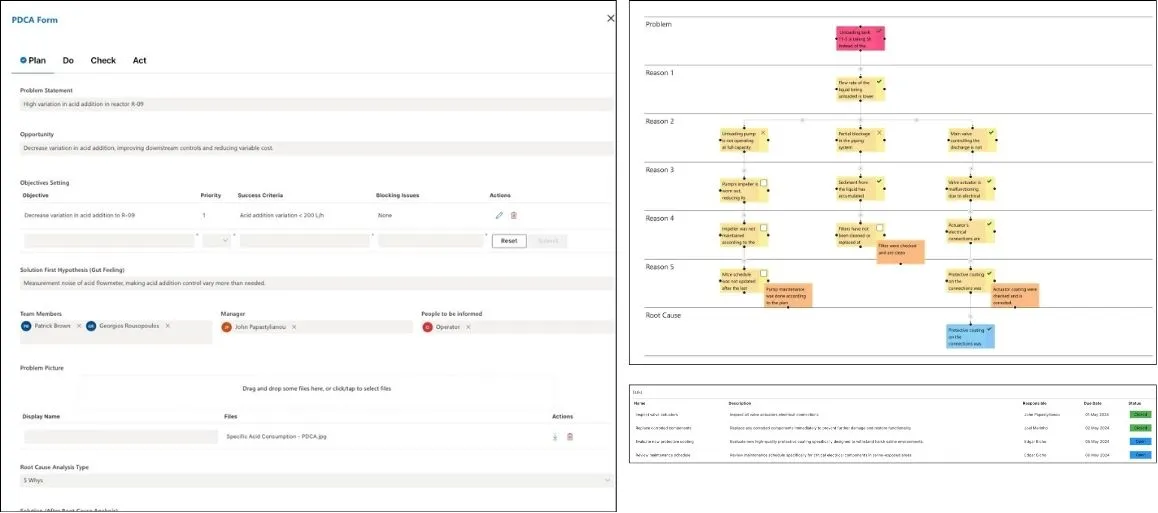 Image 2. PDCA execution in the Cyzag platform.
PDCA Management
While the PDCA cycle is inherently simple, the sheer number of PDCAs required in a large organisation can make managing them daunting and time-consuming. The accumulation of multiple cycles can create a labyrinth of tasks, priorities, and follow-ups that can be challenging to oversee.
Beyond just executing PDCA cycles, the Cyzag Platform excels in managing them by enabling you to:
-
Streamline workflows;
-
Access both high-level and detailed views of all cycles;
-
Manage priorities, tasks and resources effectively;
-
Monitor impacts and results seamlessly;
-
Customise boards and lists to suit your needs;
-
Generate reports.
This comprehensive support ensures that every PDCA cycle contributes to continuous improvement without overwhelming your management capabilities.
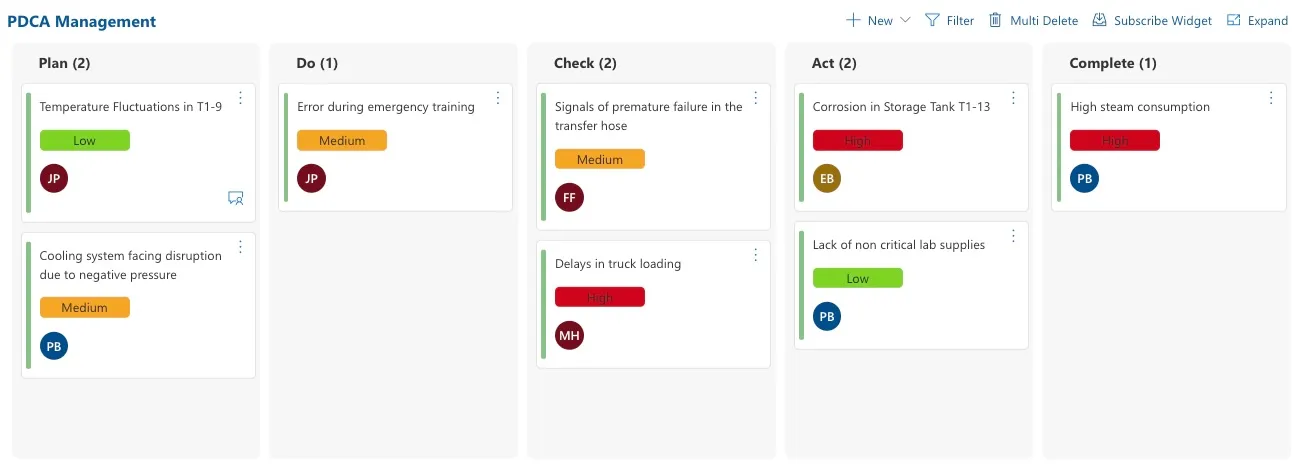 Image 3. Kanban board for PDCA management within Cyzag platform.
Conclusion
The PDCA cycle remains a fundamental tool in the process industry, driving continuous improvement and operational efficiency. By systematically implementing and managing PDCA, organisations can enhance efficiency, reduce costs, improve quality and foster a culture of innovation.
As we’ve explored, leveraging platforms like Cyzag can further streamline these efforts, ensuring that every stage of the PDCA cycle is executed with precision and transparency while maintaining simplicity. Embracing these principles will not only sustain but also enhance the performance and competitiveness of process industry operations.
Book a personalised demo with us today to discover how digitalisation can streamline PDCA execution and management, making it easy and efficient.
Follow Cyzag on LinkedIn for new articles and stories.