Bridging Vision and Results: Powerful KPIs for Manufacturing Excellence
KPIs plays a pivotal role in enabling organisations to track progress, make informed decisions, and plan strategically.
Updated 12 March 2025 3 min read
Key Performance Indicators (KPIs) play a pivotal role in enabling organisations to track progress, make informed decisions, and plan strategically. They serve as indicators of efficiency, customer satisfaction, and competitive positioning. Let’s get back to basics on KPIs and their significance in manufacturing operations.
What Exactly Are Key Performance Indicators?
KPIs represent measurable values that reflect critical performance aspects within a business. They guide organisations towards their goals by providing insights into various areas, such as financial health and operational efficiency. Understanding the distinction between KPIs and metrics is essential for effective performance management.
KPIs vs. Metrics
While “KPI” and “metric” are often used interchangeably, it’s important to recognise that not all metrics qualify as KPIs. KPIs consistently align with strategic objectives and reflect key drivers of value, whereas metrics can encompass a broader range of business measurements.
Crafting Effective KPIs: The SMART Approach
Defining good KPIs requires a structured approach. The SMART framework provides a roadmap for setting KPIs that are Specific, Measurable, Achievable, Relevant, and Time-bound.
The SMART Criteria
Specific: Clearly define the aspects of performance to be measured.
Measurable: Ensure KPIs are quantifiable, allowing for objective assessment.
Achievable: Set realistic KPIs based on industry standards and available resources.
Relevant: Align KPIs with strategic objectives to focus on impactful indicators.
Time-bound: Establish clear timeframes for achieving each KPI to drive timely action.
Effective KPI Management Practices
Managing KPIs involves several key steps to ensure ongoing performance improvement and alignment with organisational goals.
-
Setting Clear Targets: Establish targets for performance based on defined KPIs.
-
Measurement Methods: Determine how KPIs will be measured and data collected.
-
Continuous Monitoring: Regularly monitor progress towards KPIs and identify deviations.
-
Corrective Actions: Implement corrective actions to address performance deviations.
-
Periodic Review: Review and revise KPIs as needed to remain relevant and effective.
-
Team Engagement: Involve the team in all stages of KPI management to foster ownership and accountability.
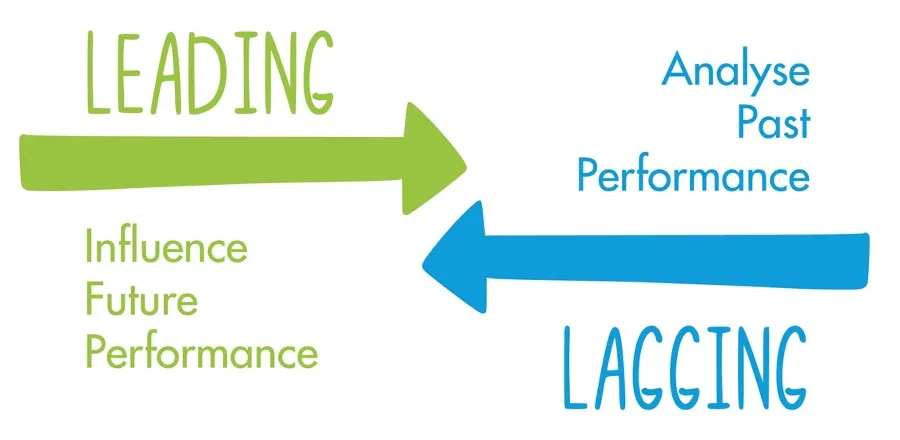
Balancing leading and lagging KPIs is crucial for proper management. You enhance performance by utilising leading indicators, early signals of future success, to drive desired impacts measured by lagging indicators.
Integrating KPIs with OKRs
While KPIs focus on measuring performance, Objectives and Key Results (OKRs) are goal-setting frameworks that complement them. Utilising both approaches can provide a comprehensive view of organisational performance and drive strategic alignment.
Application in the Process Industry
In the process industry, KPIs are instrumental in achieving and maintaining efficiency, safety, and quality standards. Visual management techniques and digital tools, such as the Cyzag Platform, streamline KPI management processes by automating calculations, facilitating data visualisation, and enabling actionable insights.
5 Benefits of Digitalisation
1. Automate KPI calculations in real time for accessibility and accuracy.
Digitalisation enables the automatic calculation of KPIs in real time, ensuring that data is readily available and accurate for analysis and decision-making.
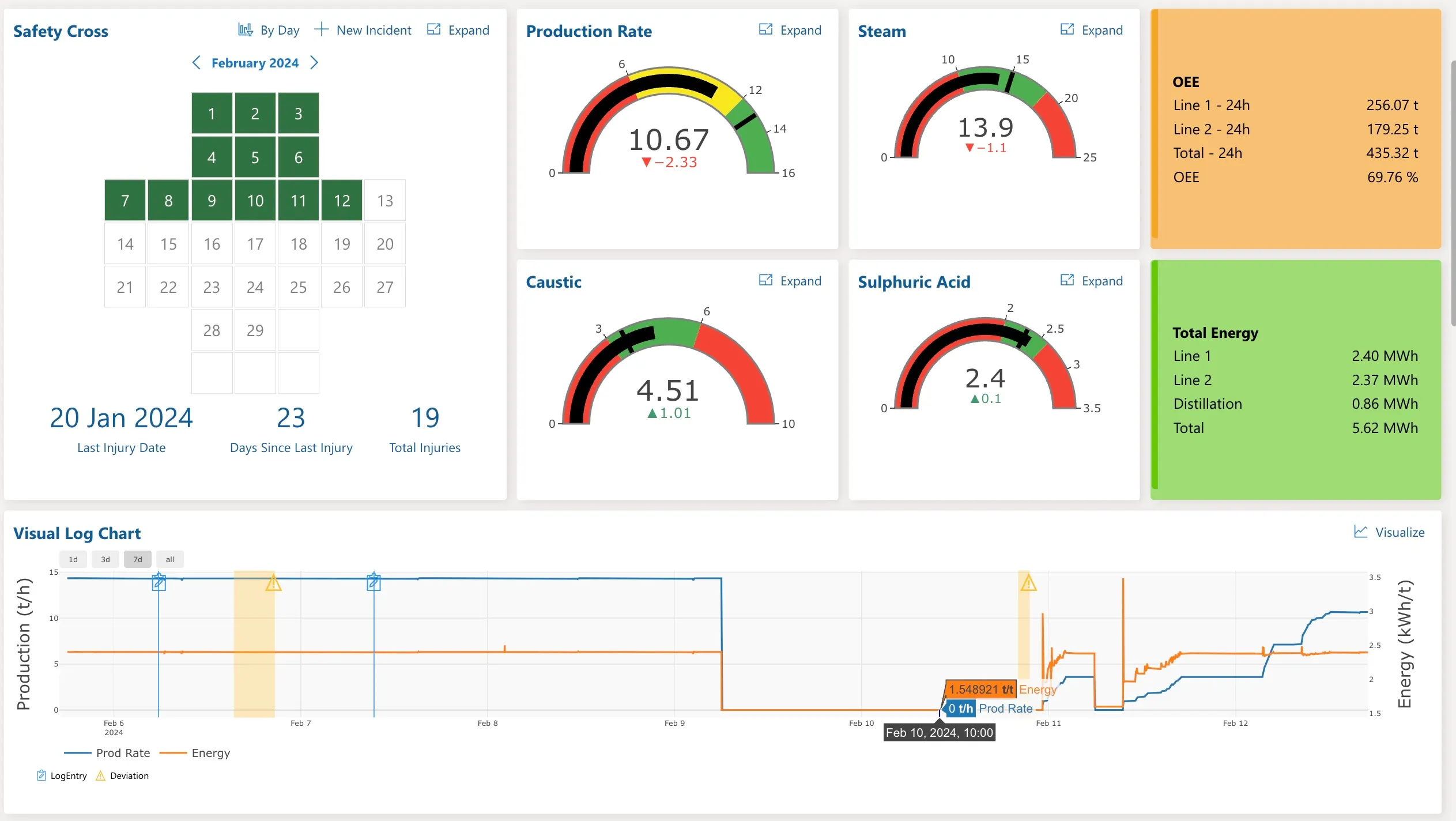
2. Visualise KPIs and conduct trend analyses to identify patterns and opportunities.
With digital tools, organisations can visualise KPIs through intuitive dashboards and graphs, allowing for trend analysis to identify patterns and potential areas for improvement or optimisation.
3. Facilitate team collaboration through custom whiteboards and data sharing.
Digital platforms offer features such as custom whiteboards and data-sharing functionalities, promoting collaboration among team members and enabling seamless communication and knowledge sharing.
4. Drive continuous improvement by tracking actions aimed at enhancing KPI performance.
Through digitalisation, organisations can systematically track actions taken to improve KPI performance, ensuring accountability and facilitating a culture of continuous improvement across the organisation.
5. Ensure data integrity and compliance through auditable record-keeping.
Digital platforms provide robust data management capabilities, including audit trails and secure storage, ensuring data integrity and compliance with regulatory requirements and industry standards.
Conclusion
Key performance metrics are indispensable tools for organisational success, providing valuable insights into performance, driving strategic decision-making, and fostering continuous improvement. By adopting a structured approach to KPI definition, management, and digitalisation, organisations can unlock their full potential and achieve sustainable growth.
Book a personalised demo to explore how digital solutions can revolutionise your KPI management practices and propel your organisation towards greater efficiency and effectiveness.
Follow Cyzag on LinkedIn for new articles and stories.