5 Steps to Avoid Wasting Time on GEMBA
Follow these 5 steps to conduct effective Gemba walks and identify waste in manufacturing processes with the DILO tool.
Updated 3 November 2025 9 min read
Businesses have been striving to improve performance by re-engineering processes for decades; however, in manufacturing, efficiency and sustainability are still a long way behind target. Lean philosophy has made an impact but the industry needs to improve its implementation and better involve teams to reach its potential. In this article, we explore how to more effectively identify waste by combining lean concepts such as Gemba walks with the DILO (Day In the Life Of) tool.
There is nothing quite so useless as doing with great efficiency something that should not be done at all.
Peter F. Drucker
What is The Lean Approach?
The lean approach brings a simple idea: to relentlessly work on eliminating waste from the manufacturing process. Originating from the Toyota Production System (TPS), Lean principles aim to streamline operations, improve efficiency, and foster continuous improvement.
In lean, waste is anything that does not add value from your customer’s perspective; in essence, anything the customer is unwilling to pay for.
What is a Gemba Walk?
Gemba walks, originating from the Japanese term “Gemba” meaning “the real place,” are an essential practice in lean manufacturing and continuous improvement methodologies. Gemba walks involve managers or leaders going to the actual location where work is done; in this case, the shop floor is considered the Gemba. Japanese companies often supplement Gemba with the related term “genchi genbutsu” — essentially “go and see for yourself” — to stress the importance of empiricism.
The Gemba walk is a very effective method for connecting leaders with their team members while finding opportunities for improvement. It is common for leaders to be surprised at how work is being done – in many manufacturing plants the amount of existing waste is endless.

The walk can observe activities happening on the shop floor or administrative areas. Typical inefficiencies include excessive movement and waiting, completing multiple authorisation forms before starting work, and manually transferring data from paper or Excel worksheets to different software.
There are 5 main objectives of Gemba Walks in manufacturing, which are:
-
Start with planning
-
Communicate the purpose
-
Go to Gemba
-
Evaluate the results and make enhancements
-
Close the cycle – plan for improvement
1. Start with Planning
Before going to Gemba, the team plans by defining the walk’s theme, selecting areas to visit, and setting a timeframe. They decide whether to observe a specific period, a full day, or an entire activity. This plan is shared with teams in advance to ensure transparency and openness.
2. Communicate the Purpose
To ensure that the Gemba walk itself is a good use of time, effective leaders keep their eyes and ears open and favour observing and learning over talking. They focus their attention on the tasks and processes rather than the people.
All team members should know what a Gemba walk is and its objectives. People must be comfortable being observed, understand why it’s important and be encouraged to contribute and explain activities to the observers. This activity allows leaders and those executing the work to exchange ideas, increase their awareness of the amount of waste in daily work, and propose improvements.
To increase the effectiveness of the Gemba walk, the DILO (Day in the Life of) tool can help register and structure the observations. The tool is simple to use, and it identifies three categories of tasks:
-
the value-adding work (VA),
-
the non-value-adding work (NVA) or pure waste,
-
the unavoidable work (NVA – UN) or necessary waste that needs to be done to add value.
Saying that waste is unavoidable sounds extraordinary, but it refers to the required tasks that do not aggregate direct value, even though they are needed.
DILO
The DILO (Day In the Life Of) analysis takes a structured approach to assessing work processes. It examines how people (actually) perform tasks rather than how they should perform them. This method involves immersing oneself in the daily activities and routines of employees to gain firsthand insights into their work environment, challenges, and interactions.
3. Go to Gemba
Before the Gemba walk, the team informs workers about the process and allows them to explain their tasks. Registering activity descriptions and durations helps analyse value-adding activities and identify waste.

Focusing on the job, asking questions, and listening to the people doing the work are crucial. The Gemba time is dedicated to:
-
Observe: Seek to understand what is happening, considering technical and personal aspects. This is not a time to instruct.
-
Engage: Ask why instead of telling people what you think they should do. The people who perform the job have deep knowledge about it, so use it! Understand if there is an established process for completing the tasks, what they are and what challenges are involved.
-
Improve: Once the process is understood, allow the people performing the job to suggest solutions. What stops people from doing the work differently? How is it possible to remove the existing barriers?
4. Evaluate the Results and Make Changes
After completing the Gemba walk, the team reviews the registered activities and defines categories. In a Kaizen circle meeting, they analyse the balance between value-added work and waste, generate improvement ideas, and propose actions to eliminate waste.
One challenge that typically arises during these discussions is a cycle of endless debate, especially during the categorisation of activities. It is healthy to listen to different perspectives, but the target is to eliminate the maximum identified waste. A focus on the quality of the discussions and suggestions is always better than resolving every issue. One way to facilitate discussion is to ensure that all team members are clear about the main categories of waste.
The lean methodology provides a clear explanation of the 8 main sources of waste:
-
Defects
-
Overproduction
-
Waiting
-
Unused talent
-
Transportation
-
Inventory
-
Motion
-
Extra processing
We will analyse two examples: one job performed in the field and another in the control room, demonstrating the tool’s flexibility.
4.1 Job Performed in the Field
Let’s consider that the theme of this Gemba walk is “Adding raw material to the product reactor”, and the person who will be observed is the production operator. The table below shows an example DILO analysis for this activity.
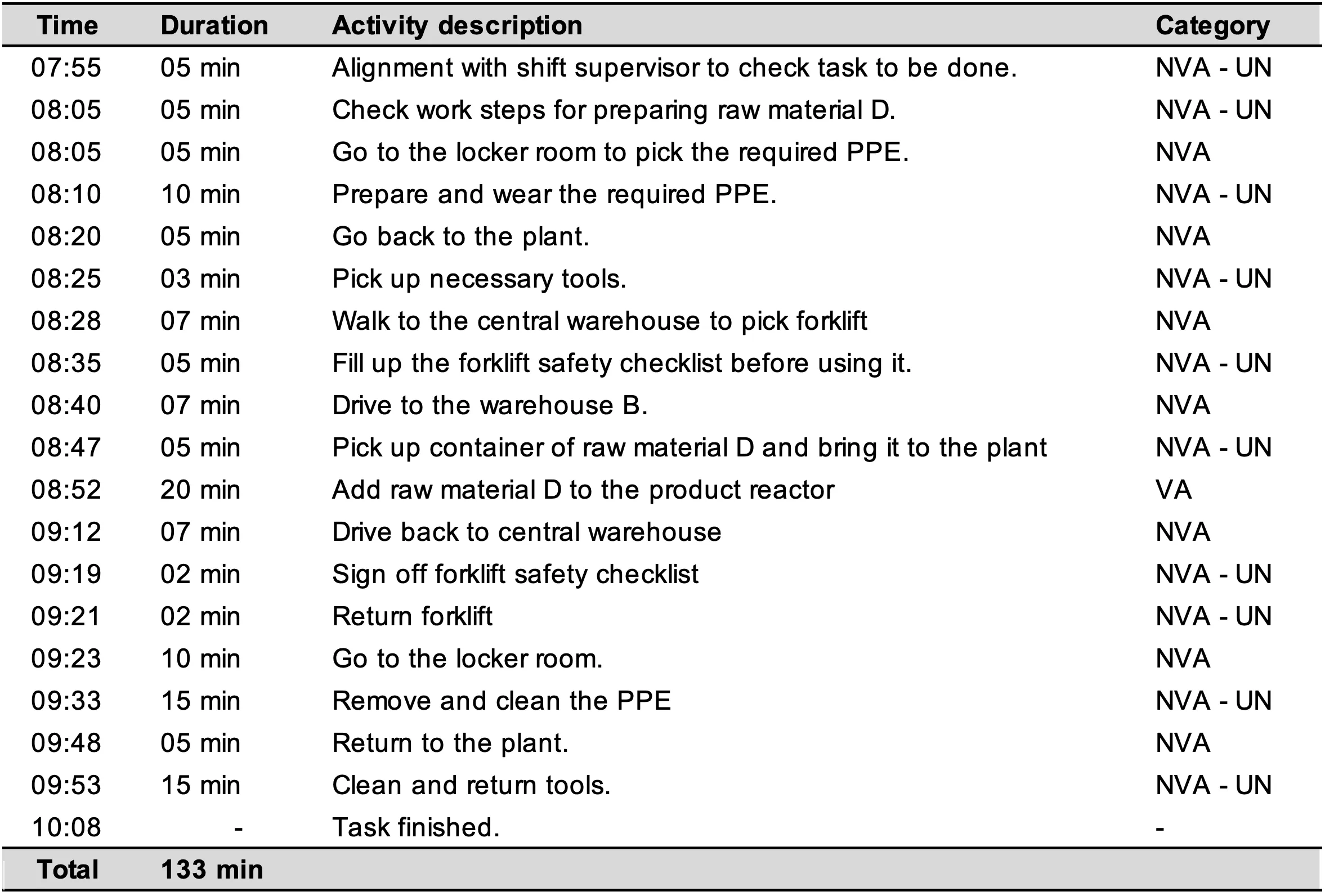
Independently of the category, by just looking at the description of the activities, it is easy to identify that there is room for improvement. The added value time of the job is only 15%. The summary of the observation is charted in the picture below:
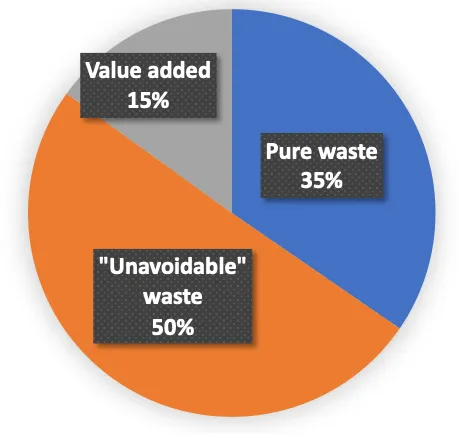 Chart 1: Categorisation of field activities (value-added and waste)
In this example, most pure waste is related to motion (unnecessary movements by people) and transportation (unnecessary moving of materials). Safety requirements and picking and cleaning tools are also unavoidable wastes but can be minimised. Countermeasures can be various, and some of the solutions pointed out during the Kaizen circle are:
-
Production planning is to be communicated to the production operators the day before. In this way, they can arrive at the plant, pick up the required PPE in the locker room and get ready to go to the plant.
-
Evaluate the possibility of keeping one forklift truck in the production area instead of the central warehouse since it is used every shift. This will not solve the problem of picking the raw material in the warehouse, but it at least reduces the operator’s walk to and from the warehouse.
-
Evaluate the possibility of reducing the number of items on the forklift safety checklist. Could it even be removed without decreasing safety?
-
Include in 5S activities to organise a cabinet containing the most common tools used at the plant, reducing the walking.
4.2 Job Performed in the Control Room
Let’s consider that the theme of this Gemba walk is “Follow up the production operator’s first task of the day”, and the person that will be observed is, obviously, the production operator. Please see the table below with the detailed DILO:
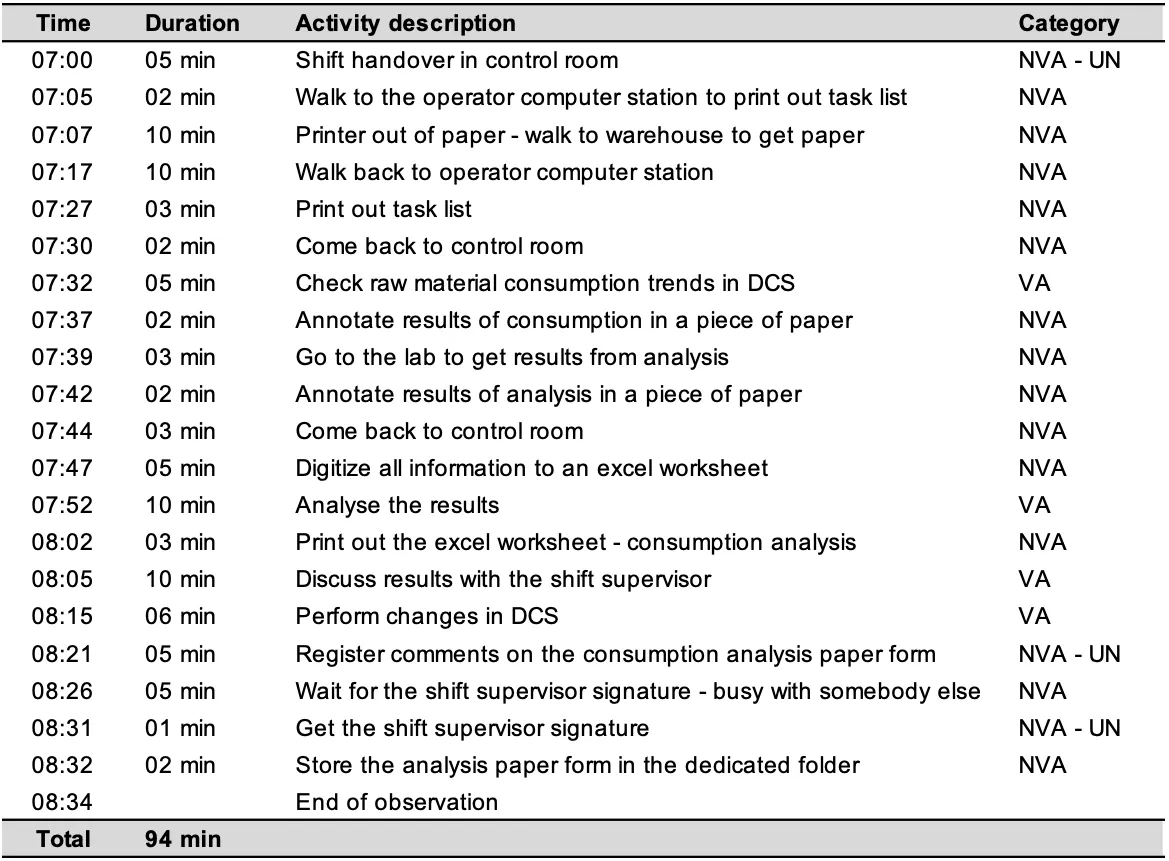
In this job, the added value time is 33%. The summary of the observation is presented in the chart below:
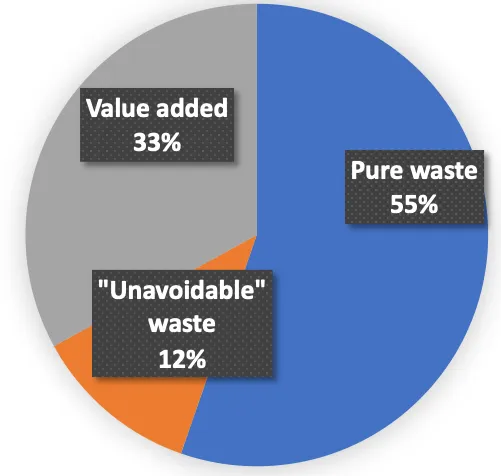 Chart 2: Categorisation of the administrative activities (value-added and waste).
In this example, most pure waste is related to motion (unnecessary movements by people). In offices, wasted motion includes walking, reaching for materials, searching for files, making excess mouse clicks, and entering duplicate data. Countermeasures can be various, and some of the solutions pointed out during the Kaizen circle are:
-
Changing the paper task list for an electronic one, available to all in an accessible platform, so there is no need to use one dedicated computer. By doing this, it is possible to remove the walking and the printing.
-
In 5S activities, organise a small cabinet containing printing paper to be used when needed, avoiding walking.
-
Evaluate a way to integrate the various tools used to avoid double data entry. Automating data entry and calculations can enhance decision-making quality and save time. It also mitigates the risk of errors and erroneous alterations to the production process that may occur during manual input.
-
Consider using a digital platform to provide operators with real-time out-of-control alerts, helping them minimise process variations and implement short-interval control (SIC). This enables immediate corrective actions during shifts. Capturing decision data electronically allows quick access and approval by shifts or supervisors, reducing delays and errors from manual records.
5. Close the cycle – plan for improvement
Following the DILO analysis, all the improvements are registered, and actions are assigned. The follow-up action occurs during daily meetings and regular continuous improvement sessions, tailored to the specific nature of each action. Keeping actions and status accessible ensures transparency with a single version of the truth to all involved. Overall, it contributes to reaching a consensus between Manufacturing and Continuous Improvement.
It is crucial that all people observed receive feedback on suggestions and activities taken, showing them respect and commitment to continuous improvement initiatives.
Summary
Performing a Gemba walk benefits the organisation’s leaders and the team members on the frontline. Processes can be streamlined, and everyone’s jobs can be made more accessible and given more value, creating an environment of autonomy and, at the same time, accountability. Combining with tools like DILO provide more structure and allows follow-ups and improvements to be more effective.
It is possible to observe an actual “day in the life of”, remove waste and refocus our energies to create more value for the customer. When discussing removing waste, consider the existing work processes and opportunities for simplification.
Remember, this is not a “time and motion study”; staff engagement is critical. Listen to the people who know the tasks and value their experience and knowledge. Guarantee action follow-up and ensure all people observed during the Gemba walks receive feedback on suggestions and actions, showing them respect.
By combining your Gemba walks with other tools such as visual management tools, including whiteboards and Kanban boards, a continuous improvement culture starts to become ingrained.
Remember to evaluate your work. Have you ever used the DILO yourself? How about starting it now? And keep in mind that the essence is to remove waste, not to create new ones.
Follow Cyzag on LinkedIn for new articles and stories.