How to Integrate Processes for Industrial Digitalisation Success
Explore the three-step cycle in which Daily Routines, Process Analytics, and CI work together to achieve industrial digitalisation success.
Updated 22 May 2025 7 min read
An integrated approach is crucial for your industrial digitalisation success. This method ensures your organisation operates more effectively than the sum of its individual parts. Are you working cohesively, or are you still trying to piece things together separately?
The reality is that many organisations struggle with this integration. A McKinsey study found that 68% of digital transformation efforts fail, often due to a lack of alignment and integration across teams and processes.
In this article, we explore the three-step cycle in which Daily Routines, Process Analytics, and Continuous Improvement work together to deliver sustainable results, enhancing overall efficiency, innovation, and resilience.
What is an Integrated Approach
Mathematically, the statement “the whole is equal to the sum of its parts, neither more nor less” is accurate in a strict arithmetic sense. However, in many other contexts, from a car to an industrial organisation, this principle takes on a deeper significance. We instead say that the “whole is greater than the sum of its parts”.
Let’s take the example of a car to understand this concept.
The Whole is Equal to the Sum of Its Parts
A car is made up of many components: wheels, doors, windows, engine, chassis, etc. If you take the car apart and spread out all these components, it will look impressive, but it won’t be a car. Group them all together in a big pile, and you have a big pile of parts – the sum of the parts – but it’s still not a car and not very useful.
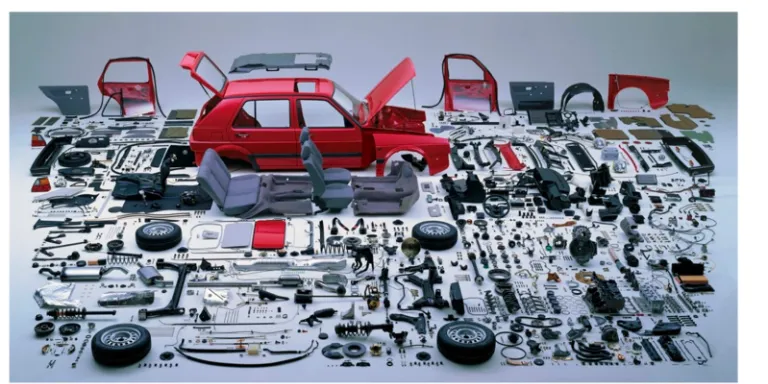 Image 1: The whole is equal to the sum of its parts example. The Whole Car =Wheels + Engine + Chassis + Doors + etc.
Image 1 illustrates that when all parts of the car are combined, they precisely make up the whole car, demonstrating that the whole is equal to the sum of its parts.
The Whole is Greater Than the Sum of Its Parts
However, simply having all the parts of a car is not enough. When all the components are put together properly, you have a functioning car that is far more valuable and useful than a pile of parts. The assembled car provides additional value, performance, and capabilities beyond the mere combination of its parts. This is due to the synergy and integration of the components working together seamlessly.
 Image 2: The Whole Car = More than Just the Parts.
Image 2 emphasises that the assembled car, with all its components working together, provides enhanced capabilities and value, illustrating that the whole is greater than the sum of its parts due to synergy and integration.
The same principle applies to successful industrial digitalisation within an organisation. The three elements mentioned previously – Daily Routines, Process Analytics and Continuous Improvement – must work together to achieve the industry’s goals and strategies. Digitalising an industry is like implementing a vehicle that rides on the wheels of various interacting components. It also requires fuel and a driver.
In an industrial organisation, it embodies the synergy that emerges when different teams and processes collaborate seamlessly using a digital platform. Each team’s unique strengths and insights contribute to a collective success that exceeds the capabilities of individual efforts, making the entire operation more efficient, innovative and resilient.
The Reality of Siloed Operation
Research from Accenture on functional silos found that only 25% of respondents believe their company’s operating model has evolved quickly enough to align with their strategy. This hinders companies’ ability to compete, making them slow, bureaucratic, and complex at a time when there is a need for speed.
In many industrial operations, the reality is that processes and people often work in silos, paying too much attention to individual components without realising that the “car will not function properly; it will be just a big pile of parts”. This fragmented approach creates significant challenges and inefficiencies. When different departments, shifts, and teams operate independently, valuable information and insights remain isolated, hindering the overall performance of the organisation.
Consider a typical manufacturing plant with distinct shifts: the day shift and the night shift. Each shift may have its own way of handling processes, tracking production metrics, and addressing issues. The lack of seamless communication between these shifts can lead to redundant efforts and overlooked opportunities for improvement. For instance, a production problem identified during the night shift might not be effectively communicated to the day shift during the shift handover, resulting in repeated mistakes and lost production time.
Similarly, different teams, such as production, quality control, maintenance, and continuous improvement, often work in isolation. Production teams focus on meeting output targets, quality control ensures product standards, maintenance addresses equipment issues, and continuous improvement professionals look for ways to optimise processes.
This siloed approach not only wastes time and effort but also prevents the organisation from achieving its full potential. Teams end up working harder, not smarter, as they try to piece together fragmented information and processes. The lack of integration results in inefficiencies, increased manufacturing costs, and missed opportunities for improvement.
Example of Fragmentation
Consider a continuous improvement professional identifying a process inefficiency that a simple production line adjustment could resolve. If this insight is not communicated to the production team and integrated into their routines, improvement opportunities are lost. Quality control teams might identify recurring defects linked to specific practices, but without integration, these insights remain isolated. This makes addressing and sustaining them difficult.
In another scenario, maintenance teams might have critical equipment performance information that could prevent downtime and improve OEE. However, this knowledge is often not shared with production teams. As a result, production may continue operating equipment on the verge of failure, leading to breakdowns and costly repairs. Without a cohesive system to integrate efforts, valuable insights and data can be missed, causing production losses and higher costs.
Cyzag’s integrated approach addresses these challenges, ensuring that all parts of the organisation work together cohesively to achieve superior results. Let’s explore this approach.
Cyzag’s Integrated Approach
Cyzag embodies this principle through its integrated approach to industry organisations, demonstrated by a comprehensive cycle that enhances operational synergy and drives industrial digitalisation success. This cycle consists of three key components:
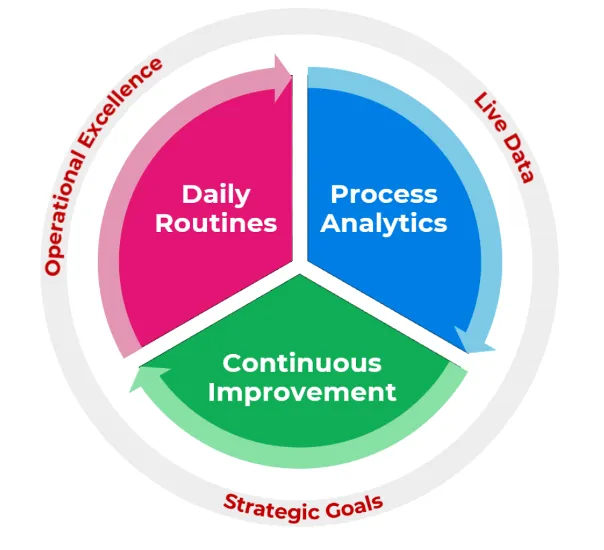
1. Daily Routines
Daily routines ensure the execution of day-to-day tasks with transparency, precision, and efficiency. This component integrates seamlessly with your operational excellence processes, guaranteeing that every task is performed correctly and consistently. By standardising routines, Cyzag helps organisations to manage routine and maintain high levels of productivity and quality.
2. Process Analytics
Process analytics leverage live data to enhance decision-making and uncover optimisation opportunities. This includes loss accounting, variable cost management, and tracking process deviations. By embedding process analytics into users’ daily routines through enhanced data access and visualisations, Cyzag ensures that data-driven insights are readily available. This integration helps identify inefficiencies and areas for improvement in real time.
3. Continuous Improvement
Continuous improvement focuses on systematically refining processes to achieve strategic goals. Opportunities for improvement arise either directly from those identified in process analytics or through strategic initiatives. These opportunities are then tracked and executed back into daily routines, creating a cycle of continuous improvement and development.
Synergistic Impact
Together, these elements create a cohesive framework that improves individual processes and connects them, making the integrated operations more effective than their isolated parts. By fostering continuous feedback loops within the system, Cyzag empowers people to collaborate and enables organisations to evolve and adapt, promoting sustainable growth and maintaining a competitive edge in the industry.
A Real-Life Example
A leading chemical company faced a major challenge in its manufacturing operations: data silos hindered operational efficiency and competitiveness. To address this challenge, they implemented the Cyzag platform, aligning shop floor activities and streamlining work processes. They also consolidated multiple tools into one, reducing burdens and complications for operators. These changes made improvements more sustainable.
Cyzag’s integrated approach connects different parts of the workflow, enabling a valuable use case of variable cost control. Specifically, they focused on steam consumption and seamlessly integrated it into the operators’ daily routines. This integration shifted the perception of improvement measures from separate tasks to inherent components of daily operations.
“We have tried DVC before, but after a month, the operators stopped looking at it. Now that it is integrated with the operator task lists, the operators are following it, and it has shown a €150k annual saving in our first use case,” said a Continuous Improvement Engineer and Team Lead.
Summary
Implementing an integrated approach in your industrial organisation is not just beneficial; it is essential for your digitalisation success. By aligning Daily Routines, Process Analytics, and Continuous Improvement, you create a cohesive framework that significantly enhances operational efficiency, innovation, and resilience. This method ensures that your organisation functions more effectively than the sum of its individual parts.
Real-life examples, like a leading chemical company using Cyzag, demonstrate how breaking data silos benefits daily operations. This approach integrated variable cost control into daily operations, leading to substantial cost savings and a more engaged, proactive workforce.
Cyzag’s integrated approach fosters a collaborative environment where every team and process contribute to collective success. This holistic strategy not only improves efficiency and productivity but also drives continuous improvement and innovation, ensuring that the process manufacturing industry can meet the challenges of today and the opportunities of tomorrow.
Are you working cohesively, or are you still trying to piece things together separately? Discover how the Cyzag platform can transform your operations. Book a free 1-to-1 consultation today and learn step-by-step how to integrate and optimise your processes.
Follow Cyzag on LinkedIn for new articles and stories.