How to Boost Continuous Improvement with Digital Tools
Learn how to boost continuous improvement using digital tools to cut waste, improve collaboration, and accelerate sustainable change.
Updated 25 June 2025 5 min read
Continuous improvement remains one of the most reliable ways to drive performance in an industry under pressure, facing skill gaps, rising costs, and sustainability demands that are pushing operations to the limit. But too often, manual tools like spreadsheets and emails slow everything down. That’s why accelerating continuous improvement with digital tools is no longer optional.
Digitalisation helps teams act faster, cut admin work, and stay aligned, turning CI potential into real, measurable impact. In this article, we explore how digital tools can streamline CI and empower every team to drive meaningful change.
Why Continuous Improvement with Digital Tools?
Traditional CI methods have proven their worth over time by addressing operational issues, minimising waste, and improving efficiency and quality. However, they often rely on manual effort, time-consuming tracking, and constant oversight. As improvements become part of daily routines, their impact can fade without sustained focus.
That’s where continuous improvement with digital tools makes a difference. By replacing spreadsheets and manual workflows with smart, connected systems, teams can simplify routines like Idea Logs, PDCAs, and A3s, freeing up time for high-impact activities. Solutions become easier to scale across teams and sites, with digital tools enabling quick replication, standardisation, and reduced admin work. The result is a more agile, aligned, and impact-driven approach to improvement, built for long-term success.
Challenges in CI and How Digital Solutions Help
Despite their importance in delivering operational excellence, many CI initiatives struggle to achieve consistent results, often hindered by delays, manual work, and disconnected efforts. As operations grow more complex, traditional methods alone aren’t enough.
Let’s break down how digital solutions can help tackle the most typical CI challenges:
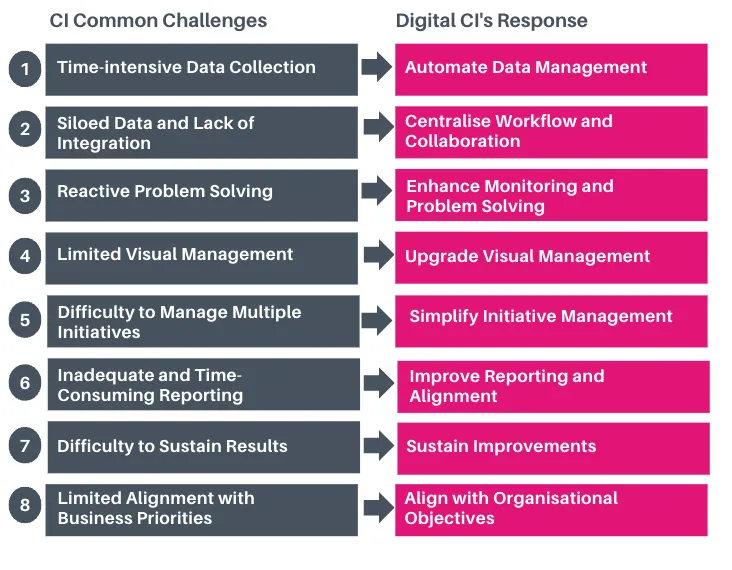 Image 1. The common CI challenges vs the solutions
1. The Challenge: Time-Intensive Data Collection
The Solution: Automate Data Management
Manual data entry and processing can slow the CI cycle and introduce errors. Digital solutions offer automated, real-time data capture and analysis, which minimises manual effort, ensures accuracy, and speeds up decision-making. Real-time analytics and reports help identify trends and areas for improvement and measure impact effectively.
2. The Challenge: Siloed Data and Lack of Integration
The Solution: Centralise Workflows and Collaboration
Digital tools can consolidate data from various teams and departments into a single source of truth. Standardising workflows and enhancing communication across departments improves collaboration. Platforms like Cyzag facilitate seamless teamwork, real-time feedback, and shared insights, integrating collaboration into daily operations.
3. The Challenge: Reactive Problem Solving
The Solution: Enhance Monitoring and Problem Solving
Real-time monitoring tools provide live data visualisations, making it easier to identify issues and track cost variables. Structured problem-solving methods, such as A3, 5 Whys, and Ishikawa diagrams, are supported by digital solutions, enabling effective management and communication of actions and solutions. Detailed documentation promotes ongoing learning and easy reference.
4. The Challenge: Limited Visual Management
The Solution: Upgrade Visual Management
Traditional visual tools can be outdated and labour-intensive to maintain. Digital visual tools offer interactive dashboards and real-time visualisations, streamlining progress tracking, team engagement, and focus on CI objectives.
See our back-to-basics on Visual Management here.
5. The Challenge: Difficulty in Managing Multiple Initiatives
The Solution: Simplify Initiative Management
Managing various CI initiatives, from improvement funnels to large projects, can be overwhelming. Digital platforms simplify the management of the entire CI cycle, from detailed to high-level views (e.g., PDCA, A3, project tracking). They support idea registration, management, and tracking of benefits throughout the CI funnel.
6. The Challenge: Inadequate and Time-Consuming Reporting
The Solution: Improve Reporting and Alignment
Inconsistent data recording can lead to errors and misalignment with business goals. Digital platforms generate automatic, real-time, and standardised reports, ensuring consistency, transparency, and credibility in reporting.
7. The Challenge: Difficulty in Sustaining Reports
The Solution: Sustain Improvements
Sustaining improvements is crucial yet challenging due to poor integration of new standards into daily routines. Digital platforms help standardise successful improvements, integrating them into daily operations and providing ongoing monitoring to ensure effectiveness and continuity.
8. The Challenge: Limited Alignment with Business Priorities
The Solution: Align with Organisational Objectives
Ensuring that organisational objectives (e.g., OKRs) are clear and transparent is essential. Digital tools connect business objectives with team and project goals, linking initiatives to broader business aims and making the impact of improvements visible.
And How About People?
People are at the core of every CI process. Cyzag’s no-code platform empowers citizen developers, who are non-IT professionals like engineers and managers, to drive change efficiently. By leveraging internal expertise, these developers boost agility, foster innovation, and standardise processes, resulting in greater engagement and more impactful solutions.
How the Cyzag Platform Digitalises Your CI
The Cyzag platform provides a comprehensive solution for efficient digital continuous improvement. Our features include tools like PDCA, A3, 5 Whys, Ishikawa, Kanban boards, improvement management, reporting, dashboards, project management, and benefit tracking.
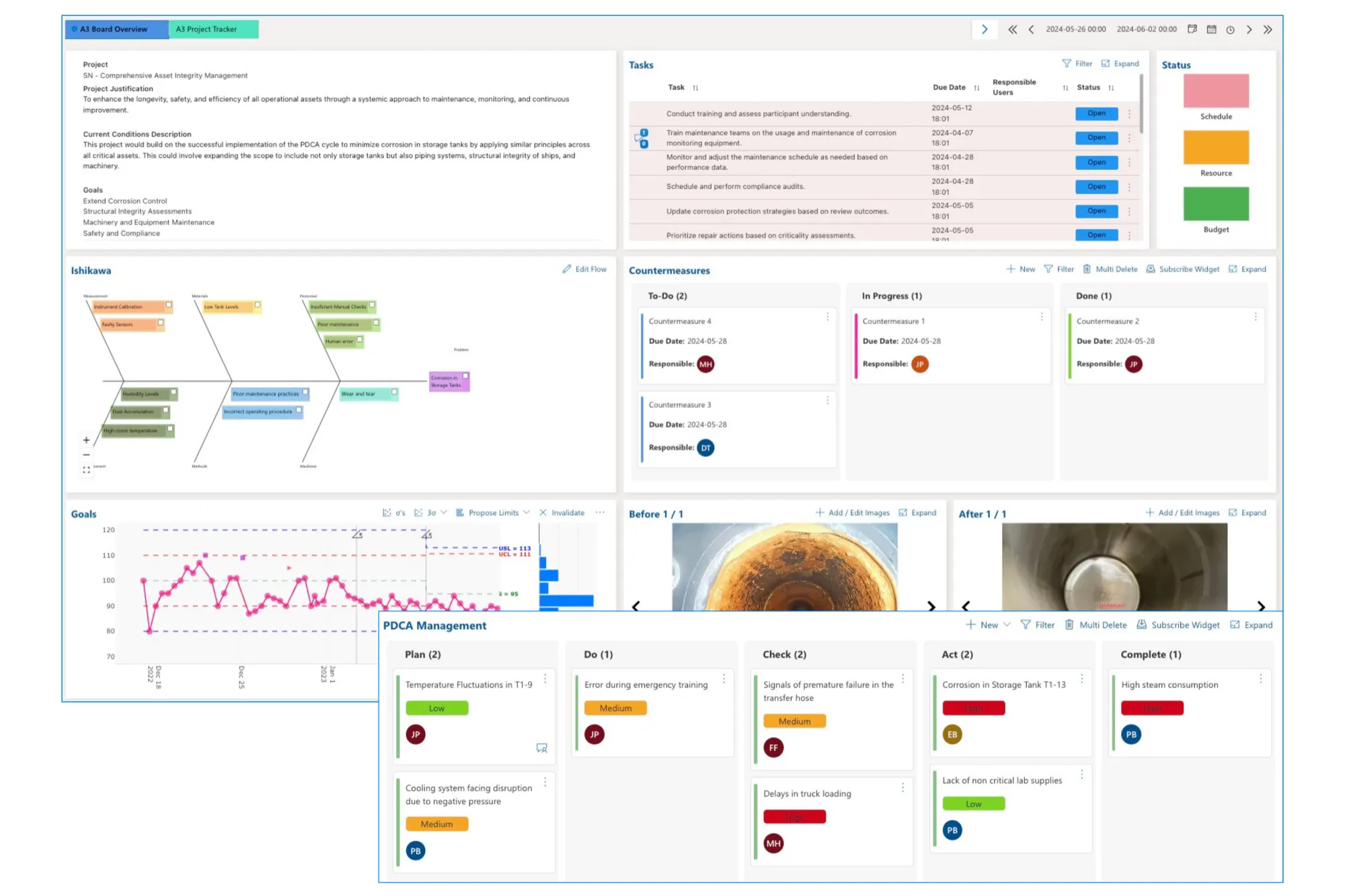 Image 2: An A3 on the Cyzag platform alongside an example of PDCA management on a Kanban board.
From CI tools to process analytics and daily routines, our integrated tool empowers teams to work more efficiently and effectively.
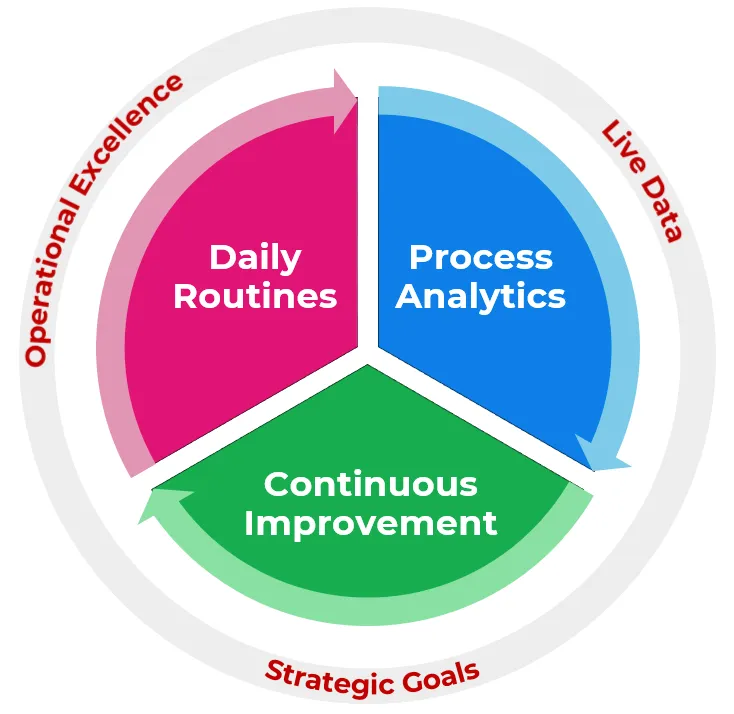 Image 3. Cyzag’s integrated approach
Conclusion
Embracing digital tools for continuous improvement brings significant advantages, such as automating data handling, centralising workflows, improving visibility, and simplifying the management of initiatives. By tackling common CI challenges through digitalisation, organisations can boost effectiveness, sustain gains, and stay aligned with broader business goals.
The Cyzag platform offers a robust yet simple toolset to digitise and streamline CI processes, empowering teams to focus on what truly drives impact.
Ready to Transform Your CI Journey with Cutting-Edge Digital Tools?
Discover how Cyzag can redefine your approach to Continuous Improvement, optimising processes, enhancing collaboration, and driving sustained success.
Schedule your tailored demo today and unlock the full potential of digitalisation for your CI strategy. Let’s make continuous improvement a game-changer for your organisation.
Follow Cyzag on LinkedIn for new articles and stories.